
Anisoplia segetum
Anisoplia segetum
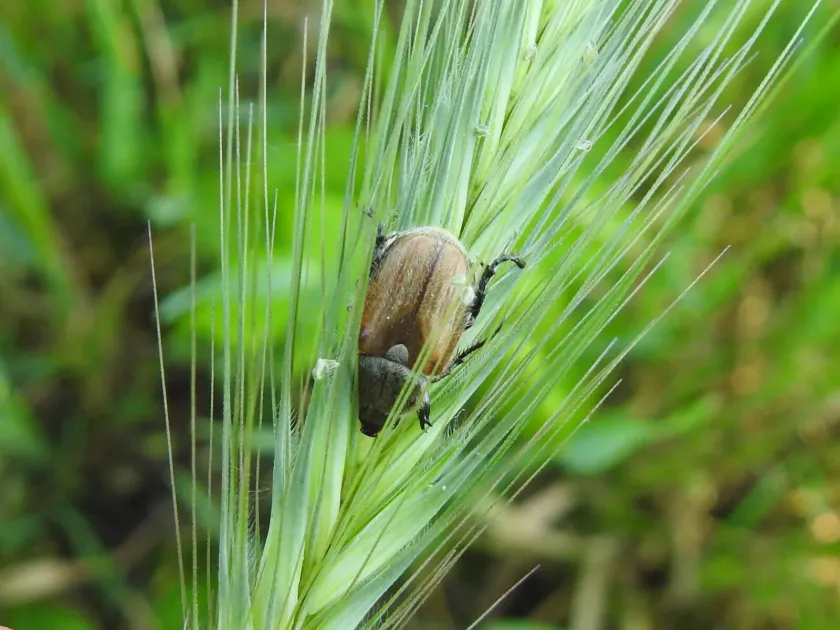
Description
How to identify
Anisoplia segetum, commonly known as a grain beetle, is a significant member of the Scarabaeidae family within the Coleoptera order. The adult beetle typically measures between 12 and 15 mm in length.
The elytra (wing covers) are generally brownish-yellow, often featuring a distinct black spot, which is a key identification characteristic. The head and pronotum are black with a metallic or greenish shimmer.
The larvae are soil-dwelling, C-shaped grubs with a pale white body and a well-developed, brown head equipped with strong mandibles for chewing roots and organic matter in the soil.
The insect follows a two-year life cycle. Larvae overwinter deep in the soil (up to 40 cm), where they remain protected from harsh winter temperatures until spring activity resumes.
Adult beetles emerge in early summer, coinciding with the grain-filling stage of wheat, rye, and barley, making them a major threat to cereal productivity during this critical period.
What it damages
This pest primarily attacks cereal crops, including wheat, rye, barley, and oats. It can also thrive on wild grasses located in field margins, which serve as a secondary habitat.
The most severe damage is caused by the adults, which feed aggressively on the milky and doughy grains of wheat heads. They hollow out the grains, leaving only the husk behind.
While larvae mainly feed on roots and organic matter, high populations can cause significant damage to the root systems of winter cereals, leading to plant thinning and weak crop stands.
The economic impact is substantial; during outbreaks, Anisoplia segetum can destroy a significant percentage of the yield, leading to major losses for grain producers.
Beyond quantity, the quality of the harvested grain is severely compromised, as damaged grains reduce the overall hectoliter weight and marketability of the crop for the milling industry.
When it appears
Adult beetles typically emerge from the soil in late June and remain active through August, depending on the climatic conditions of the region and the crop maturation timeline.
These beetles are highly active during sunny, hot days when they move between plants in search of food. They prefer warm, dry conditions for their reproductive activities.
During cool or rainy weather, the insects remain relatively inactive, hiding at the base of plants or moving into the top layer of the soil to protect themselves from adverse conditions.
The adult lifespan is relatively short, lasting about 3 to 4 weeks, during which mating and egg-laying occur in the soil, ensuring the continuation of the two-year generation cycle.
Field scouting should be prioritized during the heading and grain-filling stages to monitor beetle density and determine the need for intervention before damage threshold levels are reached.
Signs of infestation
The most obvious sign of an infestation is the presence of eaten or hollowed-out grains on the ear, where the beetle has scraped away the starchy contents of the kernel.
During sunny weather, you can easily identify the pest by visually inspecting the crop, as beetles aggregate in large numbers on the grain heads to feed on the ripening seeds.
Secondary symptoms include broken or bent stems where feeding has occurred, and the appearance of 'white heads' (empty ears) that stand out against healthy, maturing crops.
Significant infestations often result in patchy field development, where portions of the wheat stand look severely degraded compared to undamaged sections of the field.
Excavating the soil in autumn or early spring can reveal the presence of C-shaped larvae, which serves as a reliable indicator of the potential risk for the upcoming season.
Control measures
Crop rotation is the most effective cultural practice; avoiding cereal-on-cereal sequences helps prevent the build-up of larval populations in the soil.
Deep autumn tillage is highly effective, as it brings larvae to the surface, exposing them to predators like birds and harsh environmental conditions that increase larval mortality.
Chemical control, involving the application of insecticides during the peak adult flight period, is recommended when the number of beetles exceeds the established economic damage threshold.
Early harvesting can help minimize the exposure window, allowing the crop to be collected before the beetle population reaches its maximum damage potential.
- Application of pyrethroid or organophosphate insecticides.
- Prompt stubble cultivation following the harvest.
- Control of wild grasses to eliminate alternative food sources.
- Selecting early-maturing crop varieties to escape peak pest pressure.
Taxonomy
- Latin name
- Anisoplia segetum
- Order
- Coleoptera (beetles)
- Family
- Scarabaeidae
- EPPO code
- ANISSE
Discussion
No discussions yet — be the first.