
Ampulex
Ampulex
Description
How to identify
Ampulex is a genus of wasps belonging to the family Ampulicidae (cockroach wasps). These are predatory insects often misidentified as garden pests due to their striking appearance.
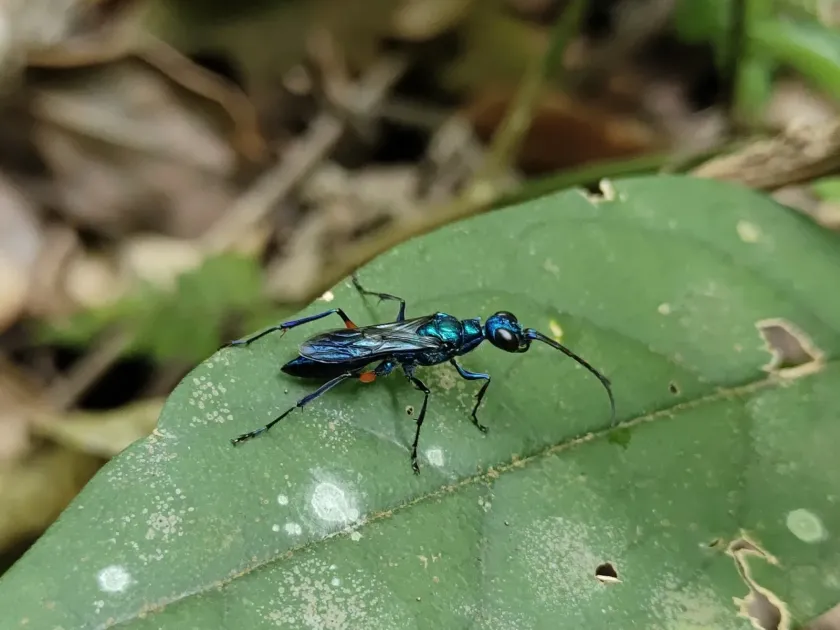
Adults exhibit a distinctive metallic sheen, often with a blue-green luster. The body is slender, typically measuring between 10 and 20 millimeters in length.
A defining characteristic is the elongated pronotum and the thin petiole of the abdomen. They possess well-developed wings, allowing for active flight in search of prey.
The head is highly mobile and equipped with powerful mandibles, which the female uses to transport paralyzed prey into a burrow.
It is important to distinguish these solitary wasps from social species, as they do not form large colonies or nests.
What it damages
From an agronomic perspective, Ampulex is not a plant pest. It does not feed on leaves, roots, or fruits of agricultural crops.
Instead, this genus is considered a beneficial entomophage, as its biological cycle is strictly dedicated to controlling certain types of synanthropic insects.
Ampulex causes no economic damage to orchards or vegetable gardens, as its diet is highly specialized and focused on arthropods.
Their presence in a garden indicates a diverse entomofauna, suggesting a healthy ecosystem without excessive use of synthetic pesticides.
Damage to crops by members of this genus is biologically impossible because they are not phytophagous.
When it appears
Adult activity occurs during the warmer months, primarily in summer, when temperatures are optimal for flight and hunting.
In temperate climates, Ampulex shows maximum activity from June to August, aligning its life cycle with the reproduction periods of its prey.
They prefer sunny, warm areas where it is easier to find shelters for nesting in the soil or natural crevices.
The life cycle includes egg, larva, pupa, and adult stages, with overwintering typically occurring at the prepupal stage inside a protective cocoon.
The emergence of new generations coincides with the peak density of cockroach populations, which serve as their primary food source.
Signs of infestation
Since Ampulex does not harm plants, there are no specific signs of crop infestation associated with this insect.
If you observe their activity, you might see a female hunting cockroaches, performing complex maneuvers to paralyze the victim.
Signs of a local population may include finding paralyzed prey being dragged into underground burrows or wood cracks.
Unlike common pests, the activity of Ampulex is discreet, as the insect leads a very cautious and solitary life.
The absence of crop damage in areas with these wasps confirms their status as neutral or beneficial inhabitants of the garden.
Control measures
Specific control measures against Ampulex are unnecessary, as the insect poses no threat to agricultural production.
The use of insecticides on the plot to target Ampulex is counterproductive and harmful, as it destroys beneficial entomophages.
It is recommended to maintain natural habitats, such as areas with loose soil or aged timber, to support the natural balance of insects.
If the presence of these wasps causes concern, simply limiting access to their nesting sites by sealing construction gaps is sufficient.
The best management approach is non-interference, as Ampulex wasps assist in the natural regulation of undesired insect populations.
Taxonomy
- Latin name
- Ampulex
- Order
- Hymenoptera
- Family
- Ampulicidae
- EPPO code
- AMPXSP
Discussion
No discussions yet — be the first.