
Grape gall midge
Ampelomyia viticola
Description
How to identify
The grape gall midge (Ampelomyia viticola) is a small insect belonging to the Cecidomyiidae family within the order Diptera. These midges are extremely small, resembling tiny flies or gnats, and are rarely observed in the adult stage on the vine.
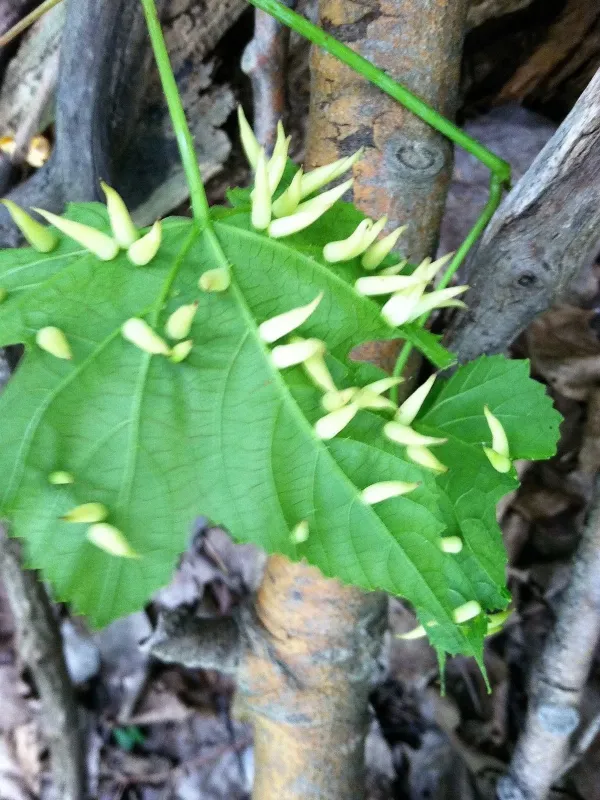
The insect is best known for its ability to induce the formation of galls on grapevine leaves. These galls serve as a protective nursery where the larvae feed and develop, sheltered from environmental factors and many predators.
What it damages
This pest exclusively targets grapevines. It primarily affects the leaves, although in some cases, it can interfere with the overall development of the canopy, leading to a reduction in the plant's photosynthetic capacity.
While damage is often localized to specific leaves, severe infestations can significantly weaken the vines, especially younger plants. This leads to reduced growth and potentially lower fruit quality due to the vine's diminished vigor.
When it appears
The grape gall midge becomes active during the spring as the vines start to leaf out. This coincides with the period when young, tender tissue is most available for the female midge to lay eggs.
Depending on regional climates, the pest can complete several generations throughout the growing season. Warm and humid conditions typically favor the development and spread of the midge across the vineyard.
Signs of infestation
The most distinctive sign of infestation is the presence of galls on the leaves. These structures are abnormal tissue growths triggered by the chemical secretions of the larvae.
- Small, cone-like, or nipple-shaped projections on the foliage.
- Color changes in the gall areas, often ranging from light green to red.
- Leaf curling or distortion around the gall sites.
- Premature yellowing of leaves that have a high density of galls.
Control measures
Mechanical removal is the most direct control strategy. Growers should inspect the vines early in the season and remove and destroy any leaves showing signs of gall development to prevent the larvae from completing their lifecycle.
If the infestation is widespread, insecticide applications may be necessary. It is crucial to target the adults or early larval stages, as the galls themselves protect the larvae from contact sprays.
Maintaining vineyard hygiene is essential. Removing and composting or burying leaf litter in the autumn helps reduce the overwintering population of the midge, breaking the chain for the next season.
Promoting general vine health through proper pruning and balanced nutrition helps plants better tolerate minor infestations without significant impact on fruit production.
Taxonomy
- Latin name
- Ampelomyia viticola
- Order
- Diptera (flies)
- Family
- Cecidomyiidae
- EPPO code
- CECIVI
Discussion
No discussions yet — be the first.