
Amitus spiniferus
Amitus spiniferus
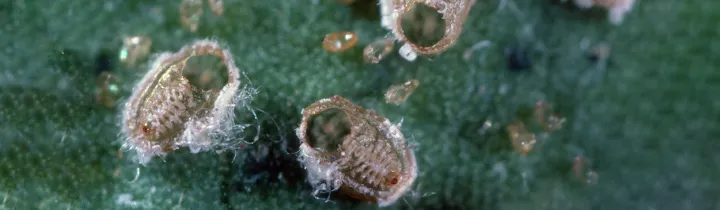
Description
How to identify
Amitus spiniferus is a small parasitoid wasp belonging to the Platygastridae family within the order Hymenoptera. It is recognized as a vital natural enemy of specific whitefly species.
The adult wasp is minute, typically black in color, and requires magnification for accurate identification. It displays the classic morphology of parasitic wasps with slender structures.
Its life cycle is entirely internal to the host, meaning the larvae develop within the whitefly nymph. This adaptation protects the offspring from external environmental stressors.
Because of its small size, Amitus spiniferus is often overlooked by farmers during routine field inspections. However, its presence is a sign of a robust biological control system.
Entomologists often use yellow sticky traps or careful leaf examinations to detect the presence and activity of these beneficial insects in orchards or greenhouses.
What it damages
It is crucial to clarify that Amitus spiniferus is not a plant pest; it is a highly beneficial insect. It acts as an effective biocontrol agent against the citrus whitefly.
The host, the citrus whitefly (Aleurocanthus spiniferus), feeds on plant sap, causing stunted growth and leaf drop. This pest also secretes honeydew, which promotes sooty mold.
By parasitizing the whitefly larvae, Amitus spiniferus directly kills the pest. This action prevents the whitefly from reaching adulthood and continuing the infestation cycle.
Using this parasitoid helps stabilize the ecosystem and significantly reduces the damage caused by sap-sucking insects in various horticultural settings.
Farmers who encourage the presence of this wasp often see a decrease in the need for chemical interventions, leading to more sustainable farming practices.
When it appears
The seasonal activity of Amitus spiniferus is closely synchronized with the life cycle of its host. It is most active during the spring and summer growth periods.
Warm temperatures accelerate its reproductive rate, allowing for multiple generations per year in subtropical and tropical climates.
In regions with distinct seasons, the wasp population may enter a period of reduced activity during the colder months, correlating with the slower metabolism of whiteflies.
The timing of release or monitoring should align with the peak emergence of whitefly nymphs, as these are the primary targets for the wasp's oviposition.
Understanding local climatic conditions is essential for maximizing the impact of the wasp in a biological control program.
Signs of infestation
The primary sign of Amitus spiniferus presence is the distinct appearance of parasitized whitefly nymphs on the underside of plant leaves.
Parasitized nymphs typically become swollen, darkened, and rigid, forming a hard shell-like structure known as a mummy, protecting the developing wasp larva inside.
A small, circular exit hole on the dorsal surface of the whitefly shell is the definitive indicator that the adult wasp has successfully emerged.
Scouting for these exit holes during routine checks is a standard practice to evaluate the effectiveness of the wasp in natural pest regulation.
Presence of active adults flying among foliage or resting on leaves is another sign, though their small size makes them difficult to observe without expertise.
Control measures
To support Amitus spiniferus populations, growers should avoid the use of broad-spectrum pesticides, as these are highly toxic to beneficial parasitoids.
Integrating IPM strategies, including the use of selective and biorational pesticides, helps preserve the natural balance between the wasp and the whitefly.
Providing floral resources near crops, such as nectar-producing wild plants, can significantly improve the longevity and fecundity of the adult wasps.
Habitat management through proper pruning and irrigation ensures that environmental conditions remain unfavorable for mass whitefly outbreaks.
In cases of severe whitefly pressure, supplemental releases of lab-reared Amitus spiniferus can be implemented to bolster the indigenous wasp population.
Taxonomy
- Latin name
- Amitus spiniferus
- Order
- Hymenoptera
- Family
- Platygastridae
- EPPO code
- AMIUSI
Discussion
No discussions yet — be the first.