
Violet leaf sawfly
Ametastegia pallipes
Description
How to identify
The violet leaf sawfly (Ametastegia pallipes) belongs to the order Hymenoptera and the family Tenthredinidae. Adult sawflies are small, black insects that resemble tiny wasps.
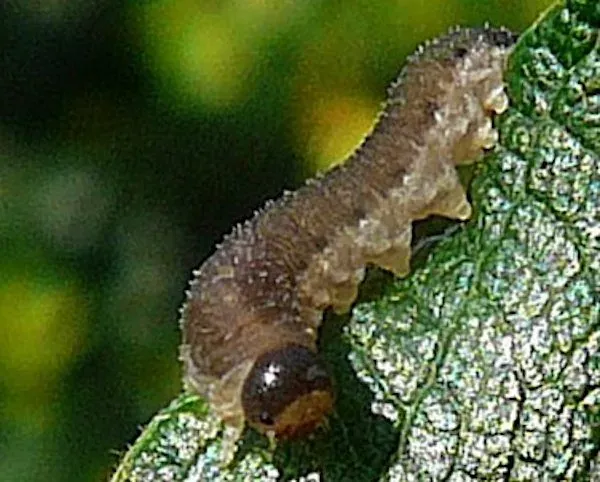
The larvae are the primary pests of this species. They look like caterpillars and have a distinct, often dark-colored head, moving slowly while feeding on foliage.
The life cycle involves complete metamorphosis, consisting of four stages: egg, larva, pupa, and adult. Several generations may occur within a single growing season.
Wintering usually happens in the prepupal stage inside protective cocoons, often located in sheltered areas such as bark crevices or soil debris.
Environmental factors like temperature and humidity play a crucial role in the timing of their emergence and the overall speed of their development.
What it damages
The primary hosts of Ametastegia pallipes are plants from the Violaceae family, particularly cultivated violets and pansies.
The larvae feed on the leaf tissue, which can result in skeletonized leaves where only the primary veins remain intact.
This damage significantly interferes with the plant's ability to photosynthesize, weakening the overall health of the specimen.
For commercial growers, an infestation can lead to a drastic reduction in the quality and marketability of flowering plants.
If left untreated, severe infestations can stunt growth, prevent flowering, and eventually lead to the death of the plant.
Signs of infestation
The first signs are small, irregular holes in the leaves, which expand as the larvae continue to feed and grow in size.
You may spot the larvae on the undersides of leaves, especially during the early morning hours before they become too active.
The presence of fine, dark, pellet-like frass (excrement) on the leaves or surrounding soil is a clear indicator of sawfly activity.
Leaves that turn yellow and wither prematurely often signify that a plant has been under sustained attack by a colony of larvae.
Close inspection of the leaf margins often reveals the initial damage, which starts small and spreads across the entire leaf structure.
Control measures
Hand-picking the larvae is an effective method for small gardens or when the infestation is detected early enough to be manageable.
Good garden hygiene, including the removal of dead leaves and debris at the end of the season, helps destroy overwintering sites.
Biological control agents, such as specific insecticidal soaps or microbial pesticides, can be used to manage larvae populations safely.
For larger infestations, targeted use of insecticides labeled for ornamental garden use may be required to prevent extensive plant damage.
Always maintain plant health through proper watering and soil nutrition, as healthy plants are more resilient to pest pressures and recover faster.
Taxonomy
- Latin name
- Ametastegia pallipes
- Order
- Hymenoptera
- Family
- Tenthredinidae
- EPPO code
- AMETPA
Discussion
No discussions yet — be the first.