
Ambrostoma
Ambrostoma
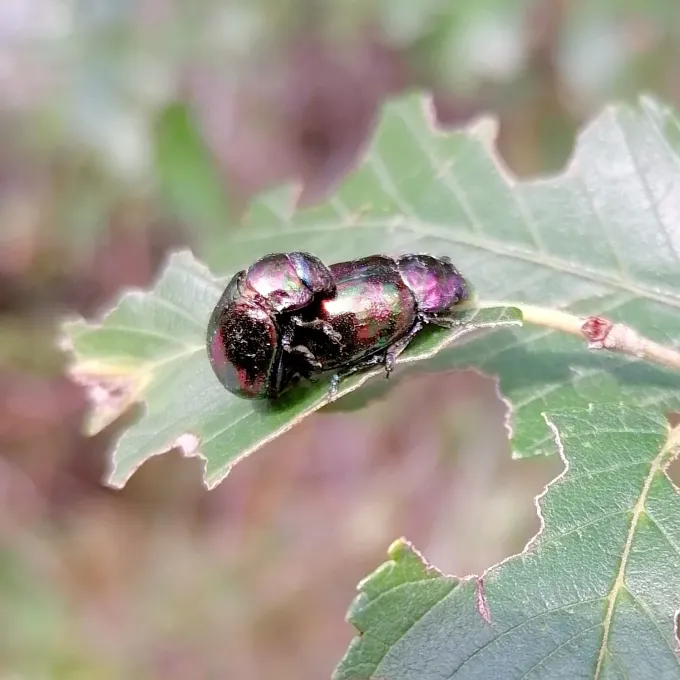
Description
How to identify
Ambrostoma is a genus of leaf beetles belonging to the family Chrysomelidae within the order Coleoptera. These beetles are typically medium-sized and often exhibit coloration that provides camouflage against their host plants.
Adult beetles possess a robust exoskeleton. Larvae generally have fleshy bodies, often brightly colored or covered in protective secretions, which aid their survival in open field environments.
The insect undergoes a complete metamorphosis, including egg, larval, pupal, and adult stages. Adults typically overwinter in the upper soil layers or beneath plant debris.
In field conditions, Ambrostoma can be identified by the characteristic damage to leaf blades, which they consume along the edges or skeletonize, leaving only the veins behind.
Specific identification requires a detailed examination of morphological features, as the genus includes several species with narrow feeding specializations.
What it damages
Primary damage is caused by both adults and larvae feeding on the vegetative parts of plants. They specialize in specific wild and cultivated plant species.
Most frequently, they affect plants in the Polygonaceae family. In some instances, they may move to nearby cultivated crops if the host plants are in close proximity.
Feeding results in a reduction of leaf area, which is critical for photosynthesis. Heavily infested plants show stunted growth and may die if the pest population density is high.
Beyond direct tissue destruction, these insects can weaken the plant's immune system, making it more susceptible to secondary fungal and bacterial infections.
The economic threshold depends on the crop's growth stage, with infestations being most damaging during periods of active leaf biomass accumulation.
When it appears
Ambrostoma activity begins in spring as soil temperatures rise, prompting overwintering adults to emerge for supplementary feeding.
Peak larval density typically occurs in the first half of summer, coinciding with the period of most intensive host plant growth.
The life cycle often consists of a single generation, though weather conditions can significantly influence emergence times and the duration of developmental stages.
During hot and arid periods, some adults may enter an aestivation phase, waiting out unfavorable temperatures in protected shelters.
In autumn, as temperatures decline, adults descend into the soil to prepare for their winter diapause period.
Signs of infestation
The first sign of an Ambrostoma presence is the appearance of irregular holes in leaves, often grouped together in areas where larvae congregate.
Inspecting the underside of leaves may reveal egg clusters, which appear as dense rows of small, specifically colored objects.
The presence of the insects themselves on the plant, especially during morning or evening hours, is a clear signal to initiate control measures.
Leaf skeletonization, where only coarse veins remain, indicates a high population density of early to mid-instar larvae.
Stunted development, yellowing, and premature wilting of affected plant parts are also clear indicators of leaf beetle activity.
Control measures
Agrotechnical methods include deep autumn plowing, which destroys overwintering sites for adults and aids in the destruction of pupae within the soil.
Crop rotation is a crucial management step, as breaking the food chain forces the pest to migrate or perish due to a lack of host plants.
Manual collection of beetles is effective in small garden plots when pest numbers are low at the start of the season.
The use of broad-spectrum insecticides is recommended only in cases of mass outbreaks where other methods fail to provide adequate control.
- Application of biological products based on entomopathogenic fungi.
- Regular crop monitoring during peak growth periods.
- Control of weeds along field borders and margins.
Taxonomy
- Latin name
- Ambrostoma
- Order
- Coleoptera (beetles)
- Family
- Chrysomelidae
- EPPO code
- AMBOSP
Discussion
No discussions yet — be the first.