
Osumi ambrosia beetle
Ambrosiophilus osumiensis
Description
How to identify
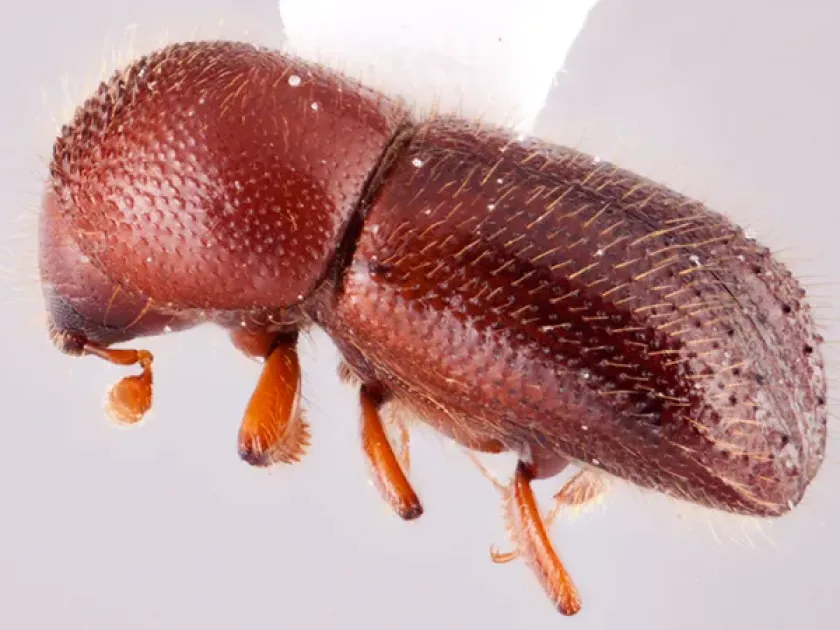
The Osumi ambrosia beetle, scientifically known as Ambrosiophilus osumiensis, belongs to the Curculionidae family and the Scolytinae subfamily. These are very small beetles characterized by a cylindrical body shape, perfectly adapted for moving through narrow tunnels excavated within the wood of host trees.
A key aspect of their biology is the obligate symbiotic relationship with ambrosia fungi. The females possess specialized structures called mycangia, where they carry fungal spores. When they bore into a tree, they inoculate the wood with these fungi, which serve as their exclusive food source.
Adult beetles are rarely seen on the surface of the bark, as they spend almost their entire life cycle hidden deep within the wood. The larval development occurs within these gallery systems, protected from the environment by the tree's own structure.
These beetles are primarily known for their ability to thrive in a wide range of moisture conditions, which allows them to infest various species of trees across different ecological zones. Their presence is often detected only after the infestation has become well-established.
Taxonomically, they are part of the tribe Xyleborini. Distinguishing A. osumiensis from other similar species requires detailed examination of morphological characters, often necessitating professional entomological equipment and laboratory analysis.
What it damages
The Osumi ambrosia beetle is known to attack a broad spectrum of deciduous and coniferous host trees. In regions where the species has been introduced, it poses a significant threat to both forest stands and ornamental nursery stock.
The primary damage is caused by the construction of tunnel networks deep inside the stem. These tunnels disrupt the plant's vascular tissue, hindering the transport of water and nutrients, which eventually leads to branch dieback or the death of the entire tree.
The fungal pathogens introduced by the beetle cause discoloration and necrosis of the wood. This damage renders timber unsuitable for industrial use, as the affected wood loses its structural integrity and aesthetic value, leading to substantial economic losses.
Under high population pressure, even seemingly healthy trees can be colonized. Weakened or stressed trees are particularly vulnerable, but the beetle's ability to successfully attack healthy specimens makes it a highly dangerous invasive species.
Secondary infections by various fungi and bacteria are common in beetle-infested wood. This creates a complex disease scenario that makes traditional recovery or treatment of the tree extremely difficult once colonization is advanced.
Signs of infestation
The most visible sign of an infestation is the presence of tiny, circular entry holes on the bark. These holes are often accompanied by "frass" — fine, powder-like sawdust pushed out by the beetles as they create their galleries.
On some trees, the entry points may show sap oozing or dark staining, which is a common defensive response by the tree. However, this sap flow is often insufficient to deter the beetles and instead highlights the exact locations of colonization.
Peeling back a small section of the bark in infested areas reveals the complex, branching gallery patterns. Inside these tunnels, one can often see the distinct fungal growth that provides sustenance to the beetle larvae and adults.
Visual symptoms in the canopy, such as yellowing, wilting, or premature leaf drop, serve as late indicators of internal damage. Such signs often appear only after the beetle population has successfully established deep within the trunk.
Using bait traps containing chemical attractants or ethanol lures is the most reliable way to monitor the presence of the beetle in a specific area. Regular surveillance is crucial to identify outbreaks early before they spread to adjacent trees.
Control measures
Effective management of Ambrosiophilus osumiensis requires an integrated pest management (IPM) approach, focusing on prevention, sanitation, and monitoring. There is no single "silver bullet" for eradication once a tree is heavily infested.
The most important control measure is the early detection and removal of infested trees. Cut and destroyed timber must be treated (e.g., burned or chipped) to ensure that emerging adult beetles cannot colonize new, healthy hosts in the vicinity.
Maintaining tree vigor through proper irrigation, fertilization, and site management helps trees build natural defenses. Trees that are not stressed are much better at compartmentalizing and resisting ambrosia beetle attacks.
Chemical control can be difficult due to the beetle's protected habitat within the wood. Preventive sprays during the adult flight period can be effective in nursery settings, but coverage must be thorough to prevent the initial penetration of the bark.
- Rigorous phytosanitary checks on wood products.
- Removal and destruction of infested tree material.
- Use of ethanol-based traps for seasonal monitoring.
- Promoting natural predators and biological control agents.
- Ensuring optimal growth conditions to reduce tree stress.
Taxonomy
- Latin name
- Ambrosiophilus osumiensis
- Order
- Coleoptera (beetles)
- Family
- Curculionidae
- EPPO code
- AMBHNO
Discussion
No discussions yet — be the first.