
Azalea sawfly
Amauronematus azaleae
Description
How to identify
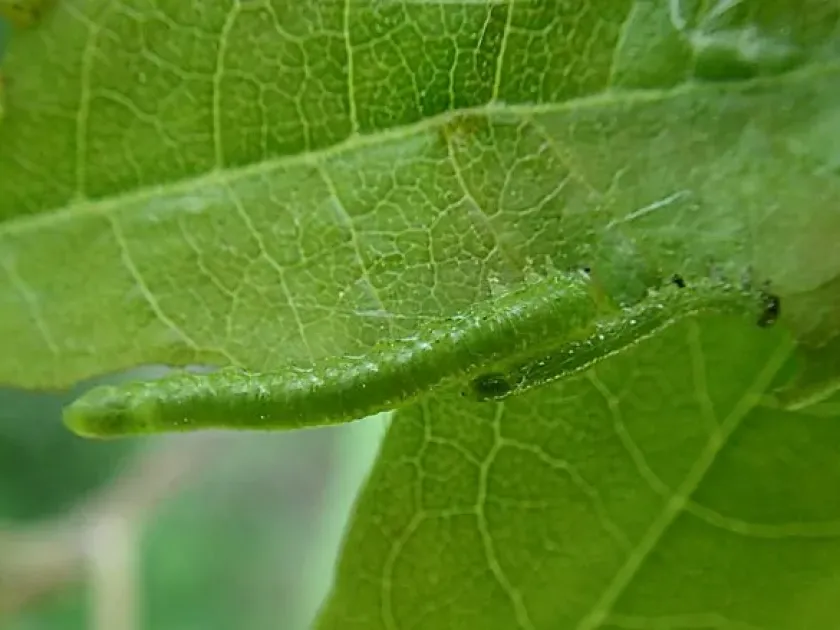
The azalea sawfly (Amauronematus azaleae) is a member of the Tenthredinidae family. While the adults are small, fly-like insects, the primary damage is caused by the larval stage, which typically resembles a caterpillar, often called a false caterpillar or slug.
The larvae are typically light green or yellowish-green, allowing them to blend perfectly with the foliage of their host plants. They feature a distinct dark head capsule and multiple pairs of prolegs, which help them cling firmly to the leaves while feeding.
The life cycle begins in spring, synchronized with the bud break of rhododendrons and azaleas. Adult females insert eggs into the leaf tissue, which hatch into larvae that immediately start feeding on the surrounding plant material.
Depending on the climatic conditions, these insects can complete several generations within a single growing season. Overwintering occurs in the soil, usually in a cocoon stage, allowing the pest to survive harsh winter conditions and emerge exactly when the host plant is most vulnerable.
Monitoring the adult emergence is a key component for agronomists, as it helps to predict the timing of the larval hatch and ensures that management strategies are implemented at the most effective time.
What it damages
The azalea sawfly is highly host-specific, primarily targeting plants of the Rhododendron genus, including both evergreen and deciduous azaleas. Heavy infestations can lead to significant aesthetic and physiological damage to these landscape plants.
Young larvae often feed in groups, starting by grazing the undersides of the leaves. As they mature, their feeding habits become more aggressive, leading to skeletonization where only the midrib and larger veins of the leaf remain.
Severe defoliation reduces the plant's ability to photosynthesize effectively, which stunts shoot growth and weakens the shrub significantly. This stress makes the plant susceptible to opportunistic fungal diseases and drought damage.
Because these plants are grown primarily for their aesthetic value, the loss of foliage is considered a major issue. Even if the plant survives, it may take several seasons to regain its vigor and typical growth habit after a severe sawfly attack.
Neglecting early signs of infestation often results in a rapid population buildup, which makes subsequent control measures more difficult and costly to implement effectively.
Signs of infestation
The earliest signs of azalea sawfly activity include small, circular or irregular holes appearing on the edges of young, newly expanded leaves. Close inspection of these leaves will often reveal the larvae resting on the underside.
Frass, or larval excrement, appears as small dark pellets on the leaves below the feeding sites. Observing these droppings on the foliage is often the most reliable way to confirm an infestation before extensive defoliation occurs.
When the population density is high, leaves may appear curled or distorted as the larvae consume the margins. In extreme cases, a plant may appear thin and sparse, with noticeable damage concentrated in the mid-to-lower canopy where larvae seek shade.
If you notice premature leaf drop during the summer months without clear evidence of fungal infections like leaf spot, it is highly likely that an active sawfly infestation is present within the shrub.
- Notched leaf edges.
- Dark granular frass on foliage.
- Skeletonized leaves.
- Distorted growth patterns in new shoots.
Control measures
Cultural control involves routine inspection of rhododendron and azalea shrubs during the spring. Early detection allows for physical removal of larvae, which is effective for small-scale infestations in home gardens.
Systemic insecticides are generally the most effective method for controlling sawfly larvae, as the chemical is absorbed into the plant's tissue, ensuring that larvae are exposed to the toxicant while feeding on any part of the leaf.
For environmentally conscious gardeners, biological products containing Bacillus thuringiensis are highly recommended. These target the larvae specifically and have minimal impact on beneficial insects or the surrounding ecosystem.
Soil management, such as gentle cultivation beneath the shrubs in late fall or early spring, can disrupt the pupal stage, exposing the cocoons to predators and environmental factors that reduce the emergence rate of adults.
Proper irrigation and mulching help maintain plant health, allowing the shrub to tolerate minor feeding and recover more quickly. A well-nourished plant is consistently better at resisting pests and recovering from potential damage.
Taxonomy
- Latin name
- Amauronematus azaleae
- Order
- Hymenoptera
- Family
- Tenthredinidae
- EPPO code
- AMNTAZ
Discussion
No discussions yet — be the first.