
Amauronematus
Amauronematus
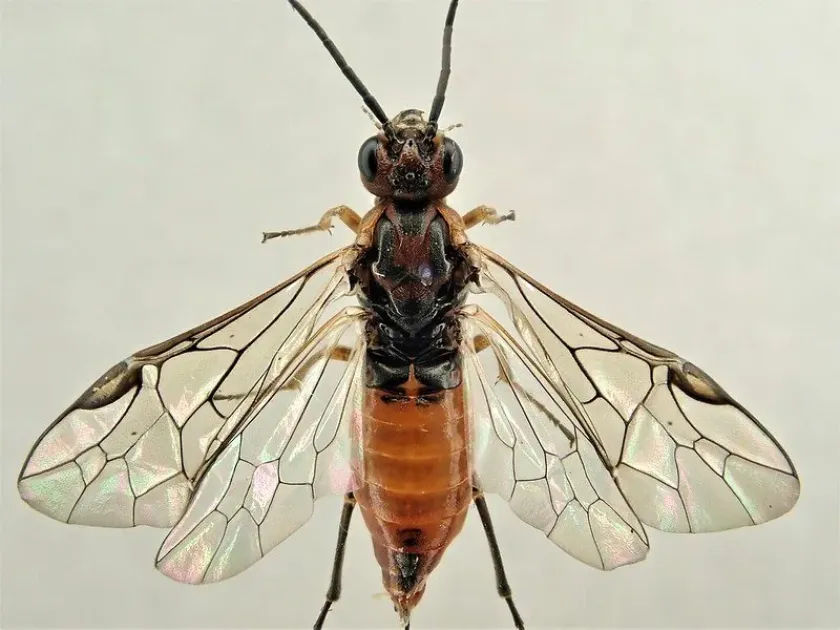
Description
How to identify
Amauronematus is a genus of insects belonging to the order Hymenoptera and the family Tenthredinidae (common sawflies). Adult insects are small and fly-like, characterized by specific structural features of the thorax and wings typical of the subfamily Nematinae.
The larvae, often referred to as false caterpillars, possess well-developed thoracic and abdominal legs, allowing them to move actively across foliage and grip onto the shoots of host plants. Their identification at the species level often requires microscopic examination of specific morphological traits.
The life cycle involves complete metamorphosis, progressing through egg, larval, pupal, and adult stages. The duration and specifics of these stages are highly dependent on the host plant species and the environmental temperature of the region.
The life cycle is closely synchronized with the phenology of the host plant. Most species overwinter in the prepupal stage within a cocoon, typically located in the soil or leaf litter beneath the canopy of the host tree.
Adult sawflies emerge in early spring during the budding period. After mating, the females use their ovipositors to insert eggs directly into the tissue of leaves or young, succulent shoots.
What it damages
The primary host plants for Amauronematus include various tree and shrub species, specifically willows (Salix) and alder (Alnus). Damage is most significant in tree nurseries, plantations, and landscaping projects featuring these species.
Larvae are voracious feeders and primarily consume the leaf blades. Under conditions of heavy infestation, they can completely skeletonize the foliage, leaving only the primary veins, which severely impacts the plant's aesthetic and physiological health.
The loss of photosynthetic leaf area weakens the tree, making it more susceptible to secondary pests and various pathogens. In extreme cases, severe defoliation can occur, hindering the plant's ability to store resources for the following season.
Young trees and nursery stock are the most vulnerable to the activity of this pest. Repeated annual damage can result in stunted growth, crown deformation, and, in severe cases, the death of young saplings.
Economic damage includes both the cost of pest control interventions and the loss of commercial value due to damaged and unsightly plant material.
When it appears
The flight of adult sawflies usually begins in early spring as temperatures rise, coinciding with the beginning of sap flow and the opening of leaf buds on host trees.
The larval feeding period generally occurs in late spring and early summer. This is the peak window of activity, as the larvae grow rapidly to reach their final instar before moving to the pupation site.
Depending on the climatic zone, some species may have one or two generations per year. Generations appearing later in the summer often cause less severe damage, as tree growth begins to slow down as autumn approaches.
At the end of the feeding period, the last generation of larvae enters the soil to spin cocoons and overwinter. This period of dormancy is crucial for the survival of the population during the colder months.
Monitoring the emergence of adults using yellow sticky traps is a recommended practice to determine the optimal timing for chemical or biological control applications, ensuring intervention before mass larval hatching.
Signs of infestation
The earliest visual sign of an Amauronematus infestation is the presence of small holes or notched edges on the leaves. As the larvae grow, these feeding patterns become more extensive and noticeable.
The presence of larvae on the underside of leaves or along the midrib is a clear indicator of infestation. When disturbed, many species of these larvae exhibit a characteristic curling behavior, often forming an "S" or spiral shape.
Excrement from the larvae, appearing as dark, granular pellets on the leaves or the ground beneath the canopy, is a significant indirect sign of pest activity and population density.
Heavily infested trees will show characteristic "lacy" foliage due to extensive skeletonization. This symptom serves as an urgent signal to inspect the plant and implement control measures before further damage occurs.
- Notched edges on leaf blades
- Skeletonized leaves with only veins remaining
- Larvae in a characteristic "spiral" posture on branches
- Presence of dark granular excrement on foliage
- Reduced growth and vigor of young shoots
Control measures
Preventive measures center on maintaining high standards of horticultural practices, as strong and healthy plants are more resilient against pest attacks. Proper spacing and avoiding overly dense canopy conditions can limit the spread.
For small-scale infestations in home gardens, manual removal of larvae is highly effective. Shaking the tree branches over a sheet or cloth and destroying the collected larvae is an environmentally safe control method.
Biological control can be enhanced by fostering a garden environment that attracts birds and beneficial insects, such as predatory bugs and parasitic wasps, which act as natural population suppressors of sawfly larvae.
When infestation exceeds the economic threshold, targeted application of contact or systemic insecticides, approved for use on ornamental or woody plants, may be necessary.
Applications are most effective when timed with the early larval instars, as they are highly susceptible to treatment at this stage. Always follow local regulations and label instructions regarding application frequency and safety.
Taxonomy
- Latin name
- Amauronematus
- Order
- Hymenoptera
- Family
- Tenthredinidae
- EPPO code
- AMNTSP
Discussion
No discussions yet — be the first.