
Alurnus humeralis
Alurnus humeralis
Description
How to identify
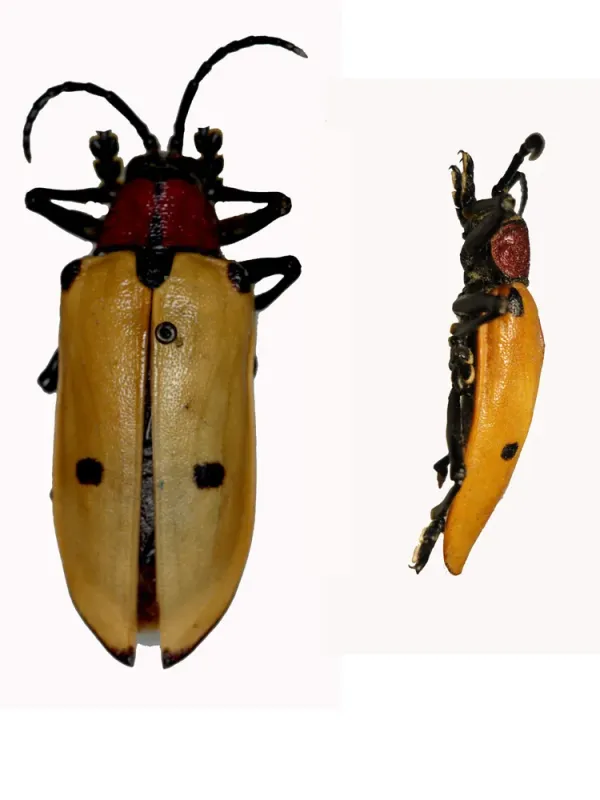
Alurnus humeralis is a prominent beetle species belonging to the Chrysomelidae family, specifically the subfamily Hispinae. These beetles are specialized feeders on various palm species and are well-recognized by their elongated body shape and striking color patterns.
The adults are typically large, measuring between 20 to 30 mm in length, and exhibit vibrant colorations, often featuring black, yellow, or red segments on the thorax and elytra. This warning coloration is common among species that feed on tough palm tissues.
Larvae of Alurnus humeralis are flattened and segmented, adapted to living on the surface of leaves where they consume plant tissue. They are often found covered in their own waste or secretions, providing a measure of protection against predators in the field.
The life cycle encompasses several distinct stages: egg, larva, pupa, and adult. Females deposit eggs directly onto the palm leaves, ensuring the offspring have immediate access to nutrients upon hatching, which facilitates rapid colonization.
As a highly specialized herbivore, this beetle has evolved to overcome the defensive structures of palm foliage, making it a significant challenge for growers and a persistent threat to palm health in its native range.
What it damages
The primary hosts of Alurnus humeralis include the coconut palm (Cocos nucifera) and the oil palm (Elaeis guineensis), both of which are economically vital crops. The beetle infests these trees at various stages of their development.
Adult beetles cause severe damage by feeding on the soft, developing tissues of emerging leaves, often targeting the apical bud. Damage to this critical growth point can severely stunt the palm or lead to the death of young seedlings.
Larval feeding activity manifests as distinct, long, narrow furrows in the leaf tissue. This damage interrupts the leaf's ability to photosynthesize, leading to a significant reduction in overall plant vigor and long-term yield potential.
Heavy infestations lead to the premature drying and browning of the canopy. The structural damage caused by the beetle's feeding can also create entry points for secondary fungal and bacterial pathogens, which may exacerbate the decline of the host tree.
The cumulative impact on plantations can be substantial, resulting in reduced nut production and the potential loss of entire stands if management protocols are not implemented effectively and promptly.
When it appears
The activity patterns of Alurnus humeralis are heavily influenced by local climatic conditions, with populations often peaking during periods of high rainfall which favor the growth of tender, new foliage.
In tropical environments, the pest can reproduce continuously throughout the year, with multiple overlapping generations. The duration of each developmental stage is highly dependent on ambient temperature and humidity.
Migration of adult beetles between palm trees typically occurs during crepuscular or nocturnal hours, making daytime visual detection difficult for plantation managers without dedicated monitoring programs.
Agronomists are encouraged to maintain frequent inspections during the active growth phases of the palms, as this is when the most significant damage occurs and when preventative measures are most impactful.
While drought conditions may temporarily limit population explosions, the species is resilient and can survive in the crown of the palms until conditions become favorable for another surge in activity.
Signs of infestation
Initial signs of infestation appear as long, narrow brown stripes on the leaflets of young palm leaves. These marks are caused by the adult beetles scraping the leaf surface to access the green tissues underneath.
The presence of larval excrement or "frass" and clearly visible feeding channels on the leaf blades are definitive indicators of an active infestation that requires immediate intervention.
Adult beetles are often observed resting on the underside of leaves or deep within the crown of the palm, where they remain relatively stationary during the day, camouflaged by their environment.
- Wilting and yellowing of young, partially unfurled fronds.
- Multiple small necrotic holes or ragged edges on the leaflets.
- Observable decline in the growth rate of young palm trees.
Advanced stages of infestation are characterized by a scorched appearance of the canopy, where the foliage becomes brittle, breaks easily in the wind, and significantly reduces the palm's decorative or productive value.
Control measures
Managing Alurnus humeralis requires an integrated pest management (IPM) approach that balances cultural, biological, and chemical control methods to ensure sustainable plantation productivity.
Cultural practices, such as the systematic removal and destruction of heavily infested palm leaves, are crucial for reducing the local reservoir of the pest and preventing the spread to healthy neighboring trees.
Biological control, utilizing natural enemies like parasitoid wasps and entomopathogenic fungi, serves as a cornerstone for long-term population suppression, especially in large-scale commercial plantations.
Chemical intervention is considered a last resort, reserved for cases where economic thresholds are exceeded. When necessary, systemic insecticides are preferred to maximize efficacy and minimize the impact on non-target species in the ecosystem.
Maintaining a healthy growing environment, including balanced fertilization and weed control, enhances the natural resistance of the palms, making them less susceptible to severe damage and supporting faster recovery from pest attacks.
Taxonomy
- Latin name
- Alurnus humeralis
- Order
- Coleoptera (beetles)
- Family
- Chrysomelidae
- EPPO code
- ALURHU
Discussion
No discussions yet — be the first.