
Altica woodsi
Altica woodsi
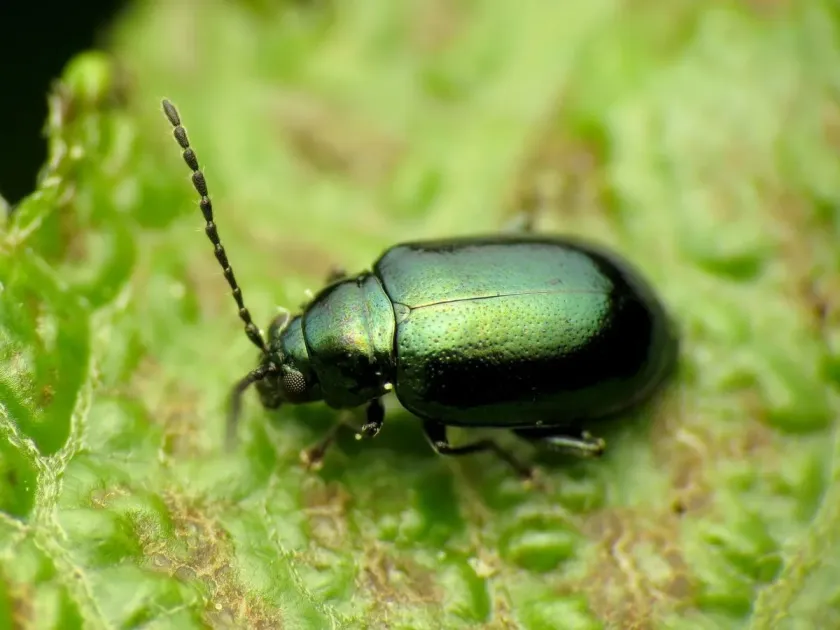
Description
How to identify
Altica woodsi, commonly known as a type of flea beetle, is a member of the Chrysomelidae family. These insects are characterized by their small, robust bodies and enlarged hind legs, which enable them to jump significant distances when disturbed.
Adult beetles typically feature a metallic coloration, ranging from dark blue to green, which serves as a protective camouflage against predators within dense foliage.
The larvae are small, soft-bodied, and often have a distinct chewing mouthpart structure adapted for feeding on leaves, stems, and buds of their host plants.
Identification often requires careful inspection, as these beetles are quite elusive and tend to hide on the underside of leaves or within the dense leaf litter near the soil surface.
Given their high mobility, monitoring for their presence often involves utilizing sticky traps or sweep netting techniques to determine the population density across a field.
What it damages
The primary damage caused by Altica woodsi includes the consumption of leaf tissues, which significantly reduces the photosynthetic efficiency of the host plants.
Adults create small, shot-hole patterns across leaves, whereas larvae are known to skeletonize the leaves by consuming all tissue except for the veins, leading to plant wilting.
Severe infestations on young seedlings can result in total crop failure, especially during early stages of plant development when the plant is most vulnerable to external stressors.
In addition to direct tissue loss, the feeding wounds create entry points for secondary pathogens, such as bacteria and fungi, which can exacerbate the health decline of the plant.
The cumulative impact of the pest population leads to significant economic losses, affecting both the overall biomass production and the commercial quality of the harvestable crop.
When it appears
The life cycle of Altica woodsi is highly dependent on environmental factors, particularly temperature and humidity, which dictate the emergence and activity of the beetles.
Overwintering adults emerge from the soil or plant debris in early spring when temperatures reach a threshold that initiates their search for food and mating sites.
Reproductive cycles occur throughout the summer months, with larvae typically appearing in synchrony with the growth phases of their host plants, allowing for rapid population growth.
As daylight hours decrease and temperatures begin to drop in autumn, the beetles transition into their diapause state, seeking sheltered locations for the winter months.
Understanding the synchronization between the pest's life cycle and the crop's development is crucial for applying timely management strategies and preventing severe infestations.
Signs of infestation
The most visible sign of an infestation is the appearance of numerous small, irregular holes or 'shotholes' on the leaves, which are indicative of adult feeding activity.
Leaf curling, yellowing, and eventual tissue necrosis are often observed when the larvae are present in high densities, as they strip the plant of its nutritional resources.
Tiny black fecal spots left on the surface of the leaves are a strong diagnostic indicator of a nearby flea beetle colony, even if the insects themselves are not immediately visible.
- Characteristic 'shot-hole' feeding damage on leaf surfaces.
- Leaf wilting despite adequate moisture levels.
- Sudden jumps of small dark insects when plants are agitated.
- Presence of skeletal leaf patterns where only major veins remain.
Regular field scouting, particularly during the early morning or late afternoon, is essential to detect these signs before the damage becomes irreversible for the crop.
Control measures
Effective control of Altica woodsi relies on a multifaceted Integrated Pest Management (IPM) approach that combines cultural, biological, and chemical methods.
Cultural practices, such as deep plowing in autumn, are highly effective as they disrupt the overwintering sites of the beetles and significantly reduce the emergence of the next generation.
Maintaining a clean field environment by removing weeds that serve as alternative hosts is vital for suppressing the population density during the initial spring buildup.
When necessary, insecticides may be used; however, they should be applied based on economic thresholds determined by regular scouting to minimize the impact on non-target species.
Biological control, including the use of parasitic wasps or entomopathogenic fungi, offers a sustainable alternative to chemical interventions, contributing to long-term population stability.
Taxonomy
- Latin name
- Altica woodsi
- Order
- Coleoptera (beetles)
- Family
- Chrysomelidae
- EPPO code
- HALTWO
Discussion
No discussions yet — be the first.