
Alissonotum
Alissonotum
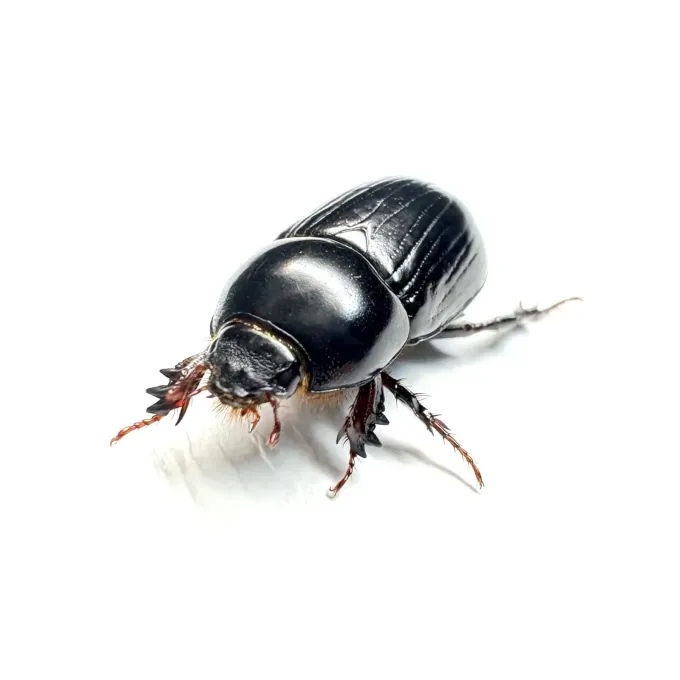
Description
How to identify
The genus Alissonotum belongs to the family Scarabaeidae. These beetles are characterized by a robust body, typical of the dynastine subfamily, adapted for burrowing in soil.
Adult beetles are generally glossy, ranging from dark brown to black in color. They feature heavily sclerotized bodies with specialized digging legs.
The larvae are classic scarab-type grubs, exhibiting a creamy white color and a distinct C-shaped body, with a well-developed head capsule and chewing mouthparts.
Identification to the species level often requires technical examination of the male genitalia and specific pronotal structures, as morphological variation is subtle.
These insects are primarily subterranean dwellers, and both life stages (larval and adult) are associated with the soil environment for the majority of their existence.
What it damages
The primary hosts for Alissonotum species are sugarcane and various grasses. They are recognized as significant pests in several tropical and subtropical agricultural regions.
Adult beetles can cause damage by feeding on the subterranean portions of young stalks, which may lead to stunted growth or the total collapse of seedlings.
Larval feeding is the most destructive phase. The grubs feed extensively on the roots, causing the plant to lose its ability to uptake water and nutrients effectively.
Heavy infestations of larvae can completely prune the root system, leading to lodging, yellowing of the foliage, and eventually the death of the plant.
Economic damage is substantial, as these pests often create patchy fields, significantly reducing the density of the crop and the total net yield.
When it appears
The life cycle of Alissonotum is highly synchronized with rainfall patterns and soil temperature, which trigger emergence and reproduction phases.
Adult emergence typically occurs at the onset of the rainy season. Moisture is critical for the beetles to leave their soil chambers and begin mating.
The larval stage remains in the soil for several months, feeding continuously as they progress through different larval instars before pupation.
Overwintering or survival during harsh dry seasons occurs within deeper soil profiles, where the insects remain inactive until conditions improve.
The development rate is highly dependent on ambient environmental conditions, allowing for rapid population explosions under favorable climatic periods.
Signs of infestation
An early indicator of an Alissonotum infestation is the sudden wilting or yellowing of plants in specific spots despite adequate soil moisture levels.
If affected plants are pulled, they often come out easily because the roots have been severed or heavily pruned by larval feeding activities.
Digging near the base of declining plants usually reveals the presence of C-shaped grubs deep within the root zone.
The emergence of adult beetles following rains can be detected by small, distinct exit holes scattered across the field surface.
Increased mortality in young crop patches is a hallmark sign that requires immediate inspection to confirm the presence of this specific scarabaeid pest.
Control measures
Soil-applied insecticides, often formulated as granules, are the most common chemical control strategy applied during planting to protect the root zone.
Cultural practices, such as deep plowing and tilling, help expose larvae to predators and environmental stress, significantly reducing their population density.
Light traps are effective for monitoring and controlling adult beetle populations by capturing them during their peak nocturnal flight periods.
Biological control through the use of entomopathogenic fungi or bacteria is an emerging area of integrated pest management for these subterranean scarabs.
- Implementing crop rotation cycles;
- Monitoring field emergence with sticky or light traps;
- Maintaining optimal soil health and field sanitation to discourage infestation.
Taxonomy
- Latin name
- Alissonotum
- Order
- Coleoptera (beetles)
- Family
- Scarabaeidae
- EPPO code
- ALISSP
Discussion
No discussions yet — be the first.