
Agonia
Agonia
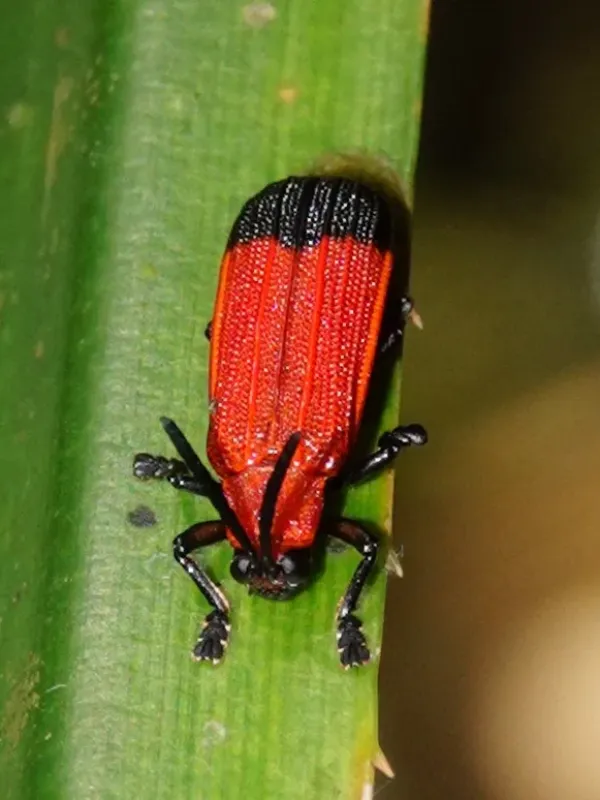
Description
How to identify
The genus Agonia belongs to the leaf beetle family (Chrysomelidae), subfamily Cassidinae. These insects are characterized by a specific body shape, often flattened and expanded at the edges, which allows them to fit tightly against the surface of a leaf.
Adult individuals are characterized by rather slow movement and a secretive lifestyle. The coloration of representatives of this genus may vary, but it is most often camouflaging, which makes it difficult to detect them during a visual inspection of plantings.
The life cycle includes complete metamorphosis: egg, larva, pupa, and imago. Eggs are usually laid in groups on the underside of the leaf blade, sometimes covered with protective secretions from the female.
Agonia larvae have a specialized structure, often equipped with outgrowths or setae that protect them from predators and adverse environmental conditions.
Pupae undergo their development stage directly on the host plant, attaching themselves to the leaves with the help of special structures, which ensures their safety during the metamorphosis period.
What it damages
The pest specializes in damaging a wide range of agricultural crops, including cereals and tropical plant species. The greatest damage is recorded in palm plantations and certain grain crops.
Adult beetles feed on the epidermis and parenchyma of the leaves, chewing out characteristic stripes or patches, which leads to a significant loss of photosynthetic area.
Larvae cause even more serious damage, often skeletonizing the leaves. The damage caused by them can cover large areas of the crown, weakening the general condition of the plant.
Heavy infestation leads to premature drying of foliage, reduced growth rates, and a sharp drop in crop yields, and in critical cases, to the death of young seedlings.
In addition to direct damage, damaged tissues become entry points for secondary infections, including fungal and bacterial diseases, which worsen the state of the agrocenosis.
When it appears
The activation of the pest depends directly on the temperature regime and humidity levels. In regions with a tropical climate, the development of Agonia can occur almost continuously throughout the year.
The mass emergence of adults and egg-laying are timed to coincide with periods of most intensive growth of host plants, when there is an abundance of succulent vegetative mass.
Temperature minimums significantly slow down all phases of pest development, forcing them into a state of diapause or reducing the overall fertility of the population.
Optimal conditions for pest reproduction often coincide with rainy seasons, when high humidity promotes the survival of larval stages.
Monitoring for the appearance of the first individuals should begin in advance, using pheromone traps or visual control methods at the early stages of vegetation.
Signs of infestation
The first sign of infestation is the appearance of characteristic light or brown stripes on the leaves, left during the feeding process of the beetles.
On the underside of the leaves, one can often find clusters of eggs covered with a protective substrate or traces of the activity of young larvae.
The presence of excrement on the leaf surface, which often accumulates around feeding sites, is an additional indicator of the pest's active behavior.
Wilting and yellowing of individual parts of the leaf, which subsequently die off, indicate a high density of the Agonia population on a specific plant.
- Damaged leaf edges.
- Presence of larvae in leaf folds.
- Discoloration of leaf blades.
- Reduction in plant turgor.
Control measures
Agrotechnical methods include regular cleaning of fields from weeds, which can act as an intermediate reservoir for the pest.
Biological control methods involve the use of entomophages—natural enemies of Agonia, which are capable of controlling population numbers under favorable conditions.
Chemical protection requires the use of systemic insecticides during periods of greatest pest vulnerability, which allows for effectively interrupting the reproduction cycle.
An important element is compliance with quarantine measures during the transport of planting material to prevent the spread of the pest to new territories.
An integrated pest management (IPM) system should combine monitoring, the use of resistant varieties, and targeted application of pesticides to minimize ecological impact.
Taxonomy
- Latin name
- Agonia
- Order
- Coleoptera (beetles)
- Family
- Chrysomelidae
- EPPO code
- AGOISP
Discussion
No discussions yet — be the first.