
Alligator weed flea beetle
Agasicles hygrophila
Description
How to identify
Agasicles hygrophila, commonly known as the alligator weed flea beetle, is a species of leaf beetle (Chrysomelidae) widely recognized for its role in the biological control of invasive aquatic plants.
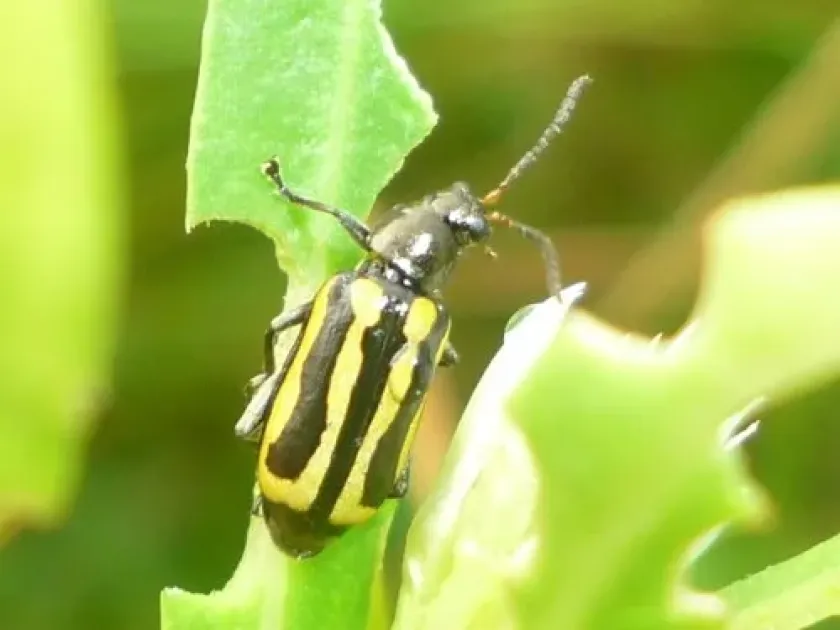
The adult beetle measures approximately 4–5 mm in length. Its body is oval, featuring a shiny black head and pronotum, with yellowish-brown elytra that have distinct black stripes, serving as a key diagnostic feature.
The larvae are small, worm-like, and typically cream-colored with dark spots. They undergo several instars during their development, which takes place almost entirely on their specific host plant.
Eggs are laid in clusters, usually on the underside of leaves, ensuring that the emerging larvae have immediate access to food sources upon hatching in the aquatic environment.
This species is globally renowned for its high host specificity, which makes it an ideal candidate for environmentally friendly weed management in various waterway systems.
What it damages
The primary host for Agasicles hygrophila is Alternanthera philoxeroides, or alligator weed, an invasive plant that causes significant disruption to drainage and irrigation networks.
Damage is inflicted by both adults and larvae. Adults feed on the leaf surface, while larvae burrow into the hollow stems of the plant, disrupting nutrient transport and causing the stems to collapse.
Severe infestations by these beetles can result in the total destruction of alligator weed mats, significantly reducing the density and spread of this problematic vegetation.
Because the beetle is highly host-specific, it rarely feeds on non-target plants, posing minimal risk to surrounding crops or native flora in the infested ecosystems.
The damage caused is considered highly beneficial in agricultural settings where alligator weed prevents proper water flow and damages infrastructure used for irrigation.
When it appears
The activity of Agasicles hygrophila is strictly regulated by temperature. Warm conditions favor rapid development, leading to multiple generations during the growing season.
Winter survival is typically achieved by adults entering diapause in protected sites near the edges of water bodies, hiding under debris or within soil layers until the arrival of spring.
Population surges usually correlate with the peak growth phase of the alligator weed. As the water temperature rises, the beetles emerge and begin the reproductive cycle.
In tropical and subtropical regions, the beetles may remain active throughout the year if the food supply is consistent and temperatures remain above their activity threshold.
Predicting the seasonal cycle is essential for researchers involved in biological control programs, as it helps optimize the timing for potential beetle reintroductions or population monitoring.
Control measures
Management of this beetle is rarely aimed at eradication, as it is a valued biocontrol agent. Efforts usually focus on augmenting its population to suppress invasive weeds.
In cases where the beetle population needs to be restricted, selective, low-impact insecticides are utilized to protect the aquatic environment from chemical contamination.
Monitoring programs are crucial for evaluating the beetle's efficiency in controlling alligator weed infestations. This involves regular sampling of plant patches for larval and adult presence.
Habitat management strategies include maintaining suitable environmental conditions for the beetles to thrive, including the presence of sufficient host plant material and protected overwintering sites.
Sustainable control involves balancing the needs of agricultural infrastructure with the ecological role of Agasicles hygrophila as a natural check on aquatic weed growth.
Taxonomy
- Latin name
- Agasicles hygrophila
- Order
- Coleoptera (beetles)
- Family
- Chrysomelidae
- EPPO code
- AGAIHY
Discussion
No discussions yet — be the first.