
Aegopsis bolboceridus
Aegopsis bolboceridus
Description
How to identify
Aegopsis bolboceridus is a notable species within the Scarabaeidae family, belonging to the Dynastinae subfamily. It is recognized as a pest primarily in South American agricultural systems, notably in Brazil.
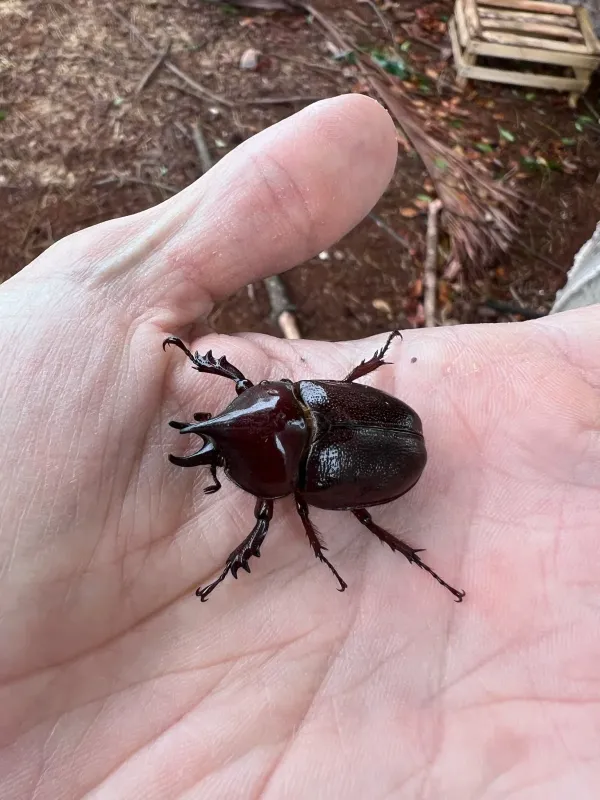
Adult beetles possess a robust, heavy body typical of rhinoceros beetles. Their color is usually dark brown or black with a polished, shiny chitinous surface that provides protection.
Sexual dimorphism is distinct; males often feature prominent cephalic or pronotal horns or tubercles, which are essential for territorial defense and mating competition.
The larvae are classic "white grubs," characterized by a C-shaped body, creamy-white color, and a hard, brown head capsule equipped with strong mandibles for cutting plant roots.
The entire life cycle occurs underground, where the larval stage dominates in terms of both duration and the severity of impact on agricultural crops.
What it damages
The primary damage is caused by the larval stage, which feeds voraciously on the root systems of crops, causing severe stunting, nutrient deficiencies, and often the death of the host plant.
This species is known to affect a variety of crops, including sugarcane and various cereals, where the underground stem base and lateral roots are primary targets for feeding.
Adult beetles may occasionally feed on soft plant tissues, but their role in economic crop loss is generally secondary to the damage caused by the subterranean larvae.
Large-scale infestations can lead to significant crop failure, resulting in gaps within fields that disrupt normal growth cycles and overall productivity.
The severity of the damage is correlated with soil moisture and the availability of organic matter, which influences the distribution and density of the larval population.
When it appears
The activity of adult beetles is highly seasonal, often triggered by the onset of rainy periods, which provide optimal conditions for emergence, flight, and reproduction.
Once mating occurs, females deposit eggs into the soil. The larvae emerge shortly thereafter, beginning their growth phase, which is when they consume large quantities of plant roots.
The larval stage may extend over several months, meaning the threat to crops is present throughout most of the growing season as the larvae migrate through the soil layers.
In regions with distinct seasons, the larvae typically undergo dormancy during colder or drier periods by moving deeper into the soil profile until favorable conditions return.
The highest risk of severe damage is often observed during the peak growth phase of the crop, when the nutritional requirements of the growing larvae are at their maximum.
Signs of infestation
An early indicator of infestation is the appearance of yellowing or wilting plants within a field, often occurring in irregular patches rather than uniformly.
Digging in the rhizosphere of affected plants usually reveals the presence of white grubs and clear evidence of roots being eaten or severed, preventing water uptake.
Secondary signs include the thinning of crop stands and the loss of overall field vigor, which becomes increasingly noticeable as the larval population grows.
In some cases, adult emergence holes can be found on the soil surface, providing a clue about the potential severity of the next generation's infestation.
The presence of larvae-related soil disturbance, such as tunneling or hollowed-out subterranean plant tissue, confirms the ongoing threat to the current crop.
Control measures
Integrated Pest Management (IPM) is essential for controlling this species, starting with deep tillage, which exposes larvae to predators and unfavorable environmental conditions.
Chemical control involving soil-applied insecticides remains a common practice, particularly at planting or during the active feeding stages of the larvae to protect root integrity.
Biological control agents, specifically entomopathogenic fungi and nematodes, offer a sustainable alternative that can effectively reduce population numbers without chemical residue.
Cultural practices such as rotating crops or managing field borders to minimize weed pressure help in disrupting the life cycle and limiting the habitat for egg-laying females.
- Deploy light traps to monitor adult flight and population density.
- Use systemic seed treatments to provide early-stage crop protection.
- Incorporate granular insecticides into the soil during critical growth periods.
- Apply biological microbial agents to suppress larval growth in the root zone.
Taxonomy
- Latin name
- Aegopsis bolboceridus
- Order
- Coleoptera (beetles)
- Family
- Scarabaeidae
- EPPO code
- AEGZBO
Discussion
No discussions yet — be the first.