
Adoxus obscurus
Adoxus obscurus
Description
How to identify
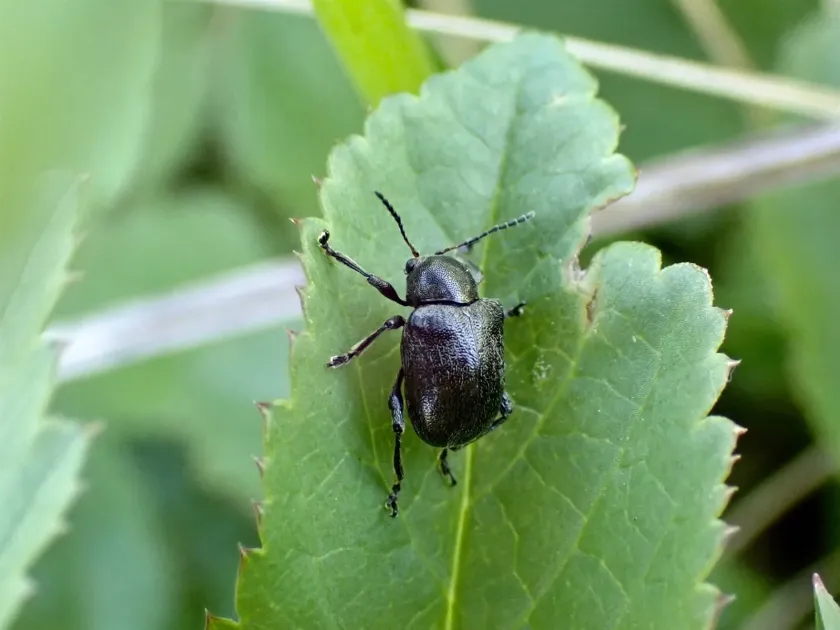
Adoxus obscurus, commonly known as the grape leaf beetle, is a small insect measuring about 5-6 mm in length. Its body is oval-shaped and typically colored black with a slight metallic or brownish sheen, which aids in camouflage against grapevines.
This pest belongs to the family Chrysomelidae within the order Coleoptera. The adult beetles possess a robust exoskeleton that provides protection against various environmental stressors and some contact-based pesticides.
The larvae are approximately 7-8 mm long and have a creamy or off-white appearance. They feature a distinct brown head and three pairs of thoracic legs, enabling them to move effectively through the soil environment.
The life cycle of the species involves complete metamorphosis, covering egg, larva, pupa, and adult stages. They typically overwinter as larvae in the soil, often nestled near the root system of the host plant.
A key identifying feature on the elytra of the adult beetle is the presence of fine longitudinal punctures arranged in rows. These beetles are generally nocturnal, preferring to hide in foliage or bark crevices during daylight hours.
What it damages
The grape leaf beetle causes damage at both larval and adult stages, though the focus of their feeding changes. The grapevine serves as the primary host, but other plants can also be affected.
Adult beetles feed on the aerial parts of the vine, primarily the leaves. They consume the leaf tissue, creating irregular, small holes or "windows" that, in cases of severe infestation, can lead to significant foliage loss.
The larvae are specialized root feeders. They reside in the soil and consume the fine rootlets of the vine, which disrupts the plant's ability to take up water and nutrients, resulting in stunted overall growth.
In addition to grapes, these beetles can be found on species within the Onagraceae family, such as fireweed. These wild host plants can act as reservoirs for the pest, sustaining populations even when vineyards are treated.
Young vineyards and nursery stocks are most vulnerable. Extensive root damage by larvae can lead to the death of new plantings or severely limit their vigor, resulting in long-term economic losses.
When it appears
The overwintered larvae become active in the soil during early spring, once temperatures rise sufficiently to trigger root growth. This is the period when they begin feeding on the grape roots.
Pupation typically takes place within the soil during May and early June, inside specially constructed earthen cells. This stage lasts for about two to three weeks before the emergence of adults.
The flight of adult beetles usually coincides with the mid-summer period, roughly June and July. During this time, they actively feed on foliage and initiate their reproductive cycle by laying eggs.
Egg-laying is typically performed near the base of the vine, in bark cracks, or on the underside of leaves. After an incubation period of approximately two weeks, the next generation of larvae hatches and moves into the soil.
The lifecycle is generally univoltine, meaning there is one generation per year. By late summer, the new larval generation moves deeper into the root zone to prepare for the upcoming winter.
Signs of infestation
The most visible sign of an Adoxus obscurus infestation is the presence of numerous small, irregular holes in the grape leaves. This "shot-hole" appearance is a classic symptom of adult beetle feeding.
General plant decline, including premature yellowing of leaves or wilting, can indicate significant larval damage to the root system. Such symptoms are often more pronounced during periods of drought.
Adults can be detected by inspecting the foliage, especially in the upper canopy. If disturbed, they often exhibit a defensive behavior, falling to the ground and remaining still to mimic death.
For root damage assessment, one might carefully excavate soil around the base of the vine. Finding the pale, leggy larvae in the root zone confirms the presence of the pest.
Reduced vigor of young vines during the growth season without clear signs of fungal or viral infection is a strong indicator that root-feeding pests, such as this beetle, may be present.
Control measures
Cultural control is a primary strategy. Regular soil cultivation and deep tilling around the base of the vines during the pupation period can physically destroy the pupae and larvae in the soil.
Weed management, particularly removing host plants like fireweed in the immediate vicinity of the vineyard, is essential to deprive the beetle of secondary food sources.
During the adult flight period, if infestation thresholds are reached, targeted insecticide applications are effective. These should be applied in the evening when beetles are most active on the foliage.
Biological control methods include the introduction of entomopathogenic nematodes into the soil. These microscopic organisms target the larval stage in the root zone and are effective in moist, well-aerated soils.
Continuous monitoring of the foliage throughout the early summer is critical. Detecting the first signs of leaf damage allows for localized treatment, preventing the population from expanding to the entire vineyard.
Taxonomy
- Latin name
- Adoxus obscurus
- Order
- Coleoptera (beetles)
- Family
- Chrysomelidae
- EPPO code
- ADOXOB
Discussion
No discussions yet — be the first.