
Adoryphorus couloni
Adoryphorus couloni
Description
How to identify
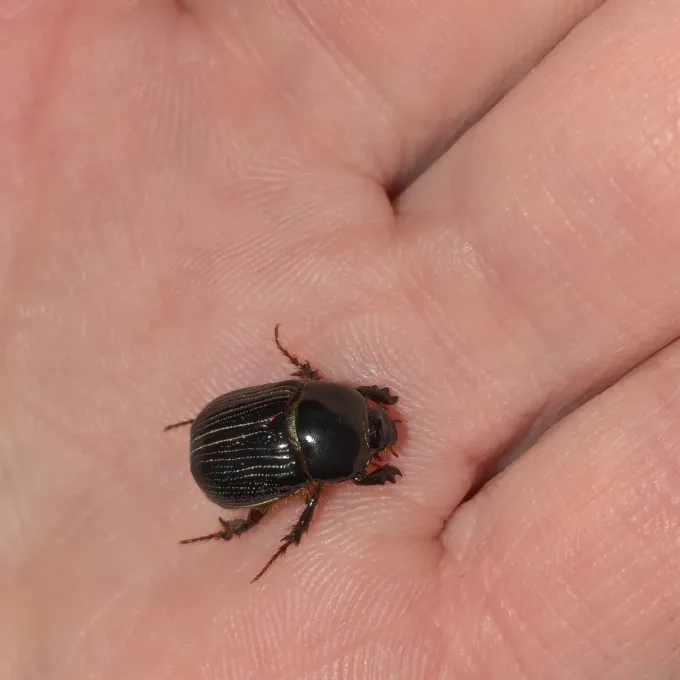
Adoryphorus couloni belongs to the family Scarabaeidae, order Coleoptera. Adult beetles are characterized by a compact, robust body, typically dark brown or black, reaching approximately 1.5 cm in length, common in the Dynastinae subfamily.
The larvae, known as grubs, are the primary damaging stage. They exhibit a classic C-shaped body with a creamy-white appearance and a distinct brown head capsule equipped with powerful mandibles for feeding on roots.
Identification is confirmed by examining the raster pattern on the ventral side of the final abdominal segment, which is diagnostic for distinguishing this species from other related soil-dwelling scarab larvae.
Adults are nocturnal and are often attracted to light, which makes light trapping a useful tool for both monitoring their presence and timing management interventions.
The species prefers habitats with stable soil moisture, making irrigated pastures or areas with high rainfall particularly susceptible to colonization by this beetle.
What it damages
The larvae cause significant damage by feeding on the root systems of grasses and cereal crops. They consume the fine roots first and eventually sever the primary roots near the soil surface.
This root destruction prevents the plant from absorbing necessary water and nutrients. Consequently, affected plants exhibit symptoms of severe water stress, followed by yellowing and eventual death.
In pastures, large-scale feeding often results in the destruction of the turf layer. This causes patches of dead vegetation that can be easily lifted or rolled back, leading to a loss of valuable forage.
Cereal crops are particularly vulnerable during the seedling stage. Heavy infestations can lead to substantial stand loss and may necessitate re-seeding the entire affected area.
In addition to direct feeding, the wounds caused to the root system facilitate the entry of soil-borne pathogens, which may lead to secondary infections and root rots.
When it appears
The lifecycle of Adoryphorus couloni is generally completed within one year. Adults emerge in spring or early summer to mate, after which females deposit eggs in the soil near suitable host plants.
Following egg hatch, the larvae undergo three distinct larval instars. They feed continuously throughout the summer and autumn, becoming increasingly destructive as they grow in size and appetite.
As soil temperatures drop in late autumn and winter, the larvae move deeper into the soil profile to overwinter in a state of reduced activity until the following spring.
In the spring, the larvae move back towards the upper soil layers to resume feeding before pupation. The pupal stage occurs in underground chambers, lasting until the emergence of the next generation of adults.
Environmental factors, such as soil moisture levels, significantly influence the speed of development and the overall survival rate of the larval population from one season to the next.
Signs of infestation
The first visual indicator of an infestation is the sudden wilting of patches of plants, which often mimics drought stress. Unlike drought, these patches do not recover despite adequate rainfall or irrigation.
Inspection of the root zone reveals the absence of fine roots. In cases of severe damage, the plant may have no roots at all, allowing it to be pulled out of the soil with very little resistance.
On pastures, the appearance of bare, brown patches that expand over time is a strong sign of grub activity. The soil in these areas may also feel loose or spongy underfoot.
Excavating the top 5-15 cm of soil in these affected areas usually exposes the C-shaped grubs. The density of these larvae determines the severity of the damage to the crop or turf.
In some cases, the presence of exit holes on the soil surface indicates that adults have successfully emerged from the soil after completing their development cycle.
Control measures
Cultural control is a primary management strategy. Deep plowing can help reduce larval populations by physically damaging them and exposing them to predators like birds and desiccating conditions on the surface.
Crop rotation is highly effective. Moving away from susceptible host plants for at least one or two seasons disrupts the lifecycle of the beetle by removing the required food source for the larvae.
Chemical control, when necessary, involves the application of soil-active insecticides during planting. These treatments are most effective when incorporated into the root zone where larvae are actively feeding.
Biological control options, such as the application of entomopathogenic fungi like *Metarhizium anisopliae*, can provide sustainable suppression of larval populations within the soil environment.
Ongoing monitoring of adult flight activity using light traps allows farmers to estimate future larval pressure and helps in making informed decisions about whether or when to apply protective treatments.
Taxonomy
- Latin name
- Adoryphorus couloni
- Order
- Coleoptera (beetles)
- Family
- Scarabaeidae
- EPPO code
- ADOYCL
Discussion
No discussions yet — be the first.