
Adoretus tenuimaculatus
Adoretus tenuimaculatus
Description
How to identify
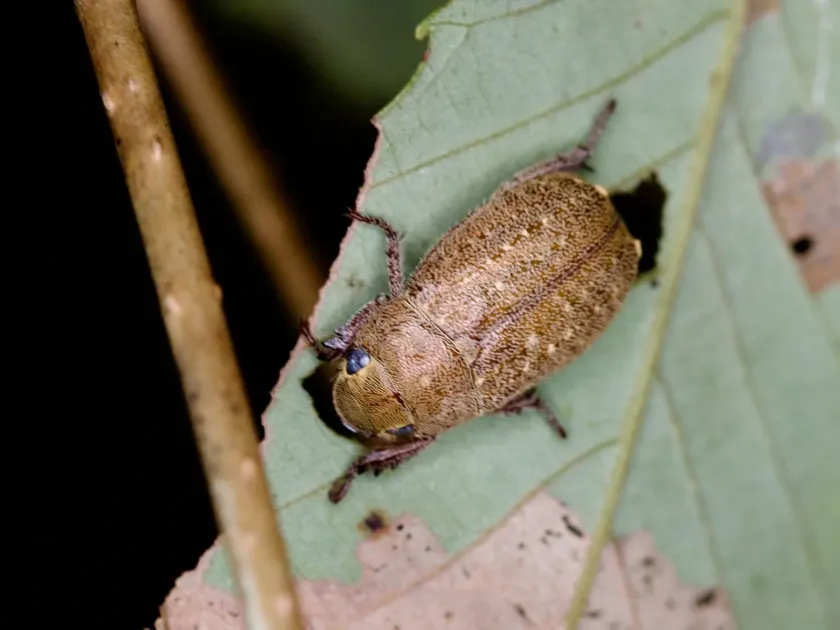
Adoretus tenuimaculatus is a beetle belonging to the family Scarabaeidae within the order Coleoptera. Adult beetles are characterized by an oval body shape, typically measuring 10-12 mm in length.
Their coloration ranges from light brown to yellowish-tan, often featuring subtle, sparse spots on the elytra, which inspired the specific epithet of the scientific name.
The larvae, which develop within the soil, exhibit the classic C-shaped form common to most scarab beetles, with a creamy-white body and well-developed thoracic legs.
The head of the larva is usually brown and heavily sclerotized, allowing them to burrow efficiently through soil to feed on organic matter and plant roots.
Adult beetles are nocturnal, spending the daylight hours hiding under debris or within the upper soil layers, which makes them difficult to observe during the day.
What it damages
Adult Adoretus beetles pose a significant threat to a wide range of agricultural crops, including fruit trees, grapevines, and various ornamental shrubs.
The primary form of damage is the skeletonization of leaves, where beetles consume the soft tissue while leaving the tougher leaf veins entirely intact.
In cases of high infestation, these beetles can cause severe defoliation of trees, leading to weakened plant health and a significant reduction in overall crop yields.
The larval stage of the beetle causes damage to plant roots, especially in young nursery stock, leading to stunted growth, reduced vigor, or the total death of the seedling.
Root damage caused by larvae also creates entry points for secondary soil-borne pathogens and fungi, which can further jeopardize the health of the plant.
When it appears
The active flight and feeding season for adult Adoretus tenuimaculatus typically occurs during the warmer months, spanning from late spring through mid-summer.
Peak activity is observed when nighttime temperatures remain consistently warm, which encourages the beetles to emerge from the soil to feed and mate.
The emergence of adults is highly dependent on environmental moisture levels, with activity often surging following rainfall events during the growing season.
Larval development occurs in the soil throughout the year, but their most intensive feeding on roots is usually observed during the spring regrowth period.
The life cycle can vary from one to several years, heavily influenced by regional climate conditions, soil type, and the availability of organic matter or root sources.
Signs of infestation
The most recognizable sign of an infestation is the presence of lacy or skeletonized leaves, where the leaf blade has been eaten away, leaving only the vein network.
During the night, adult beetles may be observed in large numbers around garden lights, or they can be spotted on foliage when using a flashlight for inspection.
Yellowing or sudden wilting of plants, particularly young seedlings that are otherwise watered properly, often indicates significant root damage caused by larvae.
Digging into the soil around the base of affected plants will often reveal the presence of C-shaped white larvae with brown heads.
Small piles of frass (insect excrement) beneath the tree canopy can serve as a secondary indicator that a population of beetles has been feeding on the leaves above.
Control measures
Managing Adoretus tenuimaculatus requires an integrated approach that targets both the adult beetle population in the canopy and the larval stages in the soil.
Cultural control practices, such as frequent tilling or plowing of the soil, are effective at bringing larvae to the surface where they perish from desiccation or bird predation.
Chemical control involving contact-stomach insecticides applied to the foliage during evening hours is recommended to manage the adult population during their peak feeding activity.
Soil-applied insecticides are beneficial when planting new crops in areas with a history of infestation to prevent larval damage to the developing root systems.
- Installation of light traps to monitor and reduce adult beetle populations.
- Application of biological control agents, such as entomopathogenic nematodes, to target larvae in the soil.
- Removal of plant debris and weeds around the base of trees to eliminate hiding spots.
- Monitoring soil moisture to avoid creating ideal conditions for larval survival.
Taxonomy
- Latin name
- Adoretus tenuimaculatus
- Order
- Coleoptera (beetles)
- Family
- Scarabaeidae
- EPPO code
- ADORTN
Discussion
No discussions yet — be the first.