
Adoretus nigrifrons
Adoretus nigrifrons
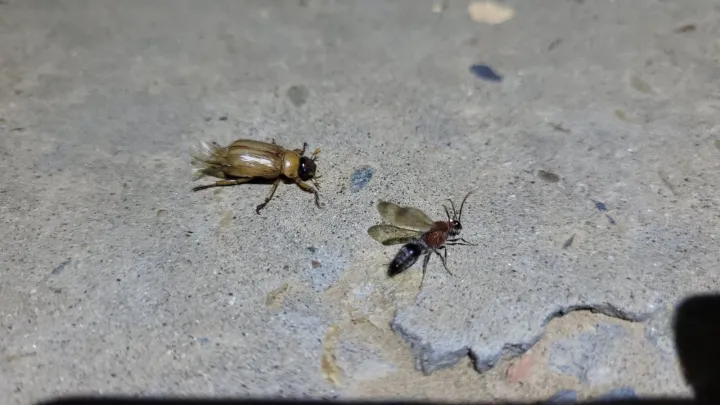
Description
How to identify
Adoretus nigrifrons is a species of beetle belonging to the Scarabaeidae family, within the order Coleoptera. Like many other scarab beetles, it is known for its distinct morphological features and specialized feeding habits.
The adult beetles are moderate in size, typically ranging from 10 to 12 mm in length. Their bodies are oval-shaped, and they are easily recognized by their bi-colored appearance: the elytra are light brown or yellowish-tan, while the head and pronotum are notably darker, appearing almost black.
The entire body is covered in fine, dense setae (hairs), which give the insect a matte appearance. The legs are robust and equipped with strong tarsal claws, adapted for grasping foliage while the beetle feeds.
The larvae are classic scarab-type grubs: C-shaped, creamy-white in color, with a well-developed sclerotized brown head capsule and three pairs of legs located on the thorax.
The life cycle involves complete metamorphosis, consisting of egg, larva, pupa, and adult stages. The adult stage is primarily responsible for the damage caused to the aerial parts of plants.
What it damages
This beetle is a polyphagous pest, meaning it feeds on a wide variety of plant species, including both agricultural crops and ornamental plants. Its broad host range makes it a significant threat in warmer climates.
Commonly affected plants include fruit trees such as apples and peaches, grapevines, roses, and various ornamental shrubs. The beetles primarily target the foliage, consuming the soft tissues of the leaves.
Feeding results in skeletonized leaves, where the soft parenchyma is consumed, leaving behind a network of primary and secondary veins. This process severely reduces the plant's photosynthetic capacity.
In addition to foliar damage, the larvae living in the soil may feed on roots and decaying organic matter, which can weaken younger plants and seedlings, especially when the pest population density is high.
Persistent feeding by a large population can lead to severe stress, stunted growth, and a significant reduction in fruit yield, making it an economically important pest in affected regions.
When it appears
The activity period for adult Adoretus nigrifrons begins during the late spring and reaches its peak during the summer months when nighttime temperatures are consistently high.
These beetles are nocturnal, spending the daylight hours concealed in the soil, under leaf litter, or in other shaded debris to protect themselves from desiccation and predators.
The life cycle is highly dependent on environmental conditions, particularly soil moisture, which is crucial for the survival of eggs and the development of the subterranean larval stages.
Pupation occurs in the soil, usually in a chamber constructed by the late-stage larva. Depending on the climate, the pupal stage occurs in late summer, and the resulting adults often remain in the soil until the following season.
Because they are nocturnal, they are rarely observed during daily field inspections, which can lead to an underestimation of their actual presence until significant damage becomes visible.
Signs of infestation
The most prominent sign of an infestation is the characteristic "lacy" or skeletonized appearance of the leaves. Since the beetles consume only the leaf blade tissues, the remaining vein structure looks like a fine net.
Daytime inspections may fail to reveal the insects themselves. To accurately diagnose the problem, researchers and farmers must conduct nocturnal inspections using a flashlight to spot the beetles on the foliage.
Another reliable sign is the presence of beetles in the soil or under debris at the base of the plant during the day. Digging gently into the soil around the drip line can reveal both adults and larvae.
Shaking the branches of suspected host plants at night often causes the beetles to drop to the ground, which is a simple and effective method for monitoring local populations.
Yellowing or premature leaf drop following the appearance of lace-like holes indicates that the infestation has reached a level requiring immediate management intervention.
Control measures
Effective management of Adoretus nigrifrons requires an integrated approach that targets both the soil-dwelling larvae and the nocturnal adults to keep populations below economic injury levels.
- Tilling the soil during the pupation period can physically destroy pupae and disrupt their development cycle.
- Using light traps at night is an effective way to attract and capture adult beetles, thereby reducing the breeding population.
- Applying contact-action insecticides during the evening hours when beetles are actively feeding on leaves.
- Manual collection by shaking branches over a collection cloth during the night and disposing of the beetles.
- Maintaining healthy plant vigor through proper irrigation and fertilization, which helps plants withstand and recover from light to moderate leaf loss.
For chemical control, evening applications are critical. Because the beetles emerge only at night, spraying during the day is largely ineffective and wastes resources.
Taxonomy
- Latin name
- Adoretus nigrifrons
- Order
- Coleoptera (beetles)
- Family
- Scarabaeidae
- EPPO code
- ADORNI
Discussion
No discussions yet — be the first.