
Gaschkevitch Leaf Beetle
Acrothinium gaschkevitchi
Description
How to identify
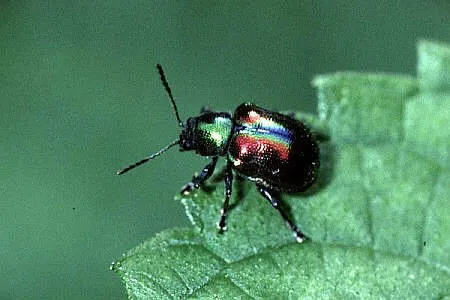
The Gaschkevitch leaf beetle (Acrothinium gaschkevitchi) belongs to the Chrysomelidae family, order Coleoptera. Adult beetles are characterized by a glossy, often metallic-colored carapace.
The body of the adult is oval and compact, which allows them to hide efficiently within the foliage of host plants. This is a common morphological feature among various species of this family.
The larvae of this species lead a secretive lifestyle, developing directly on the tissues of their host plants. They possess strong mandibles adapted for rapid consumption of plant matter.
The coloration may vary slightly between populations, but consistent morphological traits allow entomologists to identify the species accurately under microscopic examination.
These beetles are highly mobile, facilitating their rapid spread across fields during the growing season, especially when environmental conditions are optimal for their activity.
What it damages
The primary host plant for the Gaschkevitch leaf beetle is the grapevine. This insect causes significant damage to both wild and cultivated grape varieties in various regions.
Besides grapevines, the beetle can feed on other plants within the Vitaceae family. When food sources are scarce, the beetle may exhibit polyphagous behavior to survive.
Adult beetles prefer to feed on young leaves, creating characteristic holes or consuming the leaf edges. This activity significantly reduces the photosynthetic capacity of the plant.
Larvae also cause notable harm by feeding on leaves and young shoots, which negatively impacts the physiological state and overall vigor of the grapevine.
Economic impact includes decreased yield, lower sugar content in grapes, and general weakening of the vines over consecutive seasons due to repeated defoliation.
When it appears
Adult emergence following hibernation coincides with the start of sap flow and bud break in grapevines, making spring a critical period for crop protection.
Peak activity occurs in late spring and early summer, when weather conditions are most favorable for mating, egg-laying, and rapid population expansion.
The life cycle of this leaf beetle is closely tied to the phenological development of grapevines. Hot and dry weather patterns often lead to population spikes in vineyards.
In autumn, adults prepare for wintering by seeking shelter in leaf litter, debris, or the upper layers of soil, where they are protected from low temperatures.
The protection period for agronomists typically ranges from the appearance of the first leaves to the stage of cluster development, when the plant is most vulnerable.
Signs of infestation
The primary sign of infestation is the presence of characteristic leaf damage. Leaves will appear ragged, with numerous irregular holes throughout the leaf blade.
Visual inspection of the underside of leaves or shoots usually reveals the beetles themselves. They are often stationary and may drop to the ground when disturbed.
Signs of insect excrement on the leaf surface indicate active feeding by a colony of beetles, which helps in identifying the presence of the pest even before severe damage occurs.
Severe infestations lead to stunted growth of shoots and premature yellowing of leaves, which occurs due to the physiological stress caused by significant foliage loss.
Monitoring neighboring plants is essential upon the discovery of these symptoms to determine the extent of the infestation and plan targeted control measures.
Control measures
Managing the Gaschkevitch leaf beetle requires a comprehensive approach, combining agrotechnical practices with targeted chemical interventions when necessary.
Preventive measures include the thorough removal and destruction of fallen leaves and weed debris in the fall to eliminate overwintering sites for the beetles.
Application of systemic or contact insecticides is recommended when the pest population exceeds the economic damage threshold, alternating chemicals to avoid resistance.
- Manual collection of beetles in small-scale plantings.
- Use of biological control agents based on entomopathogens.
- Quarantine measures when introducing new planting material to the site.
Regular monitoring using pheromone or sticky traps is a critical step in the agronomist's strategy to detect the pest early and implement control measures in a timely manner.
Taxonomy
- Latin name
- Acrothinium gaschkevitchi
- Order
- Coleoptera (beetles)
- Family
- Chrysomelidae
- EPPO code
- ACRTGA
Discussion
No discussions yet — be the first.