
Maple gall midge
Acericecis ocellaris
Description
How to identify
The maple gall midge Acericecis ocellaris is a tiny dipteran insect belonging to the Cecidomyiidae family. Adult midges are extremely small, resembling tiny flies, and are rarely spotted by casual observers.
The life cycle of this pest is synchronized with the phenological development of its host plants. Females lay eggs directly into the young leaves of maple trees during the spring growth phase.
Upon hatching, the larvae begin to feed on the leaf tissue, which triggers the plant to form a gall. These galls serve as both a food source and a protective chamber for the developing larvae.
Inside the galls, the larvae are shielded from most external environmental stresses and natural predators, which allows them to complete their development securely.
Typically, this species completes one generation per year. After maturity, the larvae drop to the ground, where they pupate in the soil or leaf litter until the following spring.
What it damages
The primary host for this pest is the Norway maple Acer platanoides. The midges specifically target young, tender leaves that are essential for the tree's energy production in the early season.
Gall formation disrupts the leaf structure, effectively reducing the photosynthetic area. This can weaken the tree, especially if the infestation is heavy and occurs year after year.
While the midge is rarely lethal to healthy mature trees, the cosmetic damage can be severe. This is particularly problematic for landscaping, public parks, and ornamental street trees.
Young nursery stock is most vulnerable, as significant leaf deformation can stunt growth and hinder the overall vigor of the sapling, making it less resilient to harsh winters.
The presence of galls can also weaken the tree's overall immune system, potentially making it more susceptible to opportunistic secondary pathogens or environmental stress.
Signs of infestation
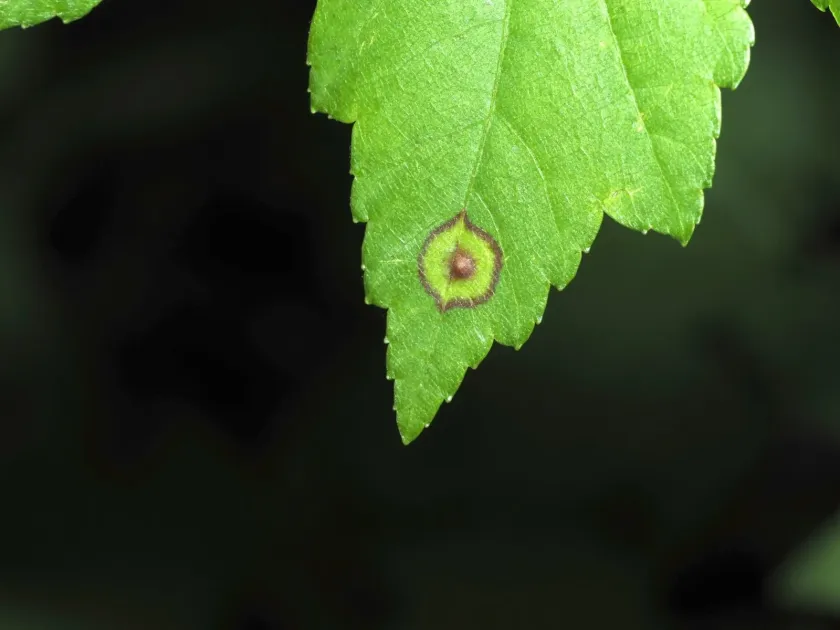
The most distinctive sign of a maple gall midge infestation is the appearance of eye-like spots on the leaves. These spots are typically yellowish-green with a pronounced red or purple border.
The center of each spot often features a small bulge or depression, which houses the larval midge. These spots are highly regular in shape, distinguishing them from common fungal leaf spots.
If the infestation level is high, the tree may show signs of premature yellowing and leaf drop. This can cause the tree to appear sparse and unhealthy during the peak summer months.
Signs of the midge appear in late spring to early summer. Close inspection of the underside of the leaves usually reveals the bumps corresponding to the galls on the upper surface.
The uniform, patterned distribution of these spots across the canopy is a clear indicator that the damage is caused by gall-forming insects rather than a random pathogen.
Control measures
The most effective cultural control method is the thorough raking and disposal of fallen leaves in autumn. Since the insects overwinter in the litter or soil, this significantly reduces the population for the next season.
Chemical control can be difficult because the larvae are protected once the galls are formed. Insecticide applications must be timed precisely during the adult egg-laying period in the spring.
Cultivating the soil around the base of the tree in late summer or autumn can help expose pupating insects to environmental conditions and natural enemies, reducing survival rates.
Maintaining tree vitality through appropriate watering and fertilization programs helps the plant better tolerate the impact of leaf damage and promotes faster recovery.
- Raking and destroying fallen leaves during the autumn.
- Targeted insecticide sprays applied during bud break.
- Cultivating the soil beneath the tree canopy.
- Monitoring leaf development in the early spring.
- Ensuring proper tree nutrition and hydration.
Taxonomy
- Latin name
- Acericecis ocellaris
- Order
- Diptera (flies)
- Family
- Cecidomyiidae
- EPPO code
- CECIOC
Discussion
No discussions yet — be the first.