
Acanalonia conica
Acanalonia conica
Description
How to identify
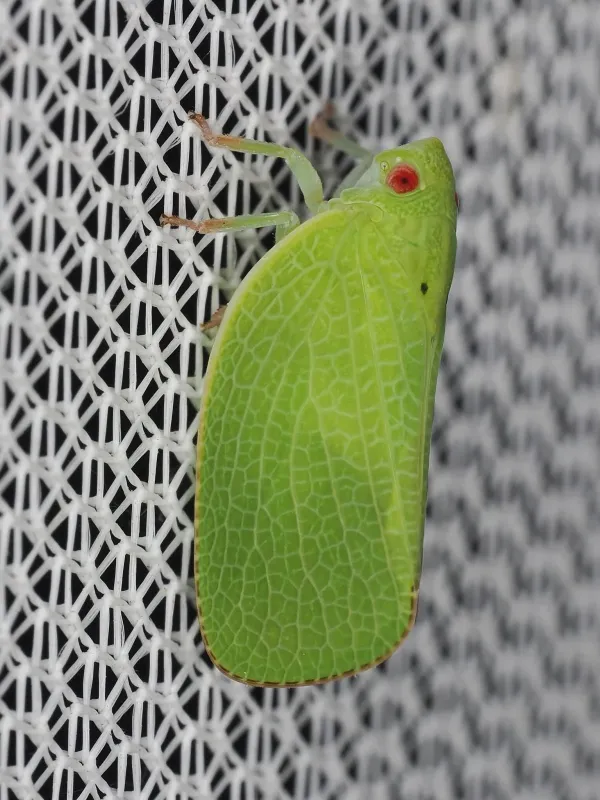
Acanalonia conica, commonly known as the green coneheaded planthopper, belongs to the order Hemiptera and the family Acanaloniidae. This insect is easily recognized by its distinct triangular, wedge-shaped appearance.
Adult insects are approximately 8–10 mm long and possess a bright green color, which acts as effective camouflage against green foliage. Their wings are held in a tent-like position over the body, typically featuring a pale edge.
The nymphs are easily identified by the presence of white, cotton-like wax filaments. They use this waxy secretion to cover their bodies, providing protection from natural predators and environmental stressors during their early development.
While adults are relatively stationary, they are quite agile and will jump suddenly when disturbed. They prefer to dwell on the undersides of leaves or within dense canopy growth, making them harder to spot during brief inspections.
The name "conica" is derived from a pronounced conical protrusion on the pronotum. This unique physical characteristic serves as a reliable marker for identification, distinguishing it from other leafhopper species in the same habitats.
What it damages
Acanalonia conica is a polyphagous pest, meaning it feeds on a diverse range of host plants. It is frequently reported as a pest in vineyards, fruit orchards (including apple and pear trees), and various ornamental shrubs.
Both nymphs and adults cause damage by using their piercing-sucking mouthparts to feed on plant sap. They primarily target young, succulent shoots, leaf petioles, and the soft tissues of developing foliage.
Continuous feeding by large populations can lead to significant plant stress, stunted growth, and reduced overall vigor. Infected plants often show signs of diminished vitality and decreased fruit yield over time.
Furthermore, the insects excrete a sugary substance known as honeydew. This substance promotes the growth of sooty mold, a black fungus that covers leaves, restricts photosynthesis, and creates an unsightly appearance.
In commercial vineyards, severe infestations can lead to early defoliation. This weakens the vine, hinders the ripening of woody tissues, and makes the plant more susceptible to cold damage and secondary infections.
When it appears
The life cycle of Acanalonia conica is strictly seasonal. The species overwinters in the egg stage, with females inserting eggs into the bark of trees or the tissues of perennial plant stems during the late autumn.
Nymphs emerge in the spring as temperatures begin to rise. This stage typically aligns with the appearance of new growth, providing the insects with an abundant source of nutrients for their development through the early summer.
Adult populations peak during the mid-summer months, typically around July. This is the period when their activity is most noticeable and when damage to host plants can escalate rapidly if left unchecked.
Generally, this species completes one generation per year in temperate climates. After reaching maturity and mating, females spend the end of the season seeking suitable locations for egg-laying to ensure the survival of the next generation.
Agricultural monitoring programs should focus on late spring and early summer. Identifying the presence of nymphs early allows for effective management before the adult population reaches damaging levels.
Signs of infestation
The primary sign of an infestation is the appearance of white, fluffy wax deposits on stems and leaf nodes. This material is produced by nymphs and is a reliable indicator that the pest is actively feeding.
Visible damage includes the curling or distortion of young leaves, which may turn pale or yellow (chlorotic) due to the removal of sap. Heavily infested plants may also show signs of stunted terminal shoot growth.
The presence of sticky honeydew on foliage, often accompanied by black sooty mold, is a classic sign of a planthopper infestation. This sticky residue often attracts ants, which can be an indirect clue to the presence of the pest.
When disturbed, the insects will scatter rapidly, often jumping. Shaking an infested branch is an easy field technique to confirm the presence of adult planthoppers within the canopy.
- White cotton-like wax filaments on plant stems.
- Curled, yellowing, or stunted new leaf growth.
- Sticky honeydew residue on leaf surfaces.
- Black sooty mold growth on leaves and stems.
- Sudden jumping activity when plant parts are shaken.
Control measures
Managing Acanalonia conica requires an integrated approach. Pruning and removing infested shoots during the dormant season can significantly reduce the overwintering egg population.
Maintaining proper plant health and avoiding overly dense canopy growth can make host plants less attractive to the insects. Regular weed management in the understory also helps reduce potential refuges for the pest.
When chemical intervention is necessary, insecticides targeting the nymphal stage are most effective. Systemic insecticides can provide long-lasting control, but they should be used judiciously to protect beneficial insects and pollinators.
Biological control plays a crucial role in maintaining ecosystem balance. Encouraging the presence of natural enemies, such as parasitic wasps and predatory bugs, can help regulate planthopper numbers naturally without heavy pesticide reliance.
Late-season field sanitation is vital. Removing plant debris and clearing dead bark can destroy the egg clusters, effectively disrupting the life cycle and preventing a resurgence of the population in the following year.
Taxonomy
- Latin name
- Acanalonia conica
- Order
- Hemiptera (bugs, aphids, leafhoppers)
- Family
- Acanaloniidae
- EPPO code
- ACNLCO
Discussion
No discussions yet — be the first.