
Acanalonia
Acanalonia
Description
How to identify
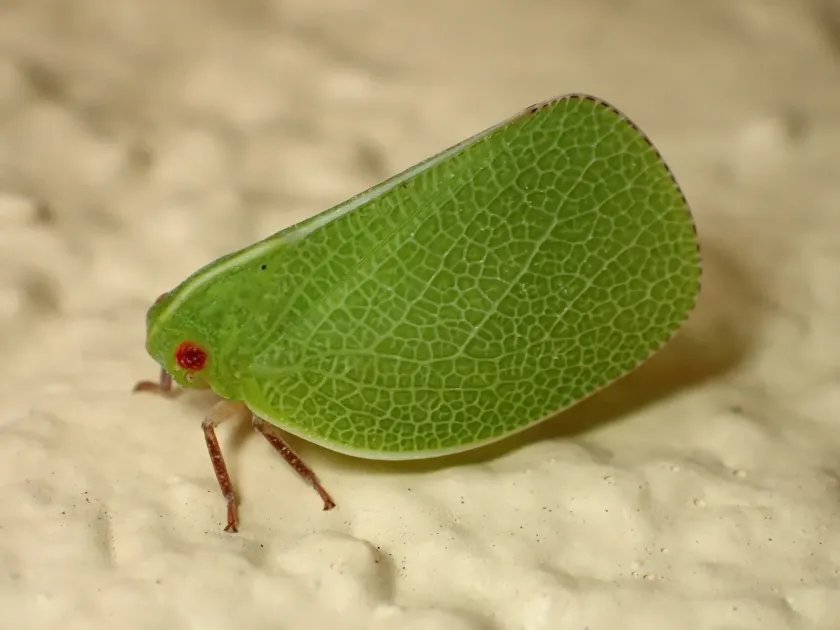
Acanalonia is a genus of insects belonging to the order Hemiptera and the family Acanaloniidae. These insects are characterized by their unique, tent-like wing posture when at rest.
Adults typically exhibit a green or yellowish-green coloration, providing excellent camouflage against leaves. While they resemble small leafhoppers, their body structure is notably broader and more flattened.
Nymphs of Acanalonia are often covered in waxy secretions or filaments, which serve as a protective barrier against predators and adverse environmental conditions. They are relatively sedentary during their early development stages.
The insect possesses a piercing-sucking mouthpart specifically adapted for feeding on plant phloem. They are primarily found in temperate and warm climates, thriving in areas with dense vegetation.
Their life cycle includes egg, five nymphal instars, and the adult stage. The species typically overwinters in the egg stage, which are laid inside plant tissues or bark.
What it damages
Acanalonia is a polyphagous insect, meaning it feeds on a wide range of host plants. Common targets include woody ornamentals, fruit trees, and grapevines.
The host range also extends to numerous herbaceous perennials, vegetable crops, and weeds. Both nymphs and adults cause damage by extracting essential plant fluids.
Feeding on young shoots and leaves during the active growth period significantly weakens the plant. This loss of vitality leads to reduced vigor and diminished harvest yields.
Beyond direct feeding damage, Acanalonia can act as a vector for various plant diseases, including viruses and phytoplasmas. Feeding punctures also serve as entry points for fungal pathogens.
Mass infestations can result in leaf curling, yellowing, and premature senescence. In fruit-bearing plants, this may negatively affect fruit development and wood maturation before winter.
When it appears
Nymphs emerge from overwintering eggs in the spring, coinciding with the beginning of active sap flow. Their presence becomes more noticeable as temperatures increase.
Adult activity and peak feeding usually occur during mid-summer, specifically in July. During this timeframe, the insects reproduce rapidly, often leading to increased pest density.
The number of generations per season varies based on regional climate, with some areas supporting multiple life cycles. As autumn approaches, females deposit eggs in protected plant sites for the winter.
Hot and dry summer conditions are particularly favorable for Acanalonia population growth. During these periods, the rate of infestation can escalate quickly across garden plots.
Monitoring should commence as soon as buds break in the spring. Inspectors should focus on the underside of leaves and stems to detect early-stage nymphs before they become adults.
Signs of infestation
The presence of white, waxy, cotton-like secretions on stems and leaf petioles is a primary indicator of Acanalonia infestation. These secretions are produced by nymphs during feeding.
Chlorotic spots on leaves often appear at feeding sites where the insect has pierced the tissue. Over time, these spots can expand and lead to necrotic patches.
Deformed and curled leaves at the shoot tips are common symptoms of heavy feeding. The plant may appear stunted or generally unhealthy despite regular irrigation.
Honeydew excreted by the insects promotes the growth of sooty mold, which appears as a black, dusty layer on the foliage. This layer interferes with light absorption and photosynthesis.
A sudden jump or flight of small, green insects when shaking plant foliage is a definitive sign of an active Acanalonia presence in the area.
Control measures
Chemical control involves the use of systemic insecticides that translocate within the plant tissues. Applications are most effective when targeted at early-instar nymphs.
Cultural practices, such as pruning heavily infested branches and maintaining clean surroundings by removing weeds, are essential for limiting the pest's host range.
Biological control methods include encouraging natural enemies such as predatory bugs, lady beetles, and spiders, which naturally suppress Acanalonia populations.
Contact-based treatments, including horticultural oils or insecticidal soaps, are effective at suffocating nymphs without leaving toxic residues in the environment.
- Regular monitoring of leaf undersides for wax production.
- Utilizing yellow sticky traps to capture adults and monitor populations.
- Providing optimal plant nutrition to enhance natural resistance against pests.
- Applying fungal-based bio-insecticides in high-humidity conditions to infect nymphs.
Taxonomy
- Latin name
- Acanalonia
- Order
- Hemiptera (bugs, aphids, leafhoppers)
- Family
- Acanaloniidae
- EPPO code
- ACNLSP
Discussion
No discussions yet — be the first.