
Acanalonia bivittata
Acanalonia bivittata
Description
How to identify
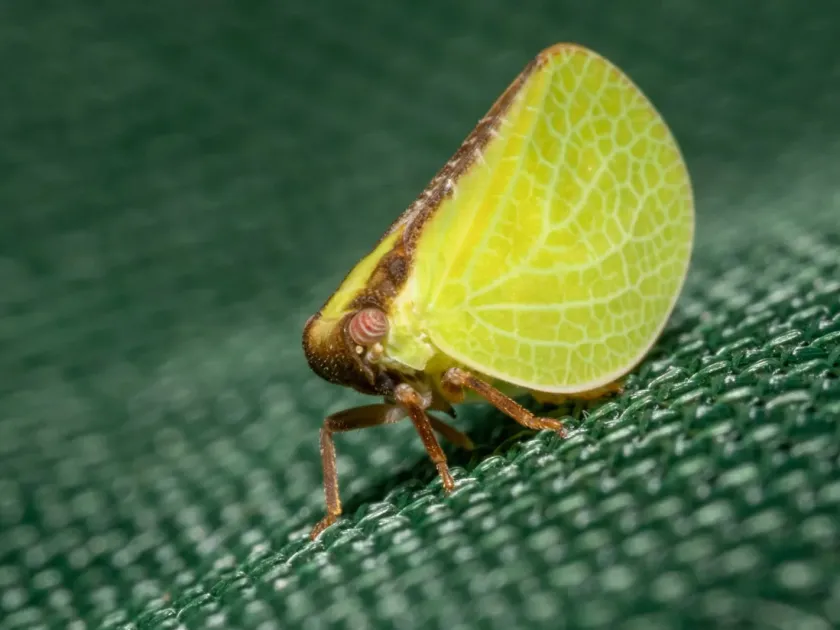
Acanalonia bivittata, commonly known as the two-striped planthopper, is an insect belonging to the order Hemiptera and the family Acanaloniidae.
Adults of this species measure approximately 8–10 mm in length and possess a characteristic triangular body shape, with wings folded closely along the sides.
The name comes from two distinct reddish or brownish stripes that run longitudinally along the dorsal side of the insect's body, serving as a key identification mark.
Nymphs are smaller and wingless versions of the adults, often covered in white, waxy filaments that serve as a defense mechanism against potential predators.
They are primarily found in North America and thrive in varied environments, preferring lush vegetation where they can feed and reproduce effectively.
What it damages
The two-striped planthopper is a generalist feeder (polyphagous), capable of attacking a wide variety of woody plants, shrubs, and herbaceous crops.
Common hosts include ornamental plants, berry bushes, fruit trees, and various garden vegetables that provide nutrient-rich sap during the growing season.
By using their piercing-sucking mouthparts, these insects drain the plant's vital fluids, which can stunt the growth of young shoots and stems.
Significant infestations can lead to a decline in plant vigor, reduced aesthetic value of ornamental plants, and potential yield loss in agricultural settings.
The damage is particularly problematic in nursery environments where consistent plant appearance and health are essential for commercial quality.
When it appears
The life cycle of Acanalonia bivittata typically involves one or two generations per year, depending on the local climate and temperature gradients.
The insect overwinters in the egg stage, with females laying eggs under the bark of twigs or within the tissues of stems during the late summer and autumn.
As temperatures rise in the spring, the eggs hatch, and nymphs begin to feed on the underside of foliage near the site of the overwintering egg mass.
Adults emerge during mid-summer, actively moving between host plants to feed and lay eggs for the next generation of the following season.
Monitoring should be most intensive during the peak summer months, as this is when the insect populations reach their maximum size and mobility.
Signs of infestation
The primary sign of infestation is the presence of adult insects or nymphs on the undersides of leaves, often congregating near the main veins.
Feeding activities produce honeydew, a sugary excretion that often attracts ants and fosters the growth of sooty mold, which can turn leaves black.
Leaf yellowing, curling, and premature leaf drop are common symptoms indicating that the plant is struggling due to significant sap loss.
White, waxy, thread-like residues left on stems and leaves are a tell-tale sign of nymphal activity and indicate that the pest has established a foothold.
Gardeners should also look for distorted or stunted shoot growth, which is a frequent result of concentrated feeding on the apical parts of a plant.
Control measures
Effective management of the two-striped planthopper requires a combination of physical monitoring, cultural practices, and chemical intervention.
- Regular inspection of host plants to identify and remove early-season egg masses on twigs.
- Maintaining healthy garden conditions to promote natural predators like lady beetles and predatory bugs.
- Applying insecticidal soaps or horticultural oils during the nymph stage to minimize population growth.
- Using systemic or contact insecticides selectively when infestations threaten the overall health of the garden.
- Keeping the area around susceptible crops free of excessive weeds that could act as alternate hosts.
Taxonomy
- Latin name
- Acanalonia bivittata
- Order
- Hemiptera (bugs, aphids, leafhoppers)
- Family
- Acanaloniidae
- EPPO code
- ACNLBI
Discussion
No discussions yet — be the first.