
Abida
Abida
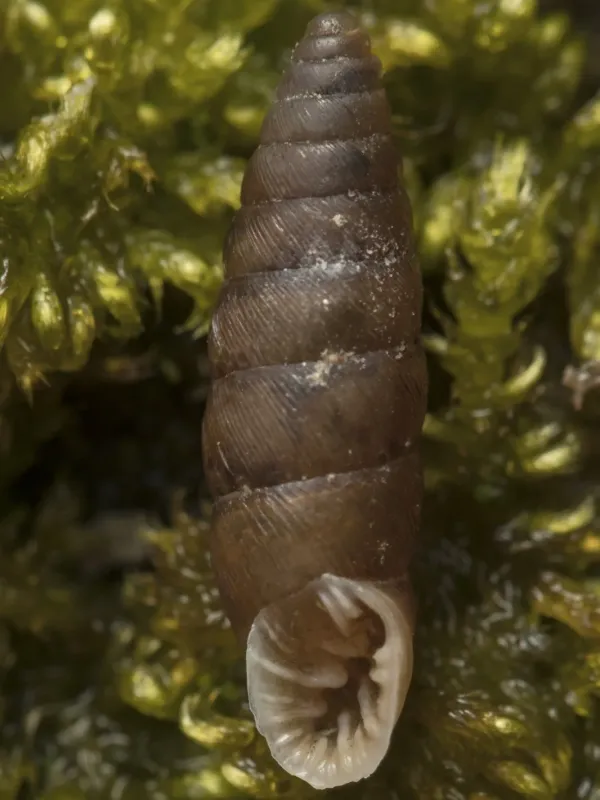
Description
How to identify
Abida is a genus of land gastropod mollusks belonging to the family Chondrinidae. They are typically small land snails characterized by their elongated, cylindrical, or spindle-shaped shells.
The shells of adult specimens usually reach several millimeters in length and feature a brownish or horn-like color. The aperture of the shell often contains tooth-like projections, which serves as a crucial taxonomic feature for identifying specific species within the genus.
These mollusks prefer moist and shaded environments, frequently found on limestone substrates, in rock crevices, and within dense vegetation covers in domestic gardens.
The biology of these mollusks is closely tied to environmental humidity levels. During dry periods, they can enter a state of estivation, attaching themselves to stones or plant stems to wait out unfavorable conditions.
Reproduction occurs during the warmer months; being hermaphrodites, these mollusks can rapidly increase their population size when conditions are favorable and moisture is sufficient.
What it damages
Abida primarily feeds on decaying organic matter, lichens, and algae, but under conditions of high population density, they may switch to feeding on the young shoots of cultivated plants.
The most significant damage is observed in nurseries and ornamental gardens, where they can damage young seedlings, the leaves of perennial flowers, and vegetable crops growing close to the soil.
Mechanical damage appears as characteristic irregular holes on leaf blades, which expand over time, reducing the aesthetic appeal and photosynthesis rate of the affected plant.
The damage also includes the contamination of leaf and fruit surfaces with excrement, creating a conducive environment for the development of secondary fungal and bacterial infections.
They pose a particular threat to seedlings in greenhouses, as in closed-ground conditions with high humidity, they are capable of destroying young plantings within a matter of days.
Signs of infestation
The primary sign of infestation is the presence of typical dried slime trails left by the mollusks as they crawl over plant leaves and stems during the night or early morning.
The pests can be detected directly on the underside of leaves, in the root zone, or under plant debris where they hide from direct sunlight during the daytime.
Irregularly shaped damage to the edges or centers of leaf blades indicates an active feeding phase, often accompanied by the deformation of young developing shoots.
In the early morning hours, one might notice clusters of individuals in areas with high moisture, such as under mulch, garden tools, or near border stones.
The presence of empty shells on the soil surface or on leaves after rain is a clear indicator that the mollusk population is actively inhabiting the garden area.
Control measures
The primary control measure is the agrotechnical approach: creating conditions that prevent excess moisture accumulation and regularly clearing away plant debris that serves as shelter.
Effective protection methods include installing physical barriers such as copper-impregnated tapes or spreading gravel around plants that are sensitive to pest damage.
To reduce the population, specialized traps can be used, such as containers filled with beer or fermented juice buried level with the soil, which attract and trap the mollusks.
Chemical control methods involve using products based on iron phosphate or metaldehyde, which are formulated as granules and applied in areas where the pests congregate.
- Regular weeding to reduce cover.
- Ensuring proper ventilation in greenhouses.
- Prompt disposal of garden waste and fallen leaves.
- Using mulching materials that hinder mollusk movement.
Taxonomy
- Latin name
- Abida
- Order
- Molluscs
- Family
- Chondrinidae
- EPPO code
- ABIDSP
Discussion
No discussions yet — be the first.