
Root-knot nematode
Meloidogyne incognita
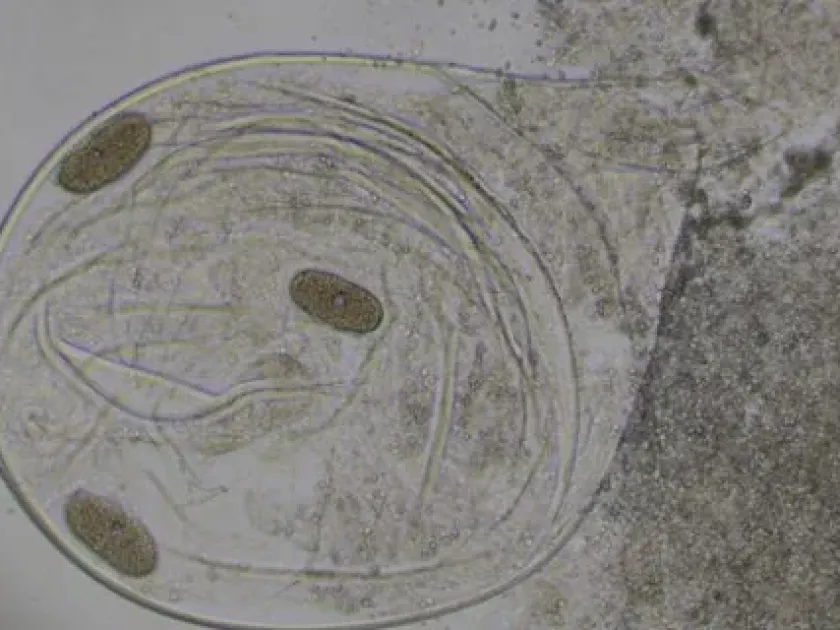
Description
How to identify
The root-knot nematode (Meloidogyne incognita) is a microscopic obligate plant-parasitic roundworm belonging to the phylum Nematoda. It is one of the most economically damaging plant pathogens worldwide.
The life cycle consists of the egg stage, four larval stages, and the adult stage. Only the second-stage juveniles (J2) are motile and capable of invading the roots of host plants.
Adult females are sedentary, pear-shaped organisms that remain embedded within the plant root tissues, producing hundreds of eggs within a protective gelatinous matrix.
Development is largely parthenogenetic, allowing for exponential population growth within a single growing season. This rapid reproduction is a key factor in their success as a pathogen.
Microscopic analysis is required for definitive species identification, but the presence of characteristic root galls is a definitive diagnostic indicator for the Meloidogyne genus.
What it damages
Meloidogyne incognita is an extreme polyphage, attacking a vast range of crops, including tomatoes, cucumbers, peppers, potatoes, and various ornamental species.
By injecting effectors into plant cells, the nematode triggers cellular hypertrophy and hyperplasia, resulting in the formation of root galls that disrupt vascular function.
The root system's inability to transport water and nutrients leads to systemic stress, characterized by stunted growth, leaf chlorosis, and reduced overall crop vigor.
Beyond direct damage, nematodes facilitate the entry of soil-borne pathogens like Fusarium and Ralstonia, which can lead to premature root rot and plant death.
Crop losses in heavily infested fields or greenhouse environments can reach 100%, making early detection and proactive management essential for agriculture.
When it appears
This species is highly temperature-dependent, with optimal soil development occurring between +25°C and +30°C. Development ceases below +10°C.
In temperate climates, the nematode is most active during the summer months, while in greenhouses, it can persist and multiply year-round due to stable climate conditions.
The survival of the population is ensured by eggs that remain dormant in the soil or in infected plant debris, capable of withstanding unfavorable conditions for extended periods.
Dissemination often occurs through human activity: moving infested soil, using contaminated nursery stock, or through runoff water that carries larvae between fields.
Greenhouse settings are particularly prone to outbreaks because the soil is rarely subjected to the freezing temperatures that would naturally suppress outdoor populations.
Signs of infestation
Above-ground symptoms are non-specific: stunted growth, wilting during hot periods, and nutrient deficiency symptoms that persist despite regular fertilization.
When plants are uprooted and examined, the roots show distinctive swellings known as galls, which vary in size and shape depending on the host plant species.
In addition to galls, the roots may appear knotted, distorted, and lack healthy lateral root branching, which is the plant's physiological response to the parasite.
The foliage often turns pale green or yellow (chlorosis), and in severe cases, the plant may wilt permanently and collapse due to secondary root decay.
Early-stage infestations are often difficult to detect until the nematode population reaches a threshold that physically compromises the plant's ability to maintain hydration.
Control measures
Integrated Pest Management (IPM) is the most effective approach, beginning with crop rotation using non-host plants to starve the nematode population.
Soil solarization and steam pasteurization are powerful physical control methods, especially effective in greenhouses to eliminate soil-borne larvae and eggs.
Breeding for resistance is a primary management goal, and the use of resistant rootstocks has proven to be an effective strategy for high-value vegetable crops.
Biological control agents, such as nematode-trapping fungi or parasitic bacteria, can be introduced to the soil to suppress the J2 larval population naturally.
- Sanitation of farming tools to prevent the spread of contaminated soil.
- Utilization of clean, certified nursery stock to ensure field-free introductions.
- Application of organic amendments to promote beneficial soil microbiome activity.
- Strict adherence to nematicide application protocols when chemical control is required.
Causes diseases · 1
Discussion
No discussions yet — be the first.