
Alfalfa cyst nematode
Heterodera medicaginis
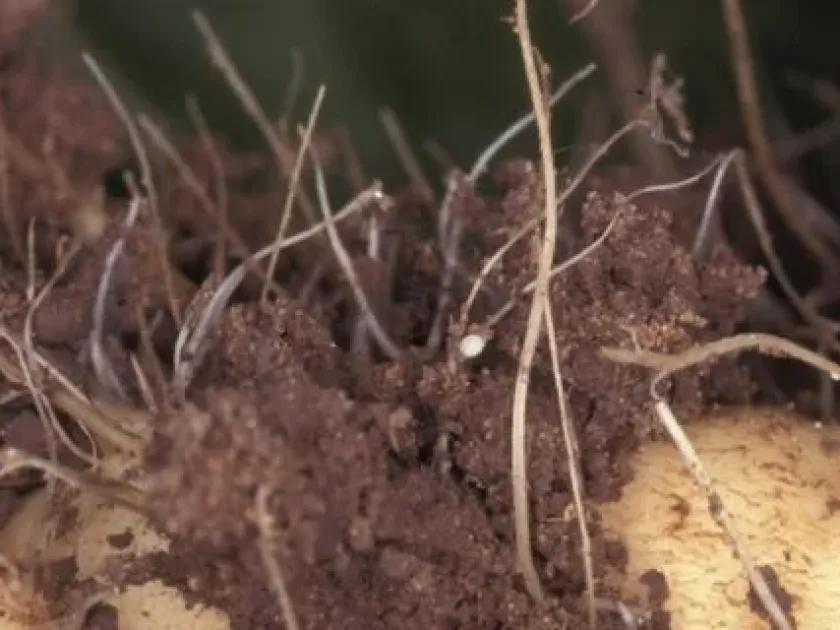
Description
How to identify
The alfalfa cyst nematode, Heterodera medicaginis, is a specialized phytoparasitic roundworm that belongs to the family Heteroderidae. It is a cyst-forming species known for its persistent survival strategy in agricultural soils.
The life cycle involves microscopic larvae that seek out host roots. Upon finding a suitable host, the nematode enters the root tissue, causing internal changes that favor its maturation and reproduction.
The defining characteristic of this nematode is the formation of cysts. After mating, the female body hardens and darkens into a protective, lemon-shaped casing that contains hundreds of eggs, allowing the population to survive harsh environmental conditions for several years.
Identification in the field is difficult because the symptoms are non-specific. Reliable detection relies on soil sampling and nematode extraction techniques in specialized laboratories to quantify the number of viable cysts per unit of soil.
This parasite is primarily spread by human activity. Soil clinging to tractor tires, plows, and other cultivation equipment serves as the main vehicle for moving cysts from infested fields to unaffected areas.
What it damages
The feeding activity of Heterodera medicaginis causes severe stress to the alfalfa root system. The nematodes disrupt the vascular tissues, which prevents the uptake of water and essential nutrients, leading to stunted growth.
In addition to direct damage, the wounds created by the nematodes serve as entry points for various soil-borne pathogens. This makes infested plants highly susceptible to root rots and other secondary diseases that complicate the diagnosis.
Fields infested with this nematode often display characteristic patches of poor development. In these zones, the plants show yellowing leaves, lack vigor, and may wilt prematurely even under moderate moisture conditions.
Economic damage is most pronounced in the reduction of forage yield and poor stand persistence. As the population density of the nematode increases over time, the productivity of the alfalfa field declines, often forcing premature plowing.
Young seedlings are particularly vulnerable. In the first year of establishment, a high nematode load can lead to poor plant stand, causing significant gaps that allow weeds to invade the field.
Control measures
Crop rotation is the most effective management tool. By planting non-host crops, farmers can starve the nematode population, as the larvae will not find suitable roots to complete their life cycle, causing the cyst content to decrease over time.
Strict sanitation protocols for farm machinery are essential. Ensuring that equipment is cleaned of soil before moving between fields is a fundamental step in limiting the geographical spread of the pest.
Maintaining optimal soil fertility is vital for plant health. Providing alfalfa with adequate nutrients helps the root system compensate for nematode feeding, potentially mitigating some of the yield losses.
Integrated pest management (IPM) strategies emphasize the use of resistant alfalfa varieties, which are specifically bred to limit the development of the nematode within the roots, significantly reducing the success rate of the infestation.
Early detection through regular soil monitoring programs allows for targeted management. If a field is found to be heavily infested, it should be isolated and managed to prevent further spread to healthy parts of the farm.
Causes diseases · 1
Discussion
No discussions yet — be the first.