
Pea cyst nematode
Heterodera goettingiana
Description
How to identify
The pea cyst nematode (Heterodera goettingiana) is a microscopic obligate parasite that specifically targets the root systems of various legume species, including peas, vetches, and beans.
It is classified as a cyst-forming nematode, where the female's body wall hardens into a protective, lemon-shaped cyst after death, shielding eggs from environmental stress.
The second-stage larvae are the active infective agents; they detect root exudates and migrate through the soil to penetrate the host root tissue.
Identification is confirmed through laboratory soil sampling, where cysts are extracted using specialized centrifugal flotation techniques for microscopic examination.
The species is highly specialized, meaning its population density increases rapidly in fields where legume hosts are grown repeatedly without crop rotation.
What it damages
Infestation severely impacts the vascular system of the roots, preventing the plant from absorbing essential water and nutrients effectively.
The formation of nematodes within the roots inhibits the development of nitrogen-fixing nodules, which is critical for the healthy growth of leguminous crops.
Typical damage includes stunted plant growth, chlorosis, and significantly reduced yield capacity, often resulting in patchy crop development across the field.
In high-density infestation zones, the root system is often reduced to a stubby mass, and the plant fails to recover even with optimal fertilization and irrigation.
The cumulative damage often leads to economic losses, making it difficult to maintain the profitability of legume production in heavily infested soil.
When it appears
In the spring, as soil temperatures rise above 10°C, larvae hatch from the cysts and begin their search for host roots to invade.
The most critical damage occurs during the early vegetative stage of the pea crop, when roots are developing and are most susceptible to nematode penetration.
The nematode life cycle is closely synchronized with the growing season of the host; one generation usually completes its cycle within several weeks.
As the plant reaches maturity and begins to senesce, the female nematodes mature and form new cysts, which persist in the soil throughout the winter.
Spread is largely mechanical, with cysts transported by farm equipment, runoff water, and wind-blown dust from infested fields to previously clean areas.
Signs of infestation
Field manifestations often appear as yellowing (chlorosis) and reduced vigor, initially concentrated in localized spots within the field.
Affected plants show a dramatic reduction in height and biomass compared to healthy individuals, often looking starved despite adequate soil fertility.
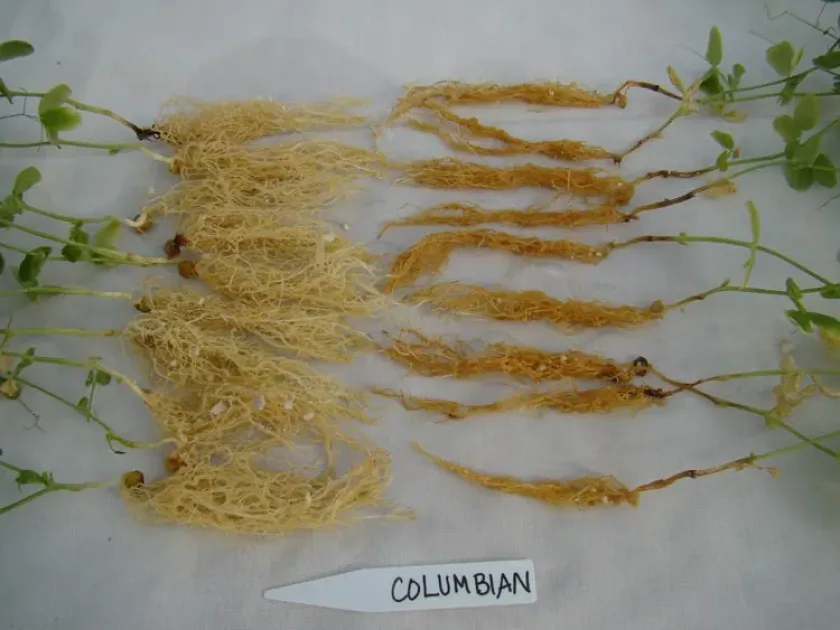
Root systems may appear deformed or stunted, with visible tiny white to pale yellow lemon-shaped cysts clinging to the root surfaces during the peak infection stage.
Plants may show symptoms of wilting during the hottest part of the day, indicating that the damaged root system cannot satisfy the transpirational demand.
Over time, the infestation leads to premature senescence of the foliage, drastically reducing the quality and quantity of the harvestable pods.
Control measures
Effective management requires a long-term strategy, prioritizing crop rotation with non-host crops to starve the nematode population in the soil.
Sanitation is critical; all equipment used in infested areas must be thoroughly cleaned before moving to non-infested fields to prevent cyst dispersal.
Maintaining optimal soil health and fertility can help the host plant partially compensate for root damage, though it does not eliminate the pathogen.
Using certified, soil-free seed is a mandatory preventive measure to ensure the nematode is not introduced into new land through planting material.
- Extend crop rotation intervals to at least 5-7 years.
- Incorporate cover crops that act as natural suppressors.
- Monitor soil nematode levels periodically through laboratory testing.
Causes diseases · 1
Discussion
No discussions yet — be the first.