
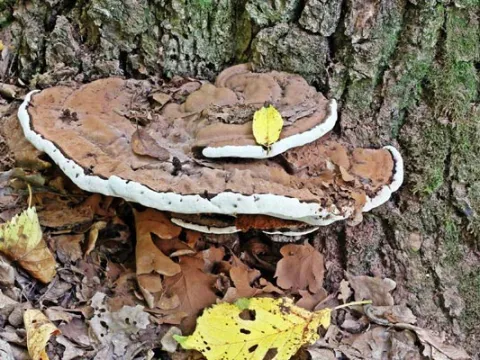
Artist's bracket
Ganoderma applanatum
Ganoderma applanatum, commonly known as the artist's bracket or shelf fungus, belongs to the Ganodermataceae family. It is a perennial fungus characterized by a hard, woody, perennial fruiting body.
What the section contains
Artist's bracket
The upper surface of the bracket is usually brownish or grayish with distinct concentric zones, while the pore surface is white or cream-colored, turning dark brown when bruised or touched.
As a pathogen, this fungus acts as a facultative parasite, meaning it can survive on both living wood and dead organic matter, making it highly persistent in forests and orchards.
Taxonomically, it is recognized as a basidiomycete, a class of fungi that produces spores on a specialized structure. Its ability to create long-lasting fruiting bodies allows it to release spores over many years.
Identification is most reliable by observing the underside of the bracket; the rapid color change upon damage is a diagnostic feature unique to this species in many regions.
This fungus primarily infects deciduous trees, including oak, beech, birch, and many fruit-bearing species. It gains entry through fresh wounds, pruning cuts, or damaged bark areas.
It causes a white rot, selectively degrading both cellulose and lignin. This process weakens the structural integrity of the tree, starting from the heartwood and moving outward.
Because the decay is internal, infected trees may seem healthy at first glance until the structural damage is severe enough to cause wind-throw or total collapse of the trunk.
The pathogen disrupts water and nutrient transport, leading to a slow decline in tree health, characterized by canopy thinning, yellowing foliage, and branch dieback.
In orchards, the damage is particularly costly, as the fungus affects the longevity of trees, requiring management strategies to ensure that the infection does not spread to productive specimens.
The fruiting bodies of the fungus are perennial and remain on the tree year-round. However, the release of spores is highly dependent on environmental conditions, particularly moisture and temperature.
The peak period for spore dispersal occurs from late spring through autumn. Wind and water splashes are the primary vectors that carry spores to vulnerable open wounds on neighboring trees.
Pruning activities during the growing season create opportunities for the fungus to establish itself. Proper timing and site protection are essential during these times to prevent infection.
While the internal decay process slows down during cold winter months, the mycelium remains active and viable inside the wood, resuming aggressive colonization as temperatures rise in the spring.
Environmental stress, such as drought or excessive moisture, can weaken tree defenses, making them more susceptible to colonization by the spores that are present in the air throughout the season.
The presence of hard, shelf-like fruiting bodies is the most definitive sign of an established infection. These brackets often appear near the base of the trunk or at points of mechanical injury.
Internally, the wood displays a mottled appearance with white rot patches and dark, narrow lines known as zone lines, which delineate the boundaries of fungal activity within the tissue.
Canopy symptoms include premature leaf senescence and stunted growth. These signs indicate that the fungus has already disrupted the tree's physiological systems significantly.
Hollow sounds when the trunk is tapped with a mallet or sensor provide an indirect diagnostic indicator of internal wood degradation caused by the fungal mycelium.
- Hard, perennial shelf-like fruiting bodies.
- White wood rot with distinct dark zone lines on cross-sections.
- Gradual canopy thinning and branch dieback.
- Increased risk of tree failure due to structural loss.
Preventative care is the most effective approach. This includes minimizing mechanical bark damage and ensuring that pruning cuts are clean and protected with wound sealants.
Regular sanitary pruning helps remove potentially infected branches before the fungus reaches the main trunk. Severely infected trees should be removed, including their stumps, to reduce the spore load.
Maintaining tree vigor through appropriate fertilization and irrigation helps the plant maintain better natural resistance against colonization by wood-decay fungi.
Avoid using mulch derived from infected trees, as it can harbor the fungus and facilitate its transfer to healthy plants located in the same garden or landscape area.
Biological control methods, such as the application of Trichoderma-based formulations to fresh wounds, can serve as a beneficial barrier against the initial colonization by the pathogen.