
Corn root lesion nematode
Pratylenchus zeae
Description
How to identify
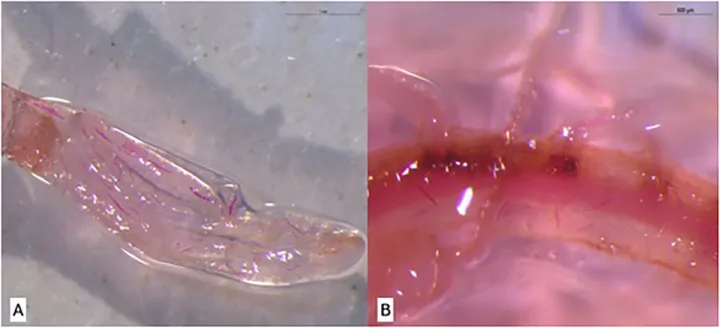
The corn root lesion nematode (Pratylenchus zeae) is a plant-parasitic nematode that belongs to the family Pratylenchidae. It is a microscopic roundworm that acts as a migratory endoparasite, living inside the root tissues of host plants.
Adults and juvenile stages of P. zeae possess a specialized feeding apparatus called a stylet, which is used to penetrate plant cells, inject digestive enzymes, and extract nutrients.
Unlike sedentary nematodes, lesion nematodes do not form galls; instead, they move continuously through the root cortex, causing mechanical damage and creating avenues for fungal pathogens.
Detection of Pratylenchus zeae in agricultural fields requires professional soil and root tissue sampling followed by extraction and microscopic identification in a laboratory.
These nematodes are widely distributed in tropical and temperate regions, often occurring in complex soil communities alongside other plant-parasitic species.
What it damages
Pratylenchus zeae has a broad host range including maize, wheat, rice, and sugarcane, though maize is particularly susceptible to significant yield loss under high nematode populations.
The primary damage occurs within the root cortex, where feeding destroys cells, leading to a reduced root system volume and a decreased ability to uptake water and essential nutrients.
Lesion nematode infestations often predispose the maize crop to secondary root rot infections, which are caused by fungi such as Fusarium or Pythium species.
Plants affected by these nematodes exhibit reduced vigor, stunted growth, and a diminished capacity to withstand environmental stress, particularly drought and heat.
Economic damage is manifested through decreased grain yield, non-uniform crop maturity, and in severe cases, lodging due to a weakened root anchorage system.
When it appears
The life cycle of Pratylenchus zeae consists of egg, four juvenile stages, and adult stages. The entire life cycle can be completed in approximately 30–40 days under optimal conditions.
Soil temperature and moisture are the primary drivers of nematode activity. They thrive in warm soil conditions, making them particularly active during the spring and summer months.
Overwintering occurs as eggs or nematodes inside roots or in the soil, allowing the population to persist from one season to the next even in the absence of a primary host.
The nematode populations increase throughout the growing season as multiple generations are produced, leading to a buildup of inoculum in the soil for the following year.
Dissemination across fields is primarily passive, occurring through the movement of infested soil via machinery, farm tools, surface water runoff, or contaminated irrigation water.
Signs of infestation
Field symptoms often appear as patches of stunted, chlorotic plants that fail to develop at the same rate as the rest of the crop, creating a "patchy" appearance.
Root systems of infected plants frequently show visible browning, necrosis, and a reduction in the number of secondary feeder roots compared to healthy plants.
Because the roots are damaged, the plants show symptoms of nutrient deficiencies and water stress, which do not improve significantly with standard fertilization or irrigation.
During dry spells, infested patches in the field will show signs of wilting much earlier than the surrounding healthy plants due to their compromised root structures.
- Stunted plant height and reduced plant vigor.
- Yellowing (chlorosis) of lower leaves.
- Brown necrotic lesions on the roots.
- Significant decrease in root mass and depth.
Control measures
Effective management requires a multi-faceted approach, starting with long-term crop rotation cycles that include non-host crops to starve the nematode population.
Managing weeds and volunteer corn is essential, as these plants can serve as reservoir hosts that maintain P. zeae populations during the off-season.
The use of resistant or tolerant maize hybrids is currently the most practical and sustainable method for minimizing yield losses caused by lesion nematodes.
Maintaining soil fertility and organic matter levels helps support root health, allowing the crop to compensate for some of the root damage caused by the parasites.
Nematicides can be used in extreme cases, though their application is often restricted due to environmental regulations and the requirement for precise soil incorporation techniques.
Discussion
No discussions yet — be the first.