
Root-lesion nematode
Pratylenchus penetrans
Description
How to identify
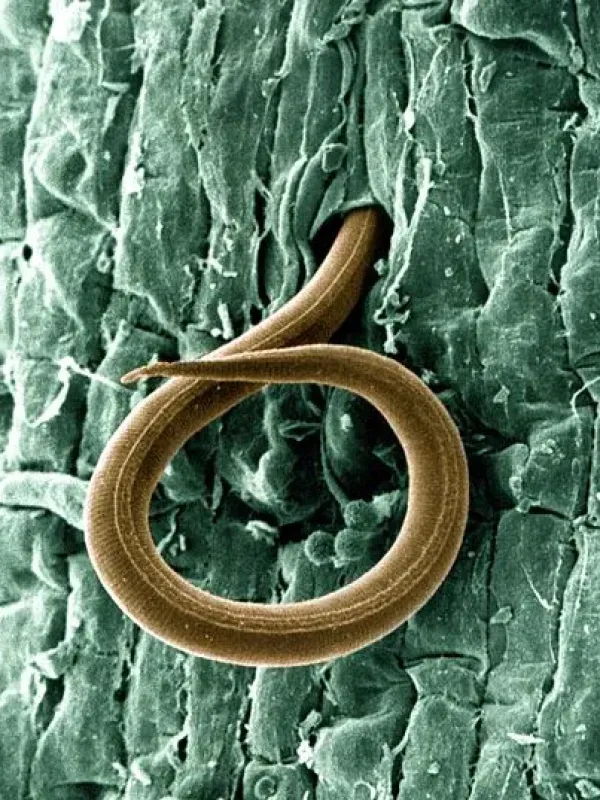
Pratylenchus penetrans, commonly known as the root-lesion nematode, is a microscopic endoparasitic roundworm that poses a significant threat to global agriculture.
These nematodes are characterized by their small, slender bodies, typically measuring 0.4 to 0.7 mm in length, making them invisible to the naked eye. They inhabit both soil and the interior of plant roots.
The life cycle involves an egg stage, four juvenile stages, and the adult stage. Unlike stationary parasites, they are migratory endoparasites, meaning they move through root tissues and back into the soil throughout their lifespan.
Temperature plays a crucial role in their development, with the most active population growth occurring in moderate soil temperatures, typically ranging from 15°C to 25°C.
With an extremely broad host range, they can survive on hundreds of different plant species, effectively ensuring their survival in various cropping systems.
What it damages
The root-lesion nematode affects a vast array of crops, including potatoes, vegetables, strawberries, fruit trees, and various ornamental plants, causing significant economic losses.
They feed on root cells by puncturing them with a specialized organ called a stylet. This feeding process leads to tissue necrosis and provides entry points for opportunistic fungal and bacterial pathogens, exacerbating root decay.
Direct damage to the root system restricts water and nutrient uptake, leading to stunted growth, reduced yields, and poor quality of harvested produce, especially in tubers and fleshy roots.
In high-intensity farming, such as orchards and greenhouses, populations can build up rapidly over consecutive seasons, leading to long-term soil productivity degradation.
Plants affected by this nematode are often more susceptible to drought stress and environmental fluctuations, making recovery difficult even with supplemental irrigation.
Signs of infestation
Field symptoms often appear as uneven growth patches, chlorosis of the foliage, and general wilting, especially during peak temperatures when moisture demand is highest.
Below ground, the signs are marked by brown lesions, localized decay, and reduced root branching. The root system often appears sparse and darkened compared to healthy plants.
On potato tubers, external symptoms may include shallow necrotic spots or surface lesions that degrade the aesthetic and storage value of the crop.
Because these symptoms are common to many root diseases, it is frequently misidentified as nutrient deficiency or fungal root rot unless a diagnostic test is conducted.
Farmers should look for these patterns in their fields and consider sending root and soil samples to professional laboratories to confirm the presence of Pratylenchus penetrans.
Control measures
Integrated pest management (IPM) is essential for controlling this nematode, starting with robust crop rotation strategies that avoid susceptible host plants for extended periods.
Good sanitation practices, such as washing farm machinery and ensuring the use of certified nematode-free planting material, are critical to prevent the spread to uninfested fields.
Utilizing bio-fumigant cover crops, such as specific mustard varieties or marigolds, can naturally lower nematode populations in the soil before planting the main crop.
In greenhouse operations, soil sterilization via steam or solarization is a highly effective method for eliminating existing nematode populations in the growing substrate.
Chemical control options are available through nematicides, but they should be used as a last resort, strictly adhering to local regulations to minimize environmental impacts.
Discussion
No discussions yet — be the first.