
Pratylenchus crenatus
Pratylenchus crenatus
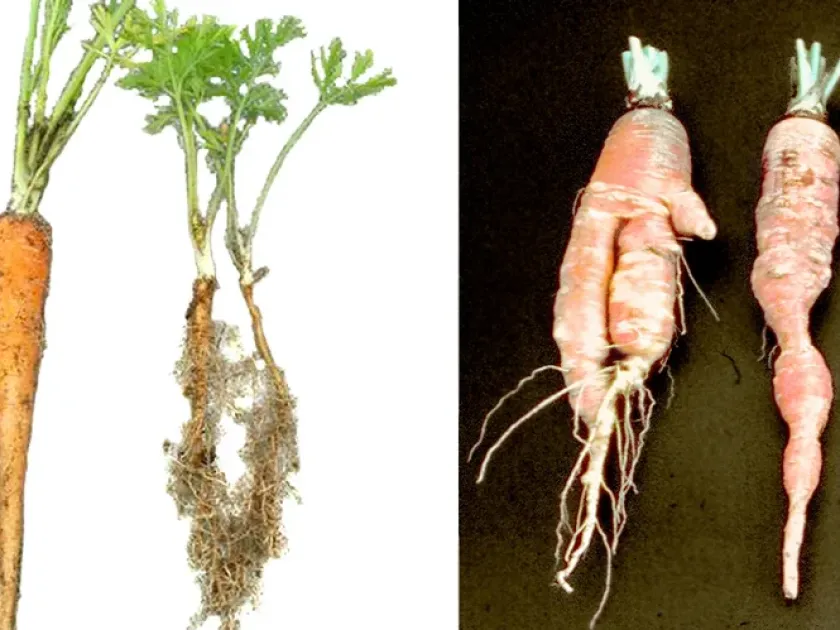
Description
How to identify
Pratylenchus crenatus is a species of migratory endoparasitic nematode belonging to the Pratylenchidae family. These microscopic worms are significant agricultural pests that live within both soil environments and root tissues of host plants.
Taxonomically, it belongs to the Kingdom Animalia, Phylum Nematoda, and Genus Pratylenchus. Its primary anatomical feature is a strong stylet used to penetrate plant cells, enabling the nematode to feed on the nutrient-rich contents within the roots.
The life cycle encompasses an egg stage, four larval stages, and an adult stage. Unlike sedentary nematodes, these organisms remain mobile throughout their life, constantly moving between soil and root tissues to find new feeding sites.
Because these nematodes are microscopic, they cannot be seen with the naked eye. Identification requires specialized extraction techniques and microscopic examination of root and soil samples collected from the field.
Their ability to survive in various soil conditions and switch between a wide range of host plants makes them a persistent challenge in diverse cropping systems worldwide.
What it damages
Pratylenchus crenatus has a broad host range, damaging cereals, potatoes, sugar beets, various vegetables, and fruits. It acts as a polyphagous pest, meaning it thrives on many different crop families.
Damage occurs when nematodes feed on the root cortex, destroying cells and creating lesions. This mechanical damage disrupts the root system's ability to transport water and essential minerals to the rest of the plant.
The lesions caused by feeding serve as entry points for secondary pathogens such as fungi and bacteria. This frequently leads to root rot complexes, which can be far more destructive than the nematode infection alone.
Plants affected by these nematodes often show stunted growth, chlorosis, and general weakness. During drought stress, infected plants are much more likely to wilt and collapse due to their compromised root systems.
Ultimately, the infestation leads to significant yield losses, reduced product quality, and decreased market value, negatively impacting the economic viability of the affected agricultural operations.
When it appears
The activity and reproduction of Pratylenchus crenatus are highly dependent on soil temperature and moisture levels. They are most active during the spring and autumn when soil conditions are optimal for movement and root development.
During the winter months, these nematodes often enter a state of reduced metabolic activity or dormancy, residing deep within the soil profile or protected inside the roots of perennial weeds and crop residues.
Dissemination across fields is facilitated by human activities, such as the movement of farm equipment carrying infested soil, or through the distribution of contaminated seeds and planting material.
Warm and moist autumns can lead to an increased number of generations before the onset of winter, resulting in a higher initial population density that will cause immediate damage when crops are planted the following season.
Root exudates from growing plants act as chemical cues that stimulate nematode activity, encouraging them to migrate toward the roots and begin the cycle of infestation anew.
Signs of infestation
Signs of infestation usually appear as localized areas of poor plant growth, often referred to as "patches." Plants within these areas typically lag behind in development compared to healthier parts of the field.
Visual symptoms on the foliage include yellowing (chlorosis) and stunted growth. Because the root system is damaged, the plants may show symptoms of nutrient deficiency even when soil fertility is high.
Upon closer inspection of the root system, one may observe dark necrotic spots or lesions. In some cases, the roots may appear thickened or excessively branched as the plant attempts to compensate for the damaged tissue.
A lack of response to fertilizers is a key indicator, as the plant physically cannot uptake nutrients efficiently through its necrotic root system. This is a common hallmark of soil-borne pest infestation.
Confirming the presence of P. crenatus requires laboratory analysis. Soil and root samples should be submitted to a diagnostic facility to quantify the nematode population and confirm the species.
Control measures
The primary control strategy is the use of integrated crop rotation. Rotating crops with non-host plants or utilizing cover crops that act as antagonistic plants can significantly reduce the soil population density.
Agricultural practices such as strict weed control are essential, as many common weeds serve as reservoir hosts that sustain nematode populations throughout the off-season.
Ensuring the use of certified, clean planting material is the most effective way to prevent the introduction of P. crenatus to uncontaminated fields. Once established, eradicating this nematode is extremely difficult.
While chemical control with nematicides is possible, it is often restricted due to environmental regulations and high costs, making it a measure of last resort typically reserved for high-value greenhouse operations.
Regular soil sampling and monitoring are critical components of an effective management plan, allowing farmers to track population trends and adjust their agronomic strategies before economic damage occurs.
Discussion
No discussions yet — be the first.