
Coffee lesion nematode
Pratylenchus coffeae
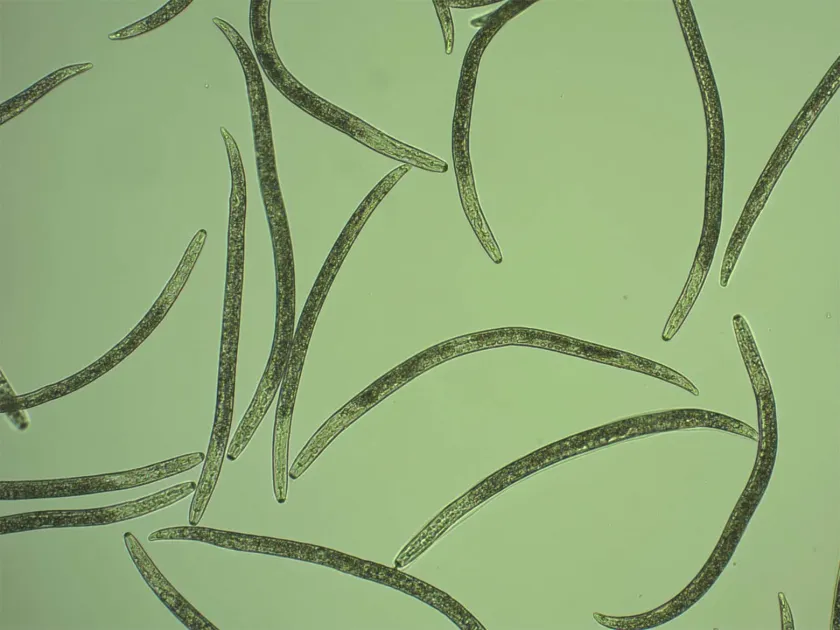
Description
How to identify
The coffee lesion nematode (Pratylenchus coffeae) is a devastating plant-parasitic nematode belonging to the family Pratylenchidae. It is a microscopic, migratory endoparasite that spends most of its life cycle within the root tissues of host plants.
As an endoparasite, this nematode moves continuously through the root cortex, feeding on parenchyma cells and destroying them as it migrates, which leads to the formation of extensive lesions.
Identification of this species requires precise laboratory techniques, such as extraction of nematodes from root tissues or soil samples followed by microscopic examination, as they are invisible to the naked eye.
Taxonomically, it is classified under the genus Pratylenchus, which is notorious for causing significant yield losses in many perennial and annual tropical crops globally.
The life cycle consists of eggs, four larval stages, and adults. Both juveniles and adults are capable of invading roots, ensuring that the infection spreads rapidly throughout the root system.
What it damages
Pratylenchus coffeae has a wide host range, including coffee trees, bananas, citrus, ginger, and yams. It causes severe root damage, leading to physiological distress in the host plant.
The damage caused by the nematode creates entry points for secondary pathogens, such as fungi and bacteria, which often accelerate the decay of the root system.
As the root system is decimated, the plant's ability to uptake water and nutrients is severely impaired, resulting in chlorosis, stunting, and reduced productivity.
In highly infested soils, crops may exhibit premature yellowing and leaf fall. Chronic infestation eventually weakens the plant to the point where it fails to recover, leading to plant death.
Economic damage is manifested through decreased fruit quality, lower yields, and the need for costly replanting strategies on heavily infested farmland.
When it appears
The development of Pratylenchus coffeae is strongly correlated with soil temperature and moisture levels. Warm and humid climates provide the ideal environment for rapid population growth.
Dissemination often occurs through the movement of contaminated soil, contaminated irrigation water, and the transfer of infected planting material or nursery stocks.
Nematodes can survive unfavorable periods by retreating into the roots or remaining in the soil, effectively persisting until conditions improve for their active phase.
The pest is most active during the growing season when host plants provide a continuous supply of young roots for feeding and reproduction.
Under optimal tropical conditions, the generation time is short, allowing for multiple lifecycles within a single season and leading to rapid escalation of the infestation.
Signs of infestation
Typical above-ground symptoms include progressive stunting, yellowing of foliage (chlorosis), and wilting, particularly during the hottest hours of the day when water demand is high.
Below-ground, the primary signs are characteristic necrotic lesions on the root surface, which may eventually coalesce and cover the entire root, leading to rot.
The root system appears sparse, with a significant loss of feeder roots. In severe cases, the cortex becomes soft and brown, making it easy to peel away from the vascular stele.
- Chlorotic leaves and poor overall growth.
- Dark brown, sunken lesions on the roots.
- Reduced root biomass and lack of lateral root branching.
- Wilting despite adequate soil moisture levels.
- Decreased yield and poor fruit development.
Control measures
The primary control strategy involves the use of pathogen-free planting material, which should be sourced from certified nurseries and inspected for signs of infection.
Hot water treatment (soaking roots in warm water at specific temperatures) is a standard practice for sanitizing planting stock before transplanting.
Cultural methods, such as crop rotation with non-host or antagonistic crops, can help reduce soil nematode populations over time, although they may not eradicate the pest completely.
Chemical control, including the application of systemic nematicides, is an option but should be managed carefully to avoid negative environmental impacts and resistance development.
Biological control, using specific fungi or bacteria that parasitize nematodes, is an area of growing interest and provides a more sustainable approach to long-term farm management.
Discussion
No discussions yet — be the first.