
Rice root-knot nematode
Meloidogyne oryzae
Description
How to identify
The rice root-knot nematode (Meloidogyne oryzae) is a microscopic obligate parasite that specifically targets the root systems of rice plants. It belongs to the genus Meloidogyne, which is notorious for causing significant yield losses in agricultural crops globally.
Classified under the phylum Nematoda, these organisms inhabit the soil and plant tissues. They have a sophisticated life cycle that involves a motile juvenile stage that seeks out host roots to penetrate and initiate the formation of galls.
The biology of Meloidogyne oryzae is adapted for extreme specialization. Once inside the root, the nematode establishes a feeding site by inducing the plant to create giant cells, which provide the nutrients necessary for the nematode to reach maturity.
Identification often requires careful morphological observation under a microscope, specifically examining the perineal patterns of adult females. Due to the similarity between different species of Meloidogyne, molecular diagnostic tools are preferred for definitive identification.
The population growth is rapid under favorable environmental conditions. A single female can produce hundreds of eggs, ensuring a high inoculum level in the soil for subsequent growing seasons if host plants are readily available.
What it damages
The primary host for this nematode is rice (Oryza sativa). It poses a severe threat to both upland and lowland rice systems, significantly hindering the plant's physiological development by damaging the root architecture.
As the nematodes feed, they induce the development of characteristic root knots or galls. These structures physically obstruct the vascular tissue, severely limiting the translocation of water and essential mineral nutrients from the roots to the shoots.
The damage caused by Meloidogyne oryzae often renders the plant susceptible to secondary infections by soil-borne fungi and bacteria. This complex infection pattern leads to rapid root rot and further deterioration of the rice plant's health.
Field-level damage manifests as stunted plant growth and reduced tillering. The weakened root system cannot support high-yielding panicles, which leads to a direct reduction in the total biomass and grain yield of the rice crop.
Significant economic impact is observed in heavily infested areas. Farmers may face substantial crop failure, and in severe cases, the fields may become unsuitable for rice cultivation until rigorous management strategies are implemented to reduce nematode levels.
Signs of infestation
Above-ground symptoms of infestation include yellowing leaves and a general lack of vigor. These symptoms are often misinterpreted as nutrient deficiencies because the plant fails to thrive despite proper fertilization and irrigation.
Wilting during the hottest parts of the day is a classic indicator of nematode damage. Since the roots are galled and partially non-functional, they cannot meet the transpiration demands of the plant during periods of high heat stress.
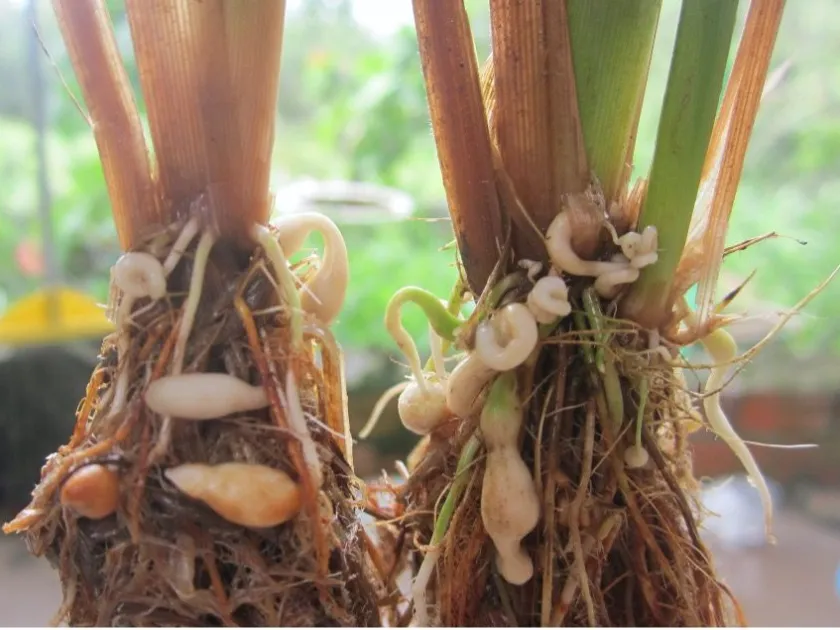
The most reliable field diagnostic sign is the presence of galls on the roots. These appear as small to large swellings or knots along the root system, which disrupt the natural smooth appearance of healthy rice roots.
Affected fields typically show patchy development, where stunted plants are clustered in specific areas. These patches reflect the uneven distribution of the nematode population in the soil and their gradual spread over time.
As the disease progresses, the root system turns necrotic and brownish. Infected plants can be easily pulled from the soil, revealing a significantly reduced and damaged root mass compared to non-infested control plants.
Control measures
Integrated Pest Management (IPM) is essential for controlling Meloidogyne oryzae. The use of certified, nematode-free seeds is the first line of defense to prevent the introduction of the pest into clean fields.
Crop rotation is highly effective. By planting non-host crops in rotation with rice, farmers can significantly reduce the soil population density of the nematode, as the juveniles require a specific host root to continue their life cycle.
Cultural practices, such as soil solarization or deep ploughing during the fallow season, help in reducing the population. These methods expose the nematodes to harsh conditions, leading to desiccation and reduced viability of both eggs and juveniles.
Breeding for resistance is a long-term solution. Many rice varieties have been screened for tolerance to root-knot nematodes, and selecting resistant cultivars is the most sustainable approach for minimizing yield losses.
Biological control agents, including various species of nematophagous fungi, are being utilized to manage populations. These natural enemies infect and destroy nematode eggs in the soil, providing an eco-friendly alternative to chemical treatments.
Discussion
No discussions yet — be the first.