
Javanese root-knot nematode
Meloidogyne javanica
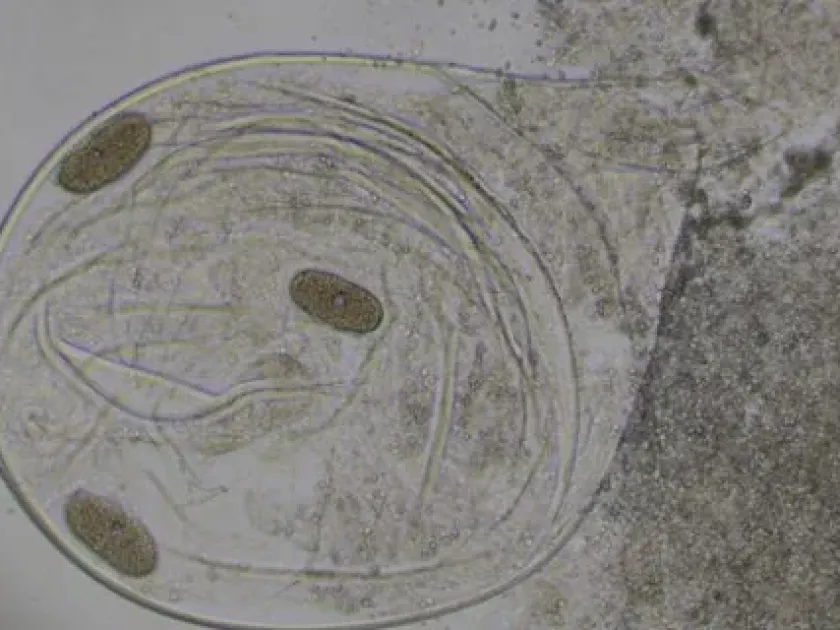
Description
How to identify
The Javanese root-knot nematode, Meloidogyne javanica, is a plant-parasitic nematode belonging to the family Heteroderidae, widely distributed in tropical and subtropical regions.
These nematodes undergo several molts, with the second-stage juvenile (J2) being the primary infective stage that moves through the soil to locate a suitable host root.
Upon penetration, the nematode induces the formation of specialized giant cells in the root tissue, which serve as a continuous food source for the sedentary female.
The life cycle is largely dependent on soil temperature and moisture levels, allowing the population to multiply rapidly under favorable conditions in greenhouse environments.
Because they are microscopic, identification relies primarily on detecting symptoms of root infestation or using laboratory diagnostic techniques such as DNA-based molecular assays.
What it damages
Meloidogyne javanica is an extremely polyphagous pathogen, attacking a vast array of crops including tomatoes, cucumbers, peppers, melons, and various legumes.
The parasitic activity interferes with the plant's ability to transport water and nutrients, resulting in stunted growth, reduced biomass, and severe physiological stress.
In addition to physical damage, the nematode significantly increases the plant's susceptibility to soil-borne fungal pathogens like Fusarium and Pythium.
Crop losses can be devastating, sometimes leading to the complete failure of commercial production in heavily infested soils if no control measures are implemented.
The cosmetic damage to roots and tubers is particularly detrimental to market value, as it makes produce unacceptable for fresh sale.
Signs of infestation
The most diagnostic sign of infestation is the development of galls (knots) on the roots, which can range from small swellings to large, distorted clusters of tissue.
Above-ground symptoms often include yellowing leaves and wilting during the heat of the day, indicating that the root system is failing to meet the plant's water demands.
Stunting is typically observed in patches within a field or greenhouse, corresponding to areas where the nematode population density is highest.
Plants often exhibit reduced fruit set and poor quality yields, which are early warnings of a struggling root system due to heavy nematode pressure.
- Root galls or knots
- Stunted plant growth
- Leaf chlorosis and curling
- Wilted foliage in midday heat
- Reduced fruit production
Control measures
Integrated Pest Management (IPM) is essential, starting with the use of nematode-free planting material and rigorous hygiene practices to prevent further spread.
Crop rotation remains a fundamental practice, incorporating non-host species or green manure crops that suppress nematode populations in the soil.
Soil solarization or steam sterilization is highly effective for pre-planting treatment, particularly in greenhouse settings where high temperatures can eliminate J2 stages.
Biological control agents, such as nematode-trapping fungi or antagonistic bacteria, provide a sustainable alternative to chemical interventions for managing soil health.
Where necessary, the targeted application of certified nematicides can suppress high population densities, provided that environmental and safety guidelines are followed.
Discussion
No discussions yet — be the first.