
Columbia root-knot nematode
Meloidogyne chitwoodi
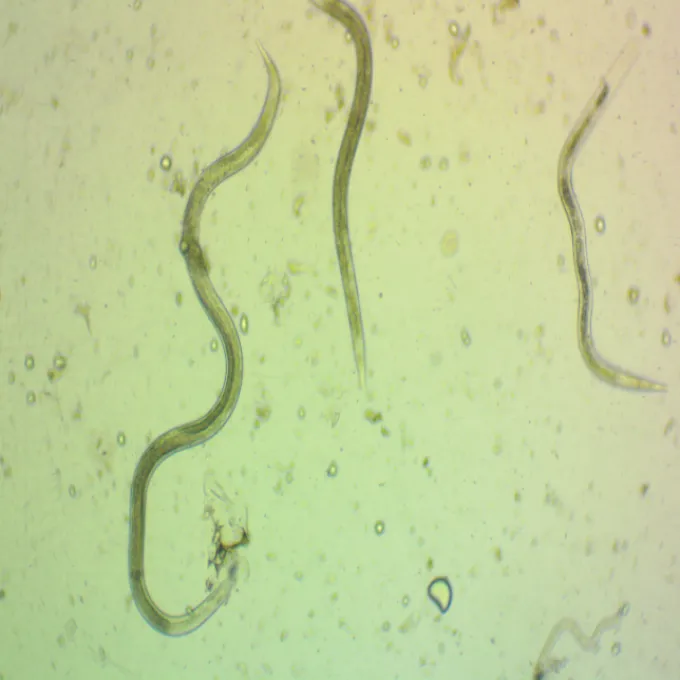
Description
How to identify
The Columbia root-knot nematode (Meloidogyne chitwoodi) is a microscopic soil-borne endoparasite that belongs to the family Meloidogynidae. It is considered a significant quarantine pest in many regions due to its impact on potato quality.
Being microscopic, these nematodes cannot be identified in the field with the naked eye. Identification requires precise diagnostic procedures, such as morphological examination of perineal patterns of females or molecular DNA analysis.
This species is well-adapted to cooler climates compared to other tropical root-knot nematode species. It survives the winter in the soil as eggs or juveniles, waiting for the presence of a host root system to continue its life cycle.
The life cycle includes the egg stage, four juvenile stages, and the adult stage. The infective second-stage juvenile (J2) migrates through the soil to penetrate the host root, where it establishes a permanent feeding site.
Global trade regulations often restrict the movement of produce from areas where this nematode is established to prevent further geographical spread into new agricultural regions.
What it damages
The primary economic host of M. chitwoodi is the potato, but it has a wide host range, including crops like wheat, corn, carrots, and several weed species that serve as overwintering reservoirs.
In potatoes, the infection leads to the formation of galls (knots) on the tubers, causing significant surface deformation. Internally, the tubers exhibit brown necrotic spots that make them unfit for commercial sale or processing.
The nematode infestation disrupts the vascular system of the host plant, hindering the uptake of water and nutrients. This results in stunted growth, chlorosis, and lower overall yields for the affected crops.
Economic losses are compounded by strict quarantine measures, which may force growers to abandon or fallow infested fields for several years, leading to long-term financial consequences.
Furthermore, the necrotic tissues caused by the nematode act as entry points for secondary pathogens, such as bacteria and fungi, causing rapid degradation during storage.
Signs of infestation
Symptoms of M. chitwoodi infection on the foliage are often subtle and can easily be mistaken for environmental stress or nutrient deficiencies, such as wilting during hot weather or yellowing leaves.
The most reliable sign of infection is found on the tubers. Upon inspection, irregular bumps or swellings appear on the surface. These galls can become more pronounced as the nematode population density increases in the soil.
Inside the tuber, brown necrotic spots are scattered throughout the parenchyma. These spots are often more visible after the tubers are peeled or boiled, which is a major concern for the processing industry.
Infection patterns in the field are typically patchy. Over time, these patches grow as the nematode spreads through the soil, especially if agricultural machinery moves infested soil between different areas.
Field diagnosis should always be followed by professional laboratory testing of soil and root samples to confirm the presence of the species and determine the population density.
Control measures
The most critical control measure is the use of nematode-free, certified seed potatoes. Since nematodes are primarily introduced to new fields through contaminated planting material, sourcing is the first line of defense.
Crop rotation remains a fundamental strategy. Planting non-host crops, particularly cereals or grasses, can help reduce the population of M. chitwoodi in the soil over time, provided that weeds are also strictly controlled.
Sanitation is essential; farmers must ensure that all machinery and tools used in infested fields are thoroughly cleaned and disinfected before being moved to clean areas to prevent the spread of soil.
Chemical control options are available but often have limited efficacy due to the difficulty of ensuring deep soil penetration. Their use should be part of an integrated pest management (IPM) approach.
- Use of certified pathogen-free seeds
- Implementation of long-term crop rotation
- Stringent equipment sanitation
- Regular soil testing and monitoring
- Weed management to eliminate host reservoirs
Discussion
No discussions yet — be the first.