
Cereal cyst nematode
Heterodera avenae
Description
How to identify
The cereal cyst nematode (Heterodera avenae) is a member of the Heteroderidae family. It is a specialized obligate parasite that specifically targets the root systems of various cereal crops.
The nematode has a distinct life cycle featuring a sedentary female stage, which eventually develops into a protective cyst. These cysts contain eggs and can remain dormant in the soil for several years.
The second-stage juveniles (J2) are the infectious phase. They emerge from cysts in the soil and migrate towards the roots of host plants, attracted by specific chemical signals released by the roots.
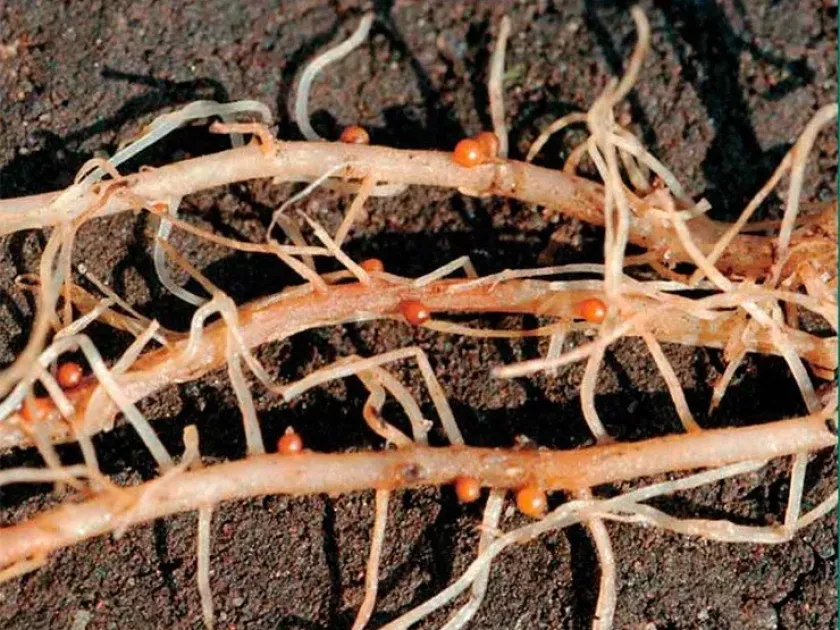
Once they penetrate the roots, they establish a feeding site, causing local tissue changes. The female nematode swells, breaks through the root surface, and stays attached while its body wall hardens into a cyst.
Correct identification often requires laboratory analysis, as the small size of the cysts and the subtle symptoms in the early stages of infection make field-level diagnosis challenging.
What it damages
Heterodera avenae primarily affects oats, barley, wheat, and rye. It causes significant damage by disrupting the plant's ability to absorb water and essential nutrients from the soil.
Infested crops display stunted growth and a characteristic yellowing of leaves. The root system is severely compromised, showing excessive branching and a lack of vitality, which often leads to wilting during dry periods.
The economic impact includes reduced grain yield, lighter bushel weight, and overall poor crop quality. Severe infestations can render a field unproductive for several seasons.
Furthermore, the physical damage to the root system serves as an entry point for various soil-borne pathogens, leading to secondary fungal infections that further weaken the plant.
The intensity of the damage depends heavily on the initial nematode population density in the soil and the susceptibility of the crop variety planted in the infested area.
When it appears
The life cycle is generally monocyclic, completing one generation per year. In spring, as soil temperatures reach approximately +10°C to +12°C, larvae emerge from the overwintering cysts.
The main infection window coincides with the early vegetative growth phase of cereal crops. Environmental factors such as soil moisture and temperature are critical for the successful movement of larvae.
By early summer, the nematodes have matured and produced a new generation of cysts, which will remain in the soil as a reservoir for the next crop season.
Dissemination is largely passive, occurring through the movement of infested soil on farm machinery, tools, or contaminated seeds that contain small soil particles.
Long-term survival in the soil is guaranteed by the cyst structure, which acts as a robust barrier against environmental extremes and even some chemical control agents.
Signs of infestation
In the field, infected areas often appear as patches of stunted, yellowing plants that contrast sharply with healthier crops. This patchiness is a hallmark symptom of nematode infestation.
Close inspection of the roots reveals small, pearl-like cysts, which are initially white or yellow and turn dark brown with age. Roots may appear shortened or have a matted, "glove-like" structure.
Plants affected by the nematode show delayed phenological development, including a later onset of tillering and an overall reduction in the number of productive stalks.
During grain filling, spikes on infested plants may be thin and poorly developed, often yielding shriveled kernels or failing to produce grain entirely.
Soil testing remains the most reliable method for detecting the presence of Heterodera avenae before symptoms become severe enough to cause visible crop failure.
Control measures
The primary management strategy is crop rotation, which breaks the life cycle of the nematode. Planting non-host crops like legumes, oilseeds, or potatoes for several years significantly reduces population density.
Genetic resistance is a critical tool. Utilizing modern cereal varieties bred specifically for resistance to Heterodera avenae can maintain productivity in infested fields.
Sanitation practices are essential to prevent the spread of cysts to clean areas. This includes cleaning all tillage and harvesting equipment after working in potentially infested soil.
Optimizing plant health through appropriate fertilization and weed control helps mitigate the overall impact, allowing the crop to tolerate lower levels of nematode pressure.
- Implement a 3 to 4-year crop rotation with non-host species.
- Select resistant cereal cultivars for planting in known infested areas.
- Ensure machinery is thoroughly washed before moving between fields.
- Avoid using uncertified seed that may contain soil-borne contaminants.
- Monitor soil populations through systematic sampling and laboratory diagnostics.
Discussion
No discussions yet — be the first.