
Helicotylenchus goodeyi
Helicotylenchus goodeyi
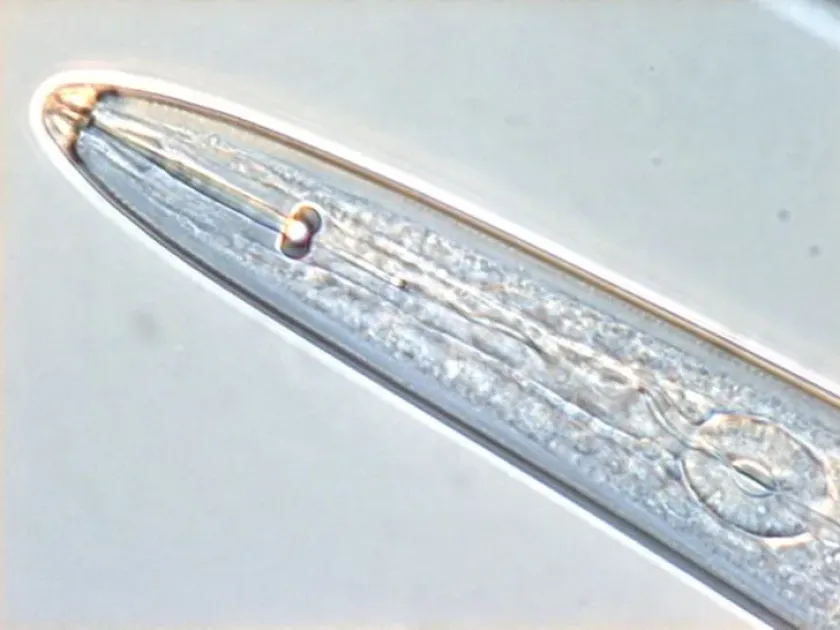
Description
How to identify
Helicotylenchus goodeyi belongs to the family Hoplolaimidae and is commonly known as a spiral nematode. It is a microscopic, soil-borne endoparasite that feeds primarily on the roots of host plants.
Morphologically, adult H. goodeyi are characterized by a spiral shape when relaxed, which is a common trait for the genus. They possess a robust stylet used to puncture root cells for nutrition.
The life cycle involves four larval stages followed by the adult stage. The nematodes are dioecious, and the cycle is completed within the soil surrounding the roots or inside the epidermal tissues.
These organisms are highly adaptable to various ecological conditions, surviving periods of scarcity by entering a state of cryptobiosis or dormancy until environmental conditions improve.
Dissemination typically occurs through the movement of infested soil, contaminated irrigation water, and the transfer of infected rhizomes or nursery stock to new areas.
What it damages
This species has a wide host range, with bananas and plantains being particularly susceptible. It also affects various agricultural and ornamental crops, leading to significant yield losses in tropical and subtropical regions.
As a semi-endoparasite, the nematode feeds by puncturing the root cortex. This activity causes localized necrosis and cell death, which limits the root system's ability to absorb water and minerals.
Root damage serves as an entry point for secondary infections, including soil-borne fungi and bacteria, which can cause root rot and systemic plant disease.
Severe infestations weaken the root structure, leading to poor anchorage of the plant, increased risk of lodging, and overall reduced vigor of the crop.
Economic impact is significant in large-scale plantations where populations of H. goodeyi can reach levels that cause stunted growth and reduced fruit quality.
Signs of infestation
Symptoms of infestation often appear as patches of stunted or chlorotic plants. These plants may show signs of premature wilting due to the reduced efficiency of the impaired root system.
Upon examination of the root system, one may observe blackened or necrotic lesions on the root surface, reflecting the damage caused by nematode feeding and subsequent tissue degradation.
In bananas, heavy infestations are often associated with the general decline of the root mass, contributing to lower nutrient uptake and significantly reduced bunch weight.
Because symptoms are often non-specific, definitive identification requires laboratory analysis, such as the extraction of nematodes from soil and root samples using Baermann funnels or similar techniques.
Plants may exhibit nutrient deficiency symptoms, particularly in terms of potassium or magnesium, even when such nutrients are available in the soil, due to the inability of the roots to transport them.
Control measures
Integrated Pest Management (IPM) is essential for controlling H. goodeyi. The use of pathogen-free planting material is the most critical step in preventing the establishment of the pest.
Crop rotation with non-host species is an effective strategy to break the nematode's life cycle and reduce the soil population density over time.
Cultural practices, such as soil solarization or the application of organic amendments like compost and green manure, can create an environment hostile to nematode reproduction.
Biological control agents, including nematophagous fungi and bacteria, offer a sustainable approach to managing nematode populations without reliance on synthetic chemicals.
Chemical control using nematicides should be treated as a last resort, used strictly according to guidelines to ensure environmental safety and to prevent the development of resistant populations.
Causes diseases · 1
Discussion
No discussions yet — be the first.