
Golden potato cyst nematode
Globodera rostochiensis
Description
How to identify
The golden potato cyst nematode (Globodera rostochiensis) is a microscopic parasitic roundworm that causes the disease commonly known as potato cyst nematode.
The nematode completes its life cycle in the soil. Females form cysts, which are protective brown shells containing hundreds of eggs that can survive for many years.
Larvae hatch in response to chemical signals from potato roots. They penetrate the root system, causing significant disruption to the plant's nutrient uptake.
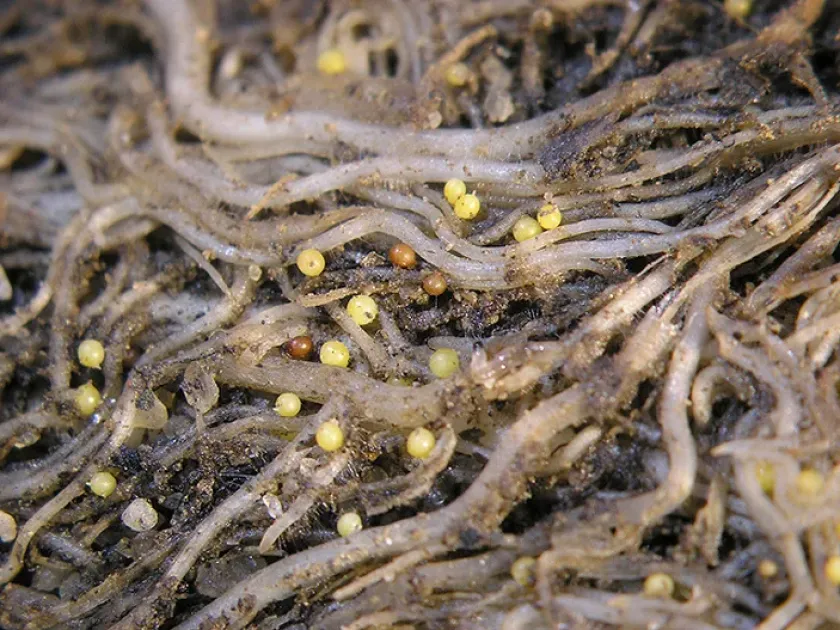
As the females mature, they swell and break through the root surface, becoming visible as small, gold-colored beads that eventually darken into cysts.
Transmission occurs through infested soil, contaminated farm machinery, seed potatoes, or runoff water, making strict hygiene protocols essential for control.
What it damages
The primary host is the potato, though it also affects tomatoes, eggplants, and certain wild members of the Solanaceae family.
By feeding on the root system, the nematode restricts the plant's ability to absorb water and nutrients, resulting in stunted growth and reduced yields.
Severe infestations can cause yield losses of up to 90%, significantly impacting the quality and size of potato tubers harvested from the field.
Once a field is infested, the persistent nature of the cysts creates a long-term agricultural challenge that requires significant management efforts.
Economic damage is exacerbated by regulatory quarantine measures that often restrict the movement of produce from infested areas to other regions.
Signs of infestation
Infected plants typically appear in patches throughout the field, characterized by early wilting, yellowing, and overall poor plant vigor during the season.
Potato bushes may show stunted growth and a general decline in health, with leaves drying out faster than in healthy, unaffected crops.
The root system often shows signs of stress, including excessive branching or a matted appearance, as the plant attempts to compensate for damaged roots.
During the flowering stage, small golden-yellow cysts may be observed clinging to the roots upon careful examination of the soil and root mass.
Harvested tubers are frequently undersized and sparse, rendering the crop commercially unviable in cases of high population density.
Control measures
Crop rotation is the most critical management strategy, with a recommended interval of at least three to five years between potato plantings.
Utilizing resistant potato cultivars is an highly effective way to reduce the nematode population without the heavy reliance on soil-applied chemicals.
Sanitation practices, such as washing equipment and tools before moving between fields, are vital to preventing the spread of cysts to clean areas.
Growing trap crops or biofumigant green manures can help lower the nematode count in the soil by triggering hatch without supporting full maturation.
Integrated pest management, including regular soil testing and careful site selection, is necessary to maintain productivity in areas prone to infestation.
Discussion
No discussions yet — be the first.