
Pale potato cyst nematode
Globodera pallida
Description
How to identify
The pale potato cyst nematode (Globodera pallida) is a microscopic soil-borne parasite classified as a member of the Heteroderidae family. It is a highly destructive pathogen that specifically targets Solanaceous plants.
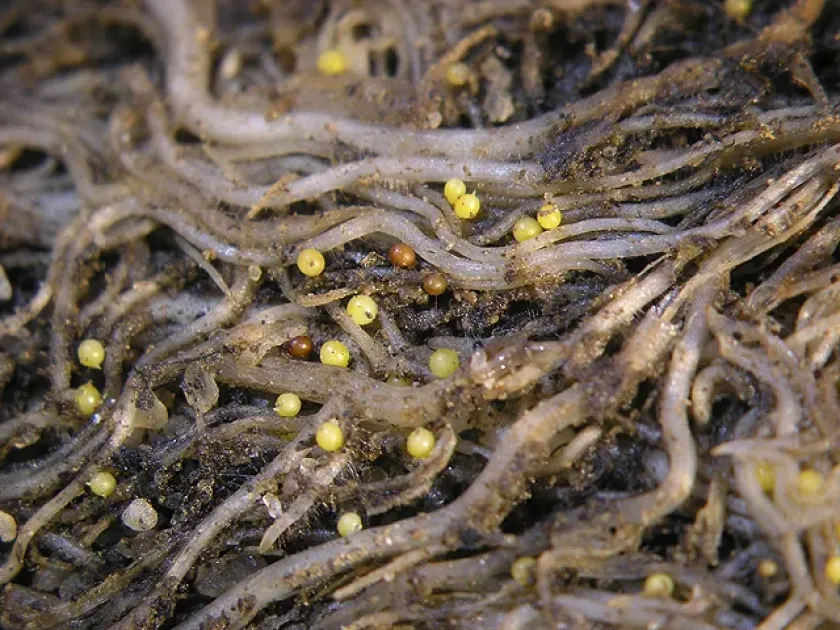
The organism persists in the soil in the form of cysts. A cyst is the toughened, dead body of a female nematode that protects hundreds of eggs and larvae, allowing them to remain viable for up to 15 years without a host.
Identification is not possible with the naked eye in the field. Professional diagnosis involves soil sampling and subsequent laboratory analysis to extract and quantify cyst populations using specialized microscopic techniques.
The life cycle begins when larvae hatch from the eggs within the cyst. This process is triggered by chemical cues known as root exudates released by host plants, which signal that a suitable food source is nearby.
After hatching, the larvae penetrate the host roots, where they establish feeding sites. The female nematode eventually swells and breaks through the root surface, later turning into a protective cyst as it matures.
What it damages
The damage caused by Globodera pallida is primarily due to the disruption of the root system's ability to absorb water and essential nutrients. This leads to severe stunting of the potato plant.
While potatoes are the primary host, this nematode can also affect other Solanaceous crops, including tomatoes and eggplants. The wide host range among weeds in this family further complicates pest management.
Economic losses are severe, with yield reductions ranging from 50% up to 80% in heavily infested soils. Additionally, the quality of the tubers is drastically reduced, making them unsuitable for fresh market sale.
Because the nematode is a major quarantine pest, its presence results in significant trade restrictions. Fields confirmed to be infested are often placed under official quarantine, preventing the movement of soil and produce.
The nematode spreads easily via contaminated soil attached to farm machinery, footwear, tools, or through the movement of infested seed potatoes, making biosecurity of paramount importance.
Signs of infestation
The most common field sign is the appearance of patchy growth. Plants in infected areas appear significantly smaller and less vigorous than those in healthy soil, creating an uneven look across the field.
Foliage symptoms often mimic drought stress. Infected plants tend to wilt rapidly during warm, sunny days, even if the soil moisture level is adequate for healthy plants nearby.
Early yellowing and premature senescence of the lower leaves are typical. These symptoms are often misdiagnosed as nutrient deficiencies or fungal blight if the root system is not inspected.
Examination of the roots usually reveals a stunted, poorly developed system with an increased number of lateral roots. Tiny, globular cysts may be visible attached to the roots under magnification.
Tuber formation is severely impaired. Plants in infested zones produce fewer tubers, and those that are formed are often too small and misshapen to meet commercial quality standards.
Control measures
Integrated Pest Management (IPM) is the gold standard for control. The primary strategy involves long crop rotations using non-host species, which starves the nematode population over several years.
The deployment of resistant potato cultivars is the most effective genetic control method. Breeders have developed varieties that can suppress the nematode's ability to complete its life cycle.
Stringent hygiene protocols are necessary. All equipment must be cleaned and disinfected before moving between fields to prevent the transfer of infested soil particles.
Biological control methods are being researched, including the application of beneficial fungi or bacteria that parasitize the cysts, although these are currently less effective than chemical or rotational methods.
Quarantine measures must be strictly followed. This includes using certified, nematode-free seed potatoes and conducting regular soil testing to monitor fields for potential infestations.
Discussion
No discussions yet — be the first.