
Stem nematode
Ditylenchus dipsaci
Description
How to identify
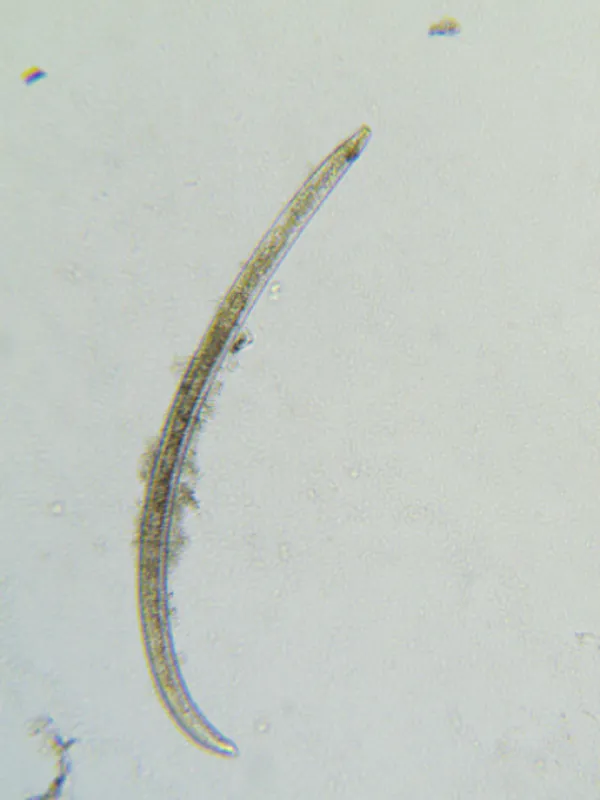
The stem nematode, Ditylenchus dipsaci, is a microscopic, eel-like worm belonging to the Nematoda phylum. Adults are typically about 1.0 to 1.5 mm long, making them invisible to the naked eye.
These organisms are obligate plant parasites that specialize in infecting the stems, bulbs, and leaves of their host plants. They use a needle-like structure called a stylet to penetrate plant cells and inject enzymes that break down cell walls.
The life cycle of Ditylenchus dipsaci consists of an egg stage, four larval stages, and the adult stage. Reproduction is rapid, and under optimal conditions, a new generation can be produced within a few weeks.
These nematodes are known for their extreme resilience. They can survive in a state of cryptobiosis, where they become desiccated and dormant, allowing them to withstand harsh environmental conditions for years in soil or dried plant matter.
Transmission occurs through contaminated seed, planting materials like onion sets or garlic cloves, as well as via farming equipment, water runoff, and footwear, making them a high-priority agricultural pest.
What it damages
This parasite affects a wide range of crops, most notably onions, garlic, tulips, potatoes, and various legumes. The severity of the damage depends on the host susceptibility and environmental factors.
By consuming plant tissue and disrupting nutrient flow, the nematodes cause significant physiological stress to the host. This interference prevents proper plant development, leading to stunted growth and reduced yields.
In bulb crops, infection manifests as a softening of the basal plate and the separation of scales. The interior of the bulb often shows brown or greyish necrotic patches that eventually rot completely.
In stem-bearing crops, the nematode causes characteristic swelling, twisting, and cracking of stems. These structural deformations often lead to premature lodging, where the plant collapses under its own weight.
The economic impact is profound due to total crop failure in heavily infested areas and the inability to store infested produce, as the decay spreads rapidly in warehouse environments.
When it appears
Activity starts in early spring as soil temperatures rise. Nematodes emerge from their dormant state in soil or infected plant debris to seek out new host tissues as soon as germination begins.
Optimal development occurs during periods of cool, wet weather. Moisture films on leaf surfaces are essential, as they allow the nematodes to move actively from plant to plant during rain or irrigation.
During dry summer months, they often enter a dormant, desiccated state to survive heat stress. This ability to wait out unfavorable conditions makes them difficult to eliminate from a field through simple fallowing.
Autumn triggers a return to protected areas within the host plant, such as the base of bulbs or roots, as the nematode prepares to hibernate or survive through the colder season.
Multiple generations can occur throughout the growing season, which explains why population levels can explode within a single year if the climate remains conducive to their migration and reproduction.
Signs of infestation
Symptoms often appear as localized patches of stunted, distorted plants. Leaves may show yellowing, curling, and an overall lack of vigor compared to healthy neighboring plants.
Bulb inspection typically reveals a "hollow" or spongy feel. When cut open, the distinct mosaic of healthy white tissue mixed with necrotic brown or grey lesions is a hallmark of nematode colonization.
The stems of affected plants often display galls or swellings, and in severe cases, the epidermis may crack. This provides entry points for secondary bacterial or fungal infections, which further accelerate plant decay.
Lodging or falling over of crops at an early stage is a common field symptom. In legume crops, stunted development often results in a "bunching" of the foliage at the top of the stem.
Diagnosis in the lab requires the extraction of nematodes from plant tissue using the Baermann funnel technique, followed by identification under a microscope to confirm the species.
Control measures
Crop rotation is the most effective management strategy. Avoid planting susceptible crops (e.g., onions, garlic, beans) in the same soil for at least three to four years to starve the nematode population.
Always use certified, nematode-free planting stock. If contaminated material is suspected, hot water treatment (soaking in water at approximately 45-50°C for a specific duration) can be used to kill the pests.
Strict hygiene is essential. Remove and destroy all infested plant debris immediately after harvest by burning or deep burial far from the field. Do not compost infested plant materials.
Control of weeds is vital, as many common weed species serve as alternative hosts for the stem nematode during the rotation period, allowing the population to persist.
While chemical nematicides exist, they are often heavily regulated or restricted. Therefore, an integrated pest management (IPM) approach focusing on cultural practices and prevention is the industry standard.
Discussion
No discussions yet — be the first.