
Potato tuber nematode
Ditylenchus destructor
Description
How to identify
The potato tuber nematode (Ditylenchus destructor) is a microscopic worm belonging to the order Tylenchida. It is a highly specialized plant-parasitic nematode that mainly targets the subterranean parts of various plant species.
Adult worms are slender and measure approximately 1.0–1.5 mm in length. Due to their minute size and transparent appearance, they are invisible to the naked eye, making the detection of infestations in the field very difficult.
The life cycle consists of eggs, four larval stages, and adults. The entire cycle occurs within the host tissue or the surrounding soil. Under adverse conditions, such as extreme dryness or lack of food, these nematodes can enter a state of dormancy, surviving for years.
The nematode reproduces sexually, and the females lay eggs inside the host plant's tissues. They possess a stylet, a hollow needle-like structure, which they use to pierce cell walls and inject enzymes that break down plant tissues for ingestion.
Dissemination is primarily through infested seed tubers, contaminated farm machinery, soil moved by water, or even through the transport of agricultural tools between infested and clean fields.
What it damages
The primary host is the potato, but the nematode also infests other crops, including carrots, garlic, onions, and various ornamental bulbs. Weed species like field bindweed and black nightshade often serve as important reservoirs for the parasite.
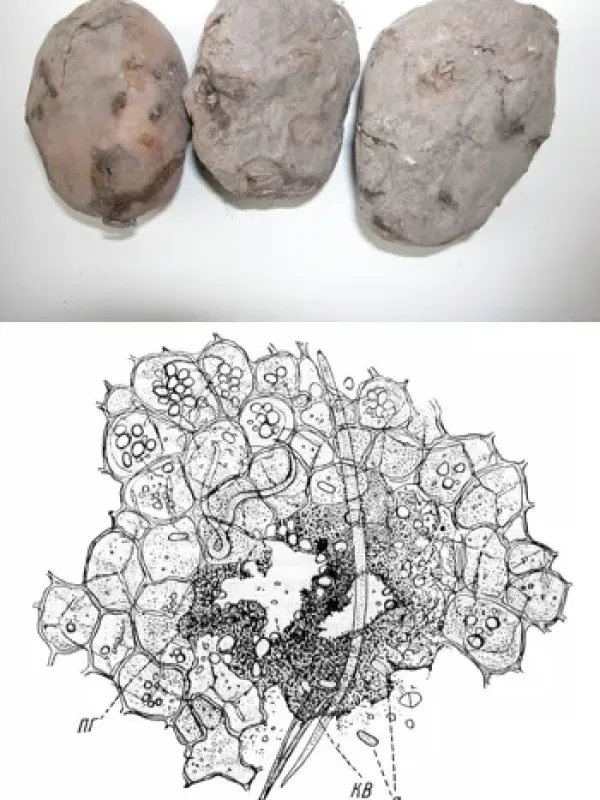
In potatoes, the damage begins as small, discolored spots on the surface of the tubers. These spots eventually turn greyish-brown, and the skin above them becomes thin, dry, and develops small cracks.
Beneath the skin, the parenchyma is destroyed, resulting in a dark, powdery, and rotten consistency. As the parasite population grows, the internal structure of the tuber breaks down, creating hollow cavities.
In the field, infested plants show stunted growth, yellowing foliage, and premature senescence. The overall yield is significantly reduced both in quantity and marketability, as the tubers become distorted and unappealing.
Post-harvest storage rot is a major economic consequence. Infested tubers serve as a source of inoculum that can spread throughout the entire storage facility, leading to massive losses of stored agricultural goods.
Signs of infestation
Visual symptoms on tubers include shallow, depressed, dark areas that are often missed during initial harvest. When cut, the difference between healthy and infected tissue is stark, with the latter showing a dark, spongy texture.
Another classic sign is the "silvering" of the skin, where the cuticle separates from the underlying necrotic flesh. As the infection progresses, these areas soften and can be easily pressed inwards with a finger.
When inspecting fields, look for patches of stunted, chlorotic plants that do not respond to water or fertilization. While these symptoms are general, they indicate the need for a soil or tuber sampling for diagnostic testing.
Diagnostic procedures involve extracting nematodes from tuber or soil samples using specialized equipment such as a Baermann funnel. Microscopic identification by a trained nematologist is required to confirm the species.
In root crops like carrots, look for deep cracks, malformations, and stunted taproots that exhibit darkened internal layers, which are clear indicators of potential nematode feeding.
Control measures
The most effective strategy is the prevention of infestation by using certified, nematode-free seed tubers. Regular field inspections and phytosanitary controls are essential for all potato-producing regions.
Implementing a long-term crop rotation is crucial. Using non-host crops like cereals or grasses for at least 3–4 years helps reduce the nematode population in the soil significantly.
Strict hygiene practices are required, including the sanitation of all farm equipment after working in potentially infested areas. Disinfection of storage facilities before the new harvest is also mandatory.
Proper weed management is essential, as various weeds act as alternative hosts that maintain the parasite population even in the absence of potatoes. Eliminating these hosts helps break the nematode's life cycle.
For high-value fields, soil fumigation or the application of specialized nematicides may be considered, although these are costly and subject to stringent environmental regulations regarding their use.
Discussion
No discussions yet — be the first.