
Stem nematode
Ditylenchus
Description
How to identify
The stem nematode, belonging to the genus Ditylenchus within the Nematoda phylum, is a devastating plant parasite. It is microscopic and lives endoparasitically within the plant tissues.
Adult worms are typically less than 1.5 mm long, slender, and transparent. They possess a specialized feeding apparatus known as a stylet, which they use to puncture cell walls and extract nutrients.
The life cycle is relatively rapid, consisting of an egg stage, four larval stages, and an adult stage. In favorable conditions, the entire life cycle can be completed in just a few weeks.
One of the most notable features of Ditylenchus is its ability to enter a state of cryptobiosis. In this dormant state, they can survive for years in dry plant debris or soil, waiting for the right moisture conditions to become active.
These nematodes reproduce sexually, and a single female can lay hundreds of eggs, allowing the population to explode quickly once they find a susceptible host plant.
What it damages
The stem nematode affects a wide range of hosts, including potatoes, onions, garlic, alfalfa, and numerous ornamental flowers. It causes significant physiological disruption to the plant.
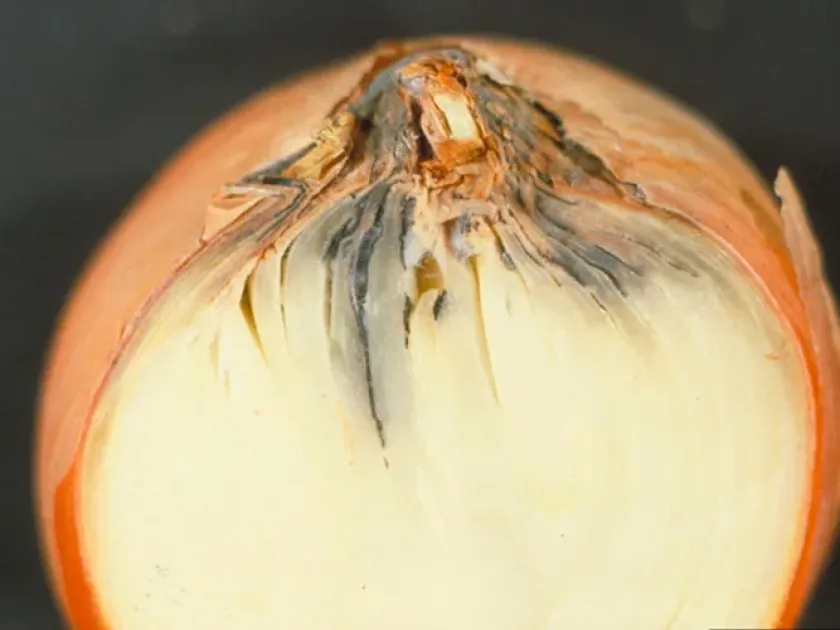
On bulbous crops like onions and garlic, the nematode causes the "bloat" disease. The base of the bulb softens, scales become distorted, and the plant eventually collapses, often leading to total loss during storage.
In potatoes, the nematode invades the tubers, causing the tissue to become spongy and necrotic. The skin may become cracked, and the inside of the tuber can be reduced to a dark, powdery mass.
For cereals and legumes, the stems become swollen, twisted, and stunted. This structural damage prevents proper water and nutrient transport, leading to lower yields and poor grain quality.
The presence of nematodes facilitates secondary infections from fungi and bacteria, which rapidly accelerate the decomposition and rotting of the plant material.
When it appears
Activity usually resumes in the spring when soil temperatures reach 10–12°C. Moisture is the most critical factor for their movement and penetration into new host tissues.
During the summer, wet weather and high humidity promote the migration of larvae from the soil to the upper parts of the plants. Rain and irrigation water act as primary vectors for spreading the pest.
As autumn approaches and temperatures drop, the nematodes prepare for winter. They move to the inner parts of bulbs, stems, or soil particles and undergo a dormant stage to survive the winter freeze.
The primary mode of transmission across larger distances is the trade and planting of infested tubers, bulbs, and seeds. Contaminated farming equipment also plays a significant role in local spread.
Long-term survival in the soil without a host is possible, but population density typically declines over time unless host weeds are present to support the parasite.
Signs of infestation
Early diagnosis is challenging, but signs usually manifest as stunted growth and chlorosis. Plants may appear weakened and fail to reach their full physiological potential.
Deformation of the stems and leaves is a key indicator. Twisting, thickening, and cracking of stems often point to a heavy infestation of Ditylenchus.
- Yellowing and wilting of the lower leaves.
- Softening or spongy texture in tubers and bulbs.
- Discoloration and necrotic lesions inside plant tissues.
- Increased susceptibility to secondary bacterial rot.
When examining suspected tubers or bulbs, cutting them open usually reveals a distinct difference in tissue texture and color compared to healthy specimens.
Control measures
Prevention is the most effective management strategy. Always use certified, nematode-free seeds, tubers, and bulbs for planting to avoid introducing the pest to your fields.
Crop rotation is essential for long-term control. Avoid planting susceptible crops in infested fields for at least three to four years to starve the nematode population.
Hot water treatment (soaking bulbs or seeds in water at 45–50°C for a specific duration) is a proven way to eliminate nematodes before they are introduced into the soil.
Sanitation practices, such as removing and destroying all crop debris after harvest and cleaning tools, are crucial to preventing the carry-over of the nematode from one season to the next.
The use of trap crops or bio-fumigant crops like mustard can help reduce nematode numbers in the soil through the release of natural chemical compounds.
Discussion
No discussions yet — be the first.