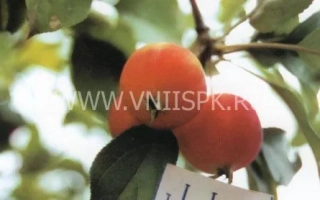
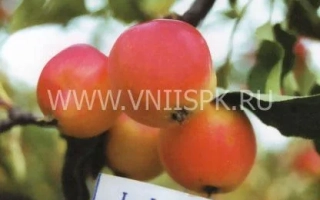
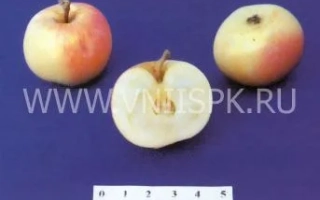
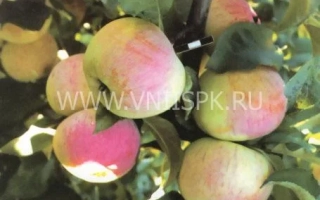
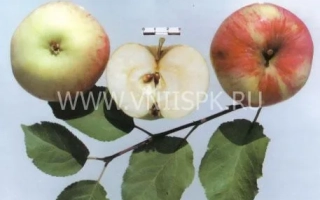
Winter variety selected at the Stavropol Experimental Station for Horticulture, developed in 1956 by P. V. Kuznetsov by crossing Yellow Noble with Renet Simirenko. Found in collectional old plantations of kolkhozes and on private plots in the foothill zone of the Northern Caucasus.
Trees are vigorous, with medium-density, broad-pyramidal crowns. Main branches are gray in color, strong, and during full fruiting occupy a horizontal position. Fruits form on spurs, rarely on fruiting spurs.
Shoots are curved, medium-length, hairy, with convex stipules. Leaves are large, egg-shaped-oval, leathery, with a matte gloss, with large wavy margins, slightly raised, petiole medium.
Inflorescence is umbellate, raceme with 6-9 flowers, buds pink, flowers medium-sized with white-pink petals. Stigma of the pistil rises above the stamens.
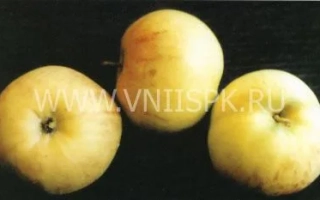
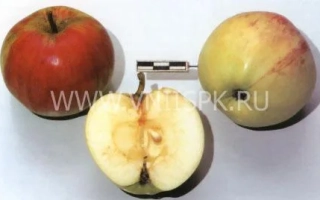
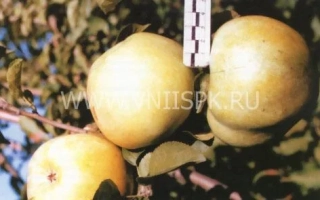
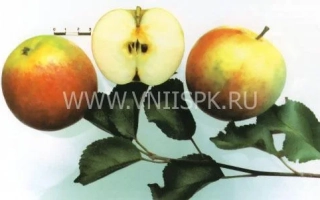
Fruits are above-average size, average in dry years, one-sided, flattened conical shape, with weak ribbing at the apex. Surface smooth, with a waxy coating. Skin color is light green, with faint pinkish blush and occasional dark-red stripes. Subcutaneous dots are barely noticeable. Fruit has a net-like russeting at the base of a wide depression. Pedicel is short and thick. Calyx is small, closed.
Fruit flesh is white, crisp, easily separable, juicy. Fruit aroma is weak. Taste rating 4.2 points. At the end of storage period (April), fruits contain: dry matter — 16.5%, sugars — 15.8%, titratable acids — 0.38%.
Harvesting maturity occurs in mid-October, consumer maturity in the second half of winter.
Fruits are light, one-sided, high marketability.
Trees grafted onto medium-sized rootstocks begin fruiting at 4-5 years. Fruit production is relatively regular. Winter hardiness of trees is below average, leaves are significantly affected by scab. Drought tolerance is high, however, under sharp fluctuations in soil moisture, dry summer and rainy autumn, fruits are prone to cracking.
Advantages of the variety: high fruit marketability.
Disadvantages of the variety: low winter hardiness of trees.