
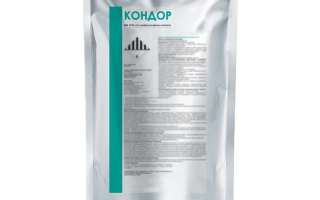
Condor, WG, (Methyl triflusulfuron, 500 g/kg)
Trust Crop Protection Technology Co., Ltd.
053 3 offers
113.43 €per 1 l ≈ 5 857 ₴


Herbicides, Desiccants
DuPontAvailable at: Agrariyam · Agrise · Агрохім · Аграрна Платформа · Pesticidy24 · Semena-online · Terhim · Yablukom
Aggregator catalog: prices are collected automatically from store websites, normalized by AI and converted at the current exchange rate. Before ordering, confirm the price and availability on the store's website. This block is not indexed by search engines — the data is loaded after the page opens.

A highly selective systemic herbicide for controlling difficult broad-leaved weeds in beet fields.
When protecting fodder and sugar beets from persistent broad-leaved weeds, the Karibu 50 herbicide from DuPont stands out for its specific focus and efficacy. This systemic, selective herbicide is engineered to target stubborn weeds like common lambsquarters (Chenopodium album), redroot pigweed (Amaranthus retroflexus), and scentless mayweed (Tripleurospermum inodorum) without causing stress to the crop itself.
The active ingredient, triflusulfuron-methyl, works by inhibiting cell division in sensitive weeds, leading to rapid cessation of growth. Growers should note that the product is most effective when applied to young, actively growing weeds (ideally at the cotyledon stage). With a maximum of two applications per season allowed, Karibu 50 offers a refined approach to weed management. A dosage of up to 25 grams per hectare represents an efficient balance between input costs and crop safety.
Karibu 50 is an essential tool for intensive farming systems where yield potential depends on eliminating early-season weed competition. Its ease of use and specific targeting make it a staple for farmers looking to maintain clean fields while ensuring the beet crop remains healthy and productive.
|
Maximum number of treatments
Maximum number of treatments
Maximum recommended number of treatments per vegetation period. |
2 |
|---|---|
|
By type of action
By type of action
Depending on their ability to move through living tissues, herbicides are divided into contact and systemic. Contact herbicides cause local damage to plant tissue upon contact, which dies or gradually degrades. This action does not always completely destroy the plant; often, its... |
|
|
By application method
By application method
Based on the method of application, herbicides are divided into foliar, soil, and root herbicides. Foliar herbicides are applied to vegetative plants and act through their above-ground organs. The main method of application for such preparations is spraying using sprayers or airp... |
|
|
By Mode of Action
By Mode of Action
Herbicides are divided into two groups according to their mode of action: Non-selective herbicides — intended for the destruction of all plant species. They are applied in agricultural fields during the absence of the main crop (after harvest, before crop emergence, on fallow lan... |
|
|
By Application Timing
By Application Timing
Herbicides are classified according to application timing into pre-emergent and post-emergent herbicides. Pre-emergent herbicides are mostly soil-applied or granular formulations applied before the emergence of crop plants. They are applied either pre-sowing (during pre-sowing cu... |
|
| Form of the preparation | |
|
Drug Consumption
Drug Consumption
Mass of the preparation per unit of treated area. It is customary to express the dosage rate in kilograms per hectare. The dosage rate is most often given in terms of 100% active ingredient, although sometimes it is calculated based on the preparation in the form of application w... |
Up to 25 g/ha |
| Catalog | Catalog → Herbicides, Desiccants |
| Manufacturer | DuPont |
| Country | USA |
Not yet комментариев. Be the first!
Herbicides, Desiccants · similar preparations




Often considered together with this product
Products you’ve viewed on this site


Reviews · 0