


SKU #3429
·
276 views
Apple Miltoš
Apple
Prices in stores
No offers yet — stores have not added prices for this product yet.
Similar varieties with prices
-
Bolotovskoe
from 3.34 €per seedling
-
 Veteran
from 4.4 €per seedling
Veteran
from 4.4 €per seedling
-
 Heavenly
from 3.68 €per seedling
Heavenly
from 3.68 €per seedling
-
 Moscow Winter
from 3.68 €per seedling
Moscow Winter
from 3.68 €per seedling
Type of Variety
Winter Apple Variety
Your mark
0 votes
0% positive ratings
Description
Winter American variety, obtained by crossing Milwaukee and McIntosh varieties. For many years it was recommended in the lower reaches of the Volga and still exists in commercial plantations, on dacha and garden plots.
Trees are large, fast-growing, forming spherical or broom-like crowns. Fruit set is concentrated on thin twigs and spurs.
Medium-thick shoots, dark brown or brownish, hairy, with relatively short internodes.
Leaves are elongated, oval or egg-shaped, with a rounded base and smoothly tapered tip. The leaf blade is fairly flat, noticeably wrinkled, matte, finely toothed, serrated or serrated-crenate along the edges. Petiole is medium in length and thickness. Stipules are relatively short, lanceolate in shape.
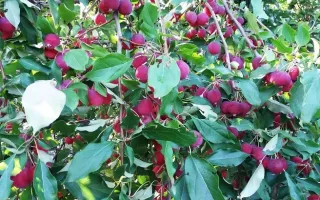
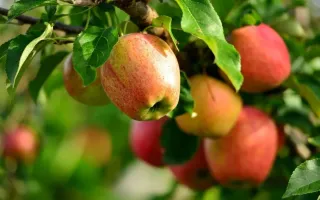
Fruits do not exceed average size, flattened-round, slightly ribbed, regular, almost perfectly shaped. Main fruit color at harvest is light green, transitioning to creamy as consumer maturity approaches. Skin coloration appears as merging stripes forming a continuous blush, brick-red over a red background covering most or the entire fruit surface. Strong waxy coating gives fruits a dull appearance while on the tree. Numerous, very large, light-colored, distinct lenticels. Short pedicel.
Flesh is light-cream, dense, fine-grained, juicy, aromatic, excellent tart-sweet flavor.
Harvest ripeness occurs at the end of September; fruits store until April. Possess good commercial and consumer qualities.
Fruits are consumed fresh and for making excellent, aromatic juice.
The variety is distinguished by exceptionally high and annual yields. In the Lower Volga region, it is highly winter-hardy, drought-resistant, and nearly immune to scab.
Trees require protection from powdery mildew.
Advantages of the variety: high annual yield, good commercial and consumer fruit quality.
Disadvantages of the variety: trees are vigorous growers, fruits do not exceed average size, require protection from powdery mildew.
Crop & resistance
Crop
Disease resistance
Specifications
| Type of Variety | |
|---|---|
| Catalog | Catalog → Apple |
No reviews yet. Be the first to share your experience.
Alternatives
Apple saplings · similar varieties


See also
Often considered together with this variety



Recently viewed
Products you’ve viewed on this site
Reviews