
In Kansas, Abengoa biorefinery built to process 325,000 tons of crop residue faces collapse
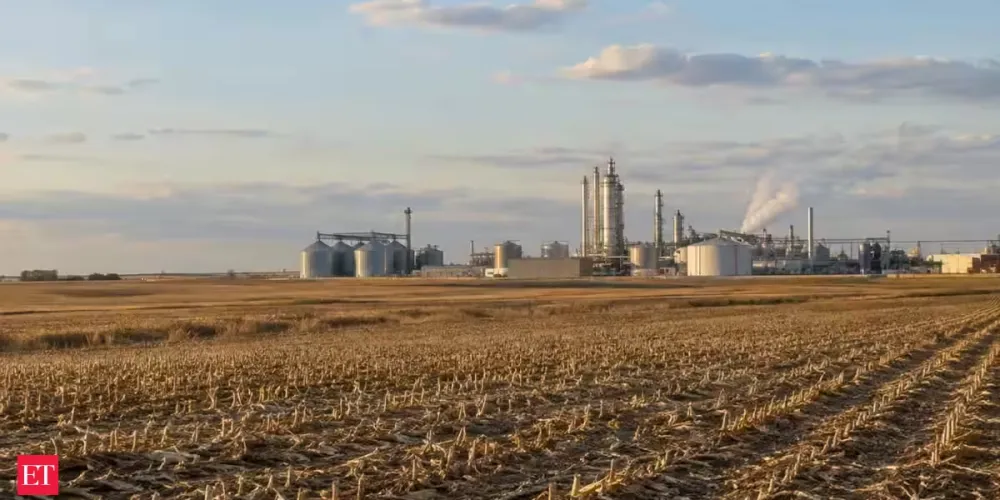
In Hugoton, Kansas, a large-scale biorefinery was launched with the primary goal of transforming agricultural waste into sustainable fuel. Built by the Spanish energy firm Abengoa, the facility was designed to process up to 325,000 dry tons of crop residues annually and produce approximately 25 million gallons of cellulosic ethanol. Additionally, an on-site cogeneration unit supplied up to 21 megawatts of power to support plant operations while generating a surplus of energy.
According to the U.S. Department of Energy, this facility represented one of the closest commercial-scale attempts to demonstrate the viability of second-generation biofuels derived from crop waste rather than food crops. The plant's grand opening in October 2014 was attended by the U.S. Secretary of Energy and the governor of Kansas. Government backing for the initiative included a $97 million cost-share grant and a $132.4 million loan guarantee under the Obama administration's push to advance advanced biofuels.
The underlying science of enzymatic hydrolysis, which converts tough plant fiber into fermentable sugar, required extensive development. Department of Energy accounts note that Abengoa's technology was evaluated for more than 30,000 hours at the pilot scale and over 6,000 hours at the demonstration scale, exceeding 36,000 hours combined. Abengoa's CEO at the 2014 plant opening cited a combined pilot-and-demonstration total of roughly 40,000 hours, highlighting the significant technical groundwork preceding the commercial launch.
However, broader policy warnings had long indicated that Washington's targets were overly aggressive. A National Academy of Sciences committee concluded years prior that the federal Renewable Fuel Standard's goal of 16 billion gallons of cellulosic biofuel by 2022 was doomed to failure, as cellulosic technology lacked a proven commercial track record and a cost-competitive feedstock supply chain compared to 30-year-old corn ethanol infrastructure.
These predictions materialized fully. A 2018 peer-reviewed paper published in Environmental Research Letters found that while total renewable fuel levels fell to 80% of 2017 goals, cellulosic biofuel achieved a meager 5% of its target. The Hugoton facility quickly became a prominent case study in that policy gap, as severe financial challenges and the parent company's bankruptcy forced the plant to halt operations, leaving workers unemployed and the site abandoned.
Not yet comments. Be the first!
Comments · 0