
Zero cost, higher returns: Gujarat’s Dahod farmers find success with natural farming
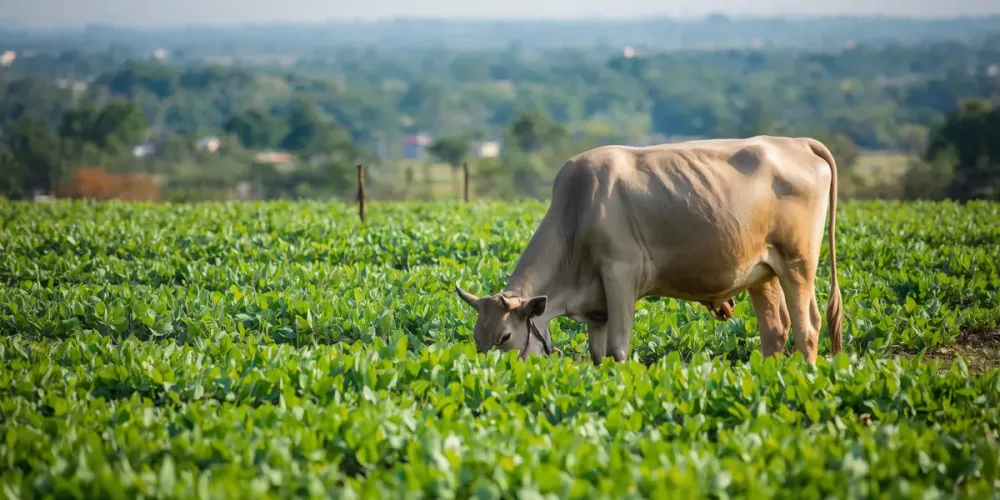
Farmers across the Indian state of Gujarat are increasingly embracing cow-based natural farming as a strategic move to cut cultivation costs and restore soil health. This sustainable agricultural transition is being facilitated by the Agricultural Technology Management Agency (ATMA) Project, which provides farmers with the necessary technical guidance, training, and financial resources. By replacing chemical fertilizers with organic alternatives, practitioners are finding that they can maintain productivity while significantly enhancing their profit margins.
In the Dahod district, a notable success story is that of Narendrabhai Hatila, who has been practicing indigenous cow-based natural farming for several years. Instead of relying on store-bought chemical inputs, Hatila uses natural formulations such as Jeevamrut and Ghan Jeevamrut, which are derived from indigenous cow dung and urine. According to Hatila, a single indigenous cow can effectively support natural farming operations on up to 30 acres of land. This practice is credited with reversing the soil degradation caused by years of heavy chemical use and fostering a more sustainable farm environment.
The ATMA Project has been instrumental in scaling these practices, offering farmers access to model farms and structured training programs. Chetan Kumar Rathod, the Taluka Project Manager for ATMA, highlights that Hatila’s commitment to the program has enabled him to implement a successful five-layer farming model. This model integrates horticulture, vegetable cultivation, and fruit crops, all grown without the use of chemical pesticides or fertilizers, leading to a consistent and sustainable annual income for the farming household.
Financial incentives are also playing a crucial role in encouraging adoption. Ramsinh Chauhan, the Technology Manager for ATMA in Dahod, noted that farmers in Dhanpur Taluka receive an annual financial aid of ₹10,800. Furthermore, the state has established Bio-Resource Centres (BRCs) to ensure that natural inputs such as Agni Astra and Brahmastra are readily available to local farmers. Under the Mission Cluster Scheme, the project provides up to ₹1 lakh for the establishment of these BRC units, with ₹60,000 available under non-mission categories to support infrastructure development.
Ultimately, the shift toward cow-based natural farming offers a compelling model for sustainable economic growth in Gujarat’s agricultural sector. By lowering input costs and revitalizing the land, this approach serves both the environment and the farmer's pocketbook. As these natural methods continue to gain traction, they represent a shift toward self-reliance and long-term agricultural resilience, proving that traditional wisdom, when combined with modern administrative support, can lead to substantial gains for small-scale farmers.
Not yet comments. Be the first!
Comments · 0