
Central Java speeds rice planting as El Niño threatens a long dry season
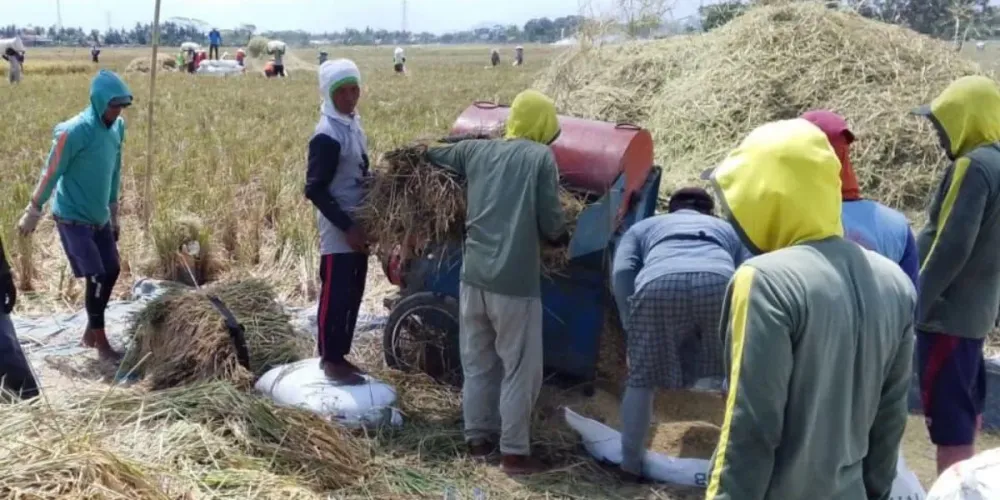
Authorities and farmers in Central Java are accelerating rice planting as they prepare for a longer and drier 2026 season. ANTARA reports that although parts of Indonesia are still receiving rain in April, the growing El Niño threat has already pushed regional officials to intensify preparations. For one of Indonesia's key rice-producing areas, the issue is not only seasonal timing but the protection of food security under tightening water conditions.
According to projections from Indonesia's Meteorology, Climatology, and Geophysics Agency, or BMKG, the dry season in southern Central Java is generally expected to start in May 2026. In Cilacap district it is expected to begin in the second ten-day period of May, while southeastern coastal areas such as Binangun and Nusawungu may enter dry-season conditions in the first ten days of the month. The season is projected to last between 140 and 180 days, peaking in August. Banyumas and Purbalingga are also expected to transition into dry conditions over the following weeks.
Teguh Wardoyo from the Tunggul Wulung Meteorological Station in Cilacap said the central risk this year is rainfall below the climatological average. That marks a sharp reversal from 2025, when some southern areas of Central Java experienced rain almost year-round without a clear dry season. Agriculture expert Prof. Totok Agung Dwi Haryanto of Jenderal Soedirman University warned that crops would face a double pressure from water scarcity and higher temperatures, putting food production under clear stress.
The main mitigation strategy is to move planting earlier so crops can still use residual rainfall before the driest phase arrives. Experts also recommend preparing nurseries before the first harvest is fully completed so land can be replanted without downtime. At the same time, local authorities are emphasizing drought-tolerant crop choices, retention basins, wells, deep wells, trench dams, pump-based irrigation, and selective irrigation-network maintenance. Fuel access is part of the equation as well, because running pumps at scale requires affordable energy.
Cilacap's agriculture office says planting acceleration is now the core policy response, supported by extension workers who are aligning farm calendars with the drier outlook. Farmers are being encouraged to use drought-tolerant rice varieties such as Inpari 46, Cakrabuana, and Respati. The district remains a strategic rice area, with 67,031 hectares of paddy land. In 2025, rice production reached 855,042 tons of dry milled grain, equivalent to 507,438 tons of consumable rice, leaving a significant surplus over local demand. That buffer is important, but ANTARA notes that resilience in 2026 will depend on adaptation, coordination, and disciplined water management as the dry season deepens.
Not yet comments. Be the first!
Comments · 0