
India’s farm reforms should marry nutrition and climate resilience, say experts
Two Indian analysts argue farm reforms must refocus from production-centric targets to policies that integrate nutrition and climate resilience across the food system. They note India’s foodgrains output has exceeded 330 million tonnes—almost double early 1990s levels—yet the country still accounts for about a quarter of the world’s undernourished people.
The piece highlights serious human-capital constraints for agriculture: more than half of Indian women and nearly two-thirds of children suffer from anaemia. Around 790 million people cannot afford a healthy diet, a condition that undermines labour productivity and the long-term sustainability of rural livelihoods and supply chains.
Climate change is already constraining yields and increasing production risk. Rising temperatures shorten wheat growing seasons in northern India, erratic rainfall raises exposure for rain-fed farming that supports millions of smallholders, and groundwater depletion is worsening in major grain belts—together elevating systemic vulnerability in food production.
The authors argue food policy must therefore address nutrition, prices, development and the climate–food nexus alongside productivity. They call for integrated interventions that combine yield gains with ecosystem stewardship and stronger nutritional outcomes rather than treating output as the sole success metric.
Innovation in farming practices is presented as critical. Precision agriculture and digital platforms using sensors, satellite imagery and weather analytics can help farmers optimise irrigation and fertiliser use. Public–private collaboration is expanding this ecosystem—cited is the Microsoft–NITI Aayog agri‑tech initiative that supports startups digitising millions of acres.
A practical example is Maharashtra’s Climate‑Resilient Agriculture Project, which reported yield improvements of 9–21% among participating farmers. Such results are used to illustrate how combined technical, advisory and institutional support can deliver measurable productivity gains under climate stress.
Biotechnology and improved seed systems are identified as further pathways. The authors call for substantial research investment and robust intellectual property frameworks to incentivise development of climate‑resilient and nutrition‑enhanced crops while preserving smallholder access through mechanisms such as trait‑specific licensing, patent pools and public–private research partnerships.
Regulatory clarity is emphasised because lengthy approval processes delay deployment of technologies that could help farmers adapt. The paper also critiques existing incentive structures: a 2009 Water Policy analysis showed minimum support price (MSP) policies and input subsidies shifted acreage toward water‑intensive wheat and rice, contributing to water conflicts in the Cauvery basin and tensions between Punjab and Haryana.
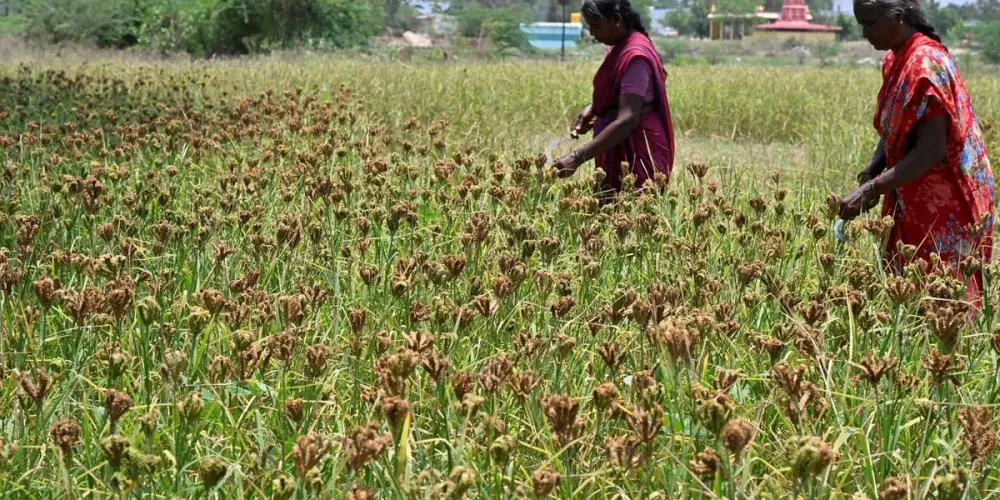
As alternatives, diversification toward pulses, oilseeds and millets is recommended—millets in particular demand significantly less water and are micronutrient‑rich. Proposals such as green water credits are mentioned to incentivise keeping water in‑stream and promoting productivity-enhancing green practices.
The authors package these ideas under Nutrition‑Sensitive Climate‑Smart Agriculture (NSCSA), an integrated approach to combine productivity, climate adaptation and nutritional outcomes. They position NSCSA as a pillar of a ‘Green Revolution 2.0’, whose success will be measured by India’s ability to nourish its population while sustaining ecosystems.
Not yet comments. Be the first!
Comments · 0